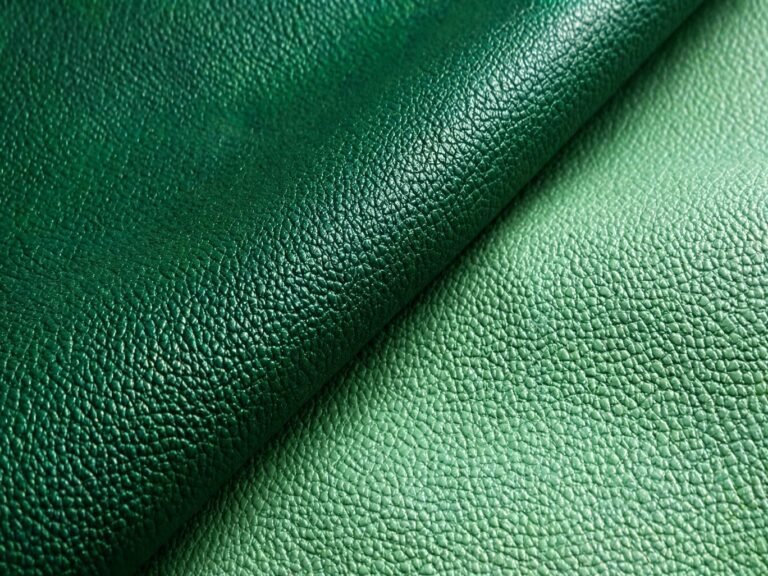
The phrase “leather food” carries two meanings that most specifiers never connect. The first: conditioning products — beeswax, lanolin, neatsfoot oil — applied to animal leather to replace oils lost through evaporation, UV exposure, and daily handling. Without this feeding regimen, animal hide dries, stiffens, and cracks within 2–3 years. The second: food-contact safety — whether the leather surface itself is safe for repeated contact with food, governed by FDA 21 CFR 177.2600 in the US and Regulation (EC) 1935/2004 in the EU. These two meanings intersect at a critical question for product specifiers: if your leather needs chemical feeding every season, can it ever be food-safe?
The answer reveals why silicone leather advantages extend beyond durability — they eliminate the conditioning cycle entirely while achieving food-contact certification that animal leather and PU leather cannot.
Meaning 1: Why Animal Leather Needs “Food” (And What That Costs You)
Animal leather is collagen fiber — organic material that contains natural moisture and oils. Over time, these oils evaporate at a rate of 8–15% per year depending on humidity, UV exposure, and temperature cycling. The leather food industry exists to replace what nature removes.
Typical leather food composition:
- Beeswax-based conditioners: Surface-sealing only. Blocks pores, reduces breathability, creates wax buildup requiring solvent removal.
- Lanolin creams: Penetrate fiber but oxidize over time, causing darkening and rancid odor in humid environments.
- Neatsfoot oil: Deep penetration but modifies surface pH, making the leather sticky and attracting dirt.
- Silicone-based conditioners: Surface coating only. Does not condition fibers. Blocks pores over time — explicitly not recommended by professional leather care guides.
For B2B applications, the conditioning cycle creates three hidden costs: labor (quarterly reapplication in commercial settings), chemical inventory (conditioners, cleaners, solvents for wax removal), and replacement (when conditioning fails to prevent cracking, full reupholstery follows). In a 100-seat restaurant, leather food maintenance costs approximately $12–18 per seat per quarter — $4,800–$7,200 annually — before any material replacement.

Chemical mixing facility — conditioning products require solvent-based formulations that off-gas near food surfaces.
Why Silicone Leather Needs No Food
Silicone leather is not animal skin. It’s a cross-linked polysiloxane elastomer — an inorganic polymer backbone with methyl and vinyl side groups. This molecular structure means:
| Property | Animal Leather | PU Leather | Silicone Leather |
|---|---|---|---|
| Natural oil content | Yes — depletes 8-15%/yr | No — topcoat emulates | No oils to lose |
| Conditioning required | Quarterly minimum | No, but topcoat degrades | Never |
| Drying/cracking risk | High without feeding | Moderate (hydrolysis) | None (-40°C to 250°C) |
| 10-year maintenance cost | $480-$720/seat | $0 (but replacement at yr 3-5) | $0 |
The molecular difference is structural: silicone’s Si-O-Si backbone is thermally stable up to 250°C, UV-stable for 1,000+ hours, and inherently hydrophobic. There are no oils to replenish because the flexibility comes from the polymer chain architecture itself, not from evaporating plasticizers or animal fats. No feeding means no chemical off-gassing near food surfaces — which brings us to the second meaning of “leather food.”

Finished silicone leather rolls in TOPSUN warehouse — zero conditioning products needed throughout service life.
Meaning 2: Food-Contact Safety Standards Decoded
When specifiers search “leather food,” the second intent is food-safety compliance: can this leather surface legally touch food? The governing standards differ by market, but the testing logic is consistent — does the material leach harmful substances into food under repeated contact?
Key food-contact regulations for leather and synthetic leather:
- FDA 21 CFR 177.2600 — US standard for rubber articles intended for repeated food contact. Covers silicone elastomers specifically. Testing measures extractable matter in n-hexane and distilled water under accelerated conditions. Silicone leather must show ≤0.5% extractables in hexane and ≤2.0% in water.
- Regulation (EC) 1935/2004 — EU framework for food-contact materials. Requires that materials do not transfer constituents to food in quantities that endanger human health or cause unacceptable organoleptic changes.
- LFGB (Germany) — Uses migration testing with food simulants (3% acetic acid, 10% ethanol, 20% ethanol, olive oil). Silicone leather passes all four simulant tests.
- GB 4806 series (China) — National food safety standards for food-contact materials. Silicone rubber is specifically regulated under GB 4806.11-2016.
PU and PVC leather cannot pass FDA 21 CFR 177.2600 because their plasticizer systems — phthalates in PVC, unreacted isocyanates in PU — migrate into food simulants at concentrations exceeding regulatory limits. Animal leather, despite being a “natural” material, fails food-contact standards due to chromium tanning residues (trivalent and hexavalent chromium) and conditioning chemical residues.

Commercial kitchen seating — silicone leather passes FDA food-contact testing for repeated exposure to food residues and cleaning chemicals.
Where Food-Safe Leather Actually Gets Specified
Food-contact certification isn’t just for cutting boards. In B2B sourcing, FDA-compliant silicone leather is specified across these applications:
- Restaurant booth upholstery: Food spills contact the surface daily. Non-food-safe materials leach plasticizers into food residues that then transfer to skin.
- Commercial kitchen seating and prep area covers: Repeated contact with raw food, oils, and sanitizing chemicals. Material must withstand both food-contact migration limits and 500+ disinfection cycles.
- Baby feeding mats and bibs: Infants mouth surfaces. EN 71 toy safety plus FDA food-contact compliance are non-negotiable.
- Food packaging and gift box wraps: Direct contact with confectionery, baked goods, and food gifts. Migration testing must cover both aqueous and fatty food simulants.
- Food processing equipment covers: Gaskets, seals, and protective covers on processing machinery. Must not contaminate food products during production.

Restaurant booth upholstery — FDA-compliant silicone leather in direct food-contact zone.
Watch how silicone leather passes FDA food-contact migration testing and why it needs no chemical conditioning.
About TOPSUN
TOPSUN manufactures food-contact-certified silicone leather using a solvent-free dry coating process. Our material is FDA 21 CFR 177.2600 compliant, ISO 10993-5 biocompatible, and LFGB migration-tested — meaning it safely touches food surfaces without leaching plasticizers, phthalates, or chromium residues. With 60,000+ m² of production capacity across Dongguan, Yichang, and Xiangyang, we supply food-safe leather to restaurant chains, baby product manufacturers, food packaging brands, and commercial kitchen furniture makers worldwide. Because our material contains no animal oils and no evaporating plasticizers, it requires zero conditioning throughout its 10+ year service life — eliminating both maintenance costs and chemical off-gassing near food surfaces.
FAQ: Leather Food and Food-Safe Leather
Q: Does silicone leather need leather food or conditioner?
No. Silicone leather’s flexibility comes from its polymer chain architecture, not from oils or plasticizers that evaporate over time. It will not dry out, stiffen, or crack. Water and mild soap are the only cleaning agents needed. No beeswax, lanolin, or conditioning products are required or recommended.
Q: Can PU leather be food-safe?
No. PU leather uses polyurethane binders that contain unreacted isocyanate monomers and residual solvents (DMF in solvent-based PU). These migrate into food simulants at concentrations exceeding FDA 21 CFR 177.2600 limits. Even waterborne PU, while safer for VOC emissions, has not achieved food-contact certification due to surface treatment chemicals.
Q: What test reports should I request for food-contact leather?
Request: (1) FDA 21 CFR 177.2600 extractables test report (hexane and water), (2) LFGB migration testing with food simulants (3% acetic acid, 10% ethanol, olive oil), (3) ISO 10993-5 cytotoxicity report for skin-contact applications, and (4) REACH SVHC statement. TOPSUN provides all four upon request.
Q: Is food-safe leather different from food-grade leather?
The terms are used interchangeably, but “food-contact compliant” is the technically precise label. It means the material has passed regulatory migration testing for repeated food contact. “Food-grade” implies the material itself could be consumed, which is not the case — it means the surface is safe for food to touch.
Compliance Checklist: Specifying Food-Safe Leather
Before committing to a leather supplier for food-contact applications, verify:
- ☐ FDA 21 CFR 177.2600 test report (extractables ≤0.5% hexane, ≤2.0% water)
- ☐ LFGB migration test with 4 food simulants (3% acetic acid, 10% ethanol, 20% ethanol, olive oil)
- ☐ ISO 10993-5 cytotoxicity certificate for direct skin-contact products
- ☐ REACH Annex XVII compliance — no SVHCs above 0.1% w/w
- ☐ Confirm zero conditioning chemicals required (eliminates off-gassing risk)
- ☐ Bleach and alcohol disinfectant compatibility for 500+ wipe cycles
- ☐ EN 71 toy safety certification for baby/infant food-contact products
- ☐ Supplier provides sample swatches for in-house food-contact testing
The intersection of “leather food” — conditioning and food-safety — is where material chemistry matters most. If your leather needs chemical feeding every season, it’s releasing those chemicals into every surface it touches. If your leather is food-contact certified, it doesn’t need feeding at all. Silicone leather sits at that intersection: zero maintenance, full compliance.
Need food-safe leather for your next project? Request FDA 21 CFR 177.2600 test reports, LFGB migration data, and free A4 swatch samples from TOPSUN. Contact info@topsunsiliconeleather.com or WhatsApp +44 744 461 7933.