A consumer buys a “vegan leather” handbag, wallet, and sofa in the same year. The handbag starts peeling at 18 months. The wallet cracks at 2 years. The sofa surface becomes tacky at 3 years. All three were marketed as “durable vegan leather” — but none lasted beyond a genuine leather equivalent’s break-in period. The problem isn’t that vegan leather can’t be durable. It’s that “vegan leather” spans materials with a 5× lifespan gap: PVC lasts 2 years, PU lasts 3–5, plant-based lasts 2–4, microfiber lasts 8–12, and silicone lasts 10+. When a brand markets “durable vegan leather” without specifying the material chemistry, the consumer has no way to predict which lifespan they’re buying.
The vegan leather durability question isn’t about the category — it’s about the chemistry. Here’s the lifespan data that B2B buyers need to specify durable vegan leather with confidence.

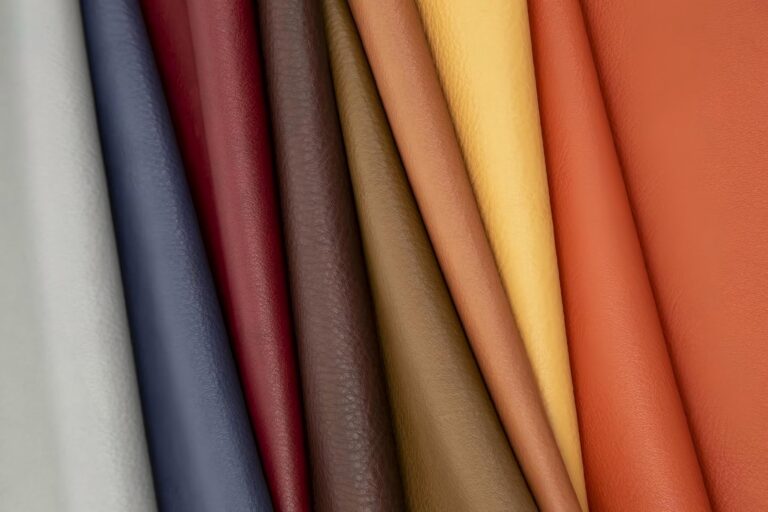
Durability comparison — the same marketing term covers materials spanning 2 to 10+ year lifespans
Vegan Leather Durability: The 5-Material Lifespan Matrix
Five material chemistries are marketed as “vegan leather.” Their durability profiles are dramatically different:
| Material | Martindale | Flex Cycles | Hydrolysis | UV Hours | Lifespan |
|---|---|---|---|---|---|
| PVC | 15,000–30,000 | 15,000–25,000 | Moderate | ≤ 200 | 2–3 years |
| PU | 30,000–80,000 | 30,000–50,000 | Fails 3–7 yr | ≤ 500 | 3–5 years |
| Plant-based | 15,000–25,000 | 10,000–20,000 | Variable | ≤ 300 | 2–4 years |
| Microfiber PU | 100,000–150,000 | 50,000–80,000 | Fails 5–8 yr | ≤ 1,000 | 8–12 years |
| Silicone | 200,000+ | 100,000+ | Immune | 1,000+ | 10+ years |
The data shows that only microfiber PU and silicone leather achieve the durability threshold that justifies marketing claims of “durable vegan leather.” PVC, standard PU, and plant-based materials all fail within 5 years — and plant-based leather, despite commanding the highest price ($20–50/m²), has the worst abrasion resistance at 15,000–25,000 Martindale cycles.

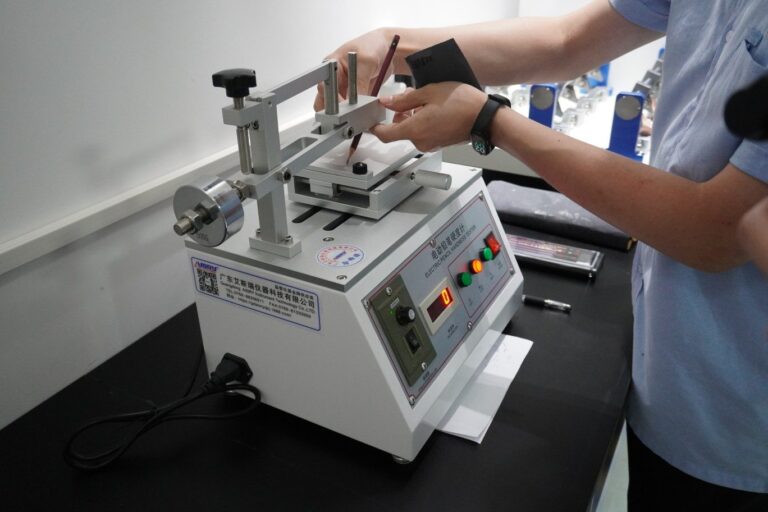
Tensile strength testing — the physical property that determines whether vegan leather resists tearing under real-world stress
The 3 Failure Modes That Destroy Vegan Leather Durability
Understanding why vegan leather fails helps predict which materials will survive. Three failure modes account for 90%+ of premature degradation:
1. Hydrolysis (PU-specific, #1 cause)
Water molecules cleave the ester bonds in polyester-based PU. The process is invisible for 2–3 years, then accelerates rapidly. In tropical climates (Southeast Asia, coastal regions), standard PU develops surface tackiness within 12–18 months. Factory advisors classify standard wet-process PU as “suitable only for one-season items.” Silicone leather is immune — the Si-O bond is inherently water-stable.
2. Plasticizer Evaporation (PVC-specific)
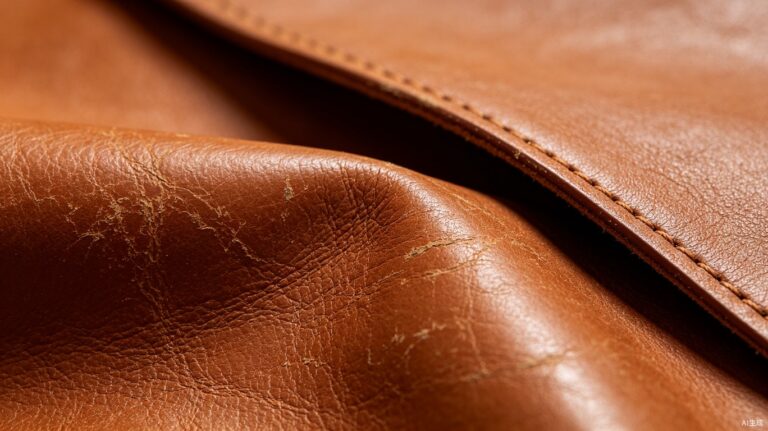
PVC leather relies on phthalate plasticizers for flexibility. These evaporate gradually, causing progressive embrittlement. The material becomes stiff, then micro-cracks at stress points, then fragments. The process is irreversible and accelerates with heat exposure. PVC vegan leather has a hard ceiling of 2–3 years regardless of care. No maintenance can prevent this — it’s an inherent material limitation.
3. Coating Delamination (all coated materials)
The surface coating separates from the base fabric when peel strength is insufficient. This generates the most visible warranty claims — large sheets of coating peeling away. Standard PU achieves 5–8 N/25mm peel strength; silicone leather achieves 25+ N/25mm. A 2023 study found 87% of peeling complaints involved PU installed within 18 months.
Real-World Durability: What the Data Means for Each Application
Laboratory data translates differently depending on the application environment. Here’s how each material performs across use cases:
| Application | PU Lifespan | Microfiber Lifespan | Silicone Lifespan |
|---|---|---|---|
| Fashion accessories (dry climate) | 3–5 years | 8–10 years | 10+ years |
| Fashion accessories (humid climate) | 1.5–3 years | 5–7 years | 10+ years |
| Furniture (residential) | 3–5 years | 8–12 years | 10+ years |
| Furniture (contract/hospitality) | 2–3 years | 5–8 years | 10+ years |
| Automotive interior | 3–5 years* | 6–8 years | 10+ years |
| Marine / outdoor | 1–2 years | 4–6 years | 10+ years |
*PU in automotive degrades faster due to heat exposure; dashboard surface temperatures exceed PU’s 80°C limit in summer.

Waterproof texture — silicone leather’s non-porous surface prevents moisture ingress that causes hydrolysis in PU materials
Why Silicone Leather Is the Most Durable Vegan Leather
TOPSUN manufactures the most durable vegan leather available — silicone leather that eliminates all three primary failure modes by chemistry:
- 200,000+ Martindale cycles — 4× higher than PU, 1.3× higher than microfiber. The surface won’t wear through in any application within 10+ years.
- 100,000+ flex cycles — eliminates hinge, seam, and fold-line cracking that destroys PU accessories within 2–3 years.
- Hydrolysis immunity — the Si-O backbone cannot be cleaved by water. Silicone leather performs identically in tropical and desert environments.
- 25+ N/25mm peel strength — 3–5× higher than standard PU. The coating cannot delaminate under normal use.
- -40°C to 250°C thermal stability — no cracking in Arctic cold, no softening in engine heat. PU degrades above 80°C; silicone is stable to 250°C.
- 1,000+ hours UV stability — no embrittlement or color shift from sunlight. PU and PVC degrade rapidly under UV.
- Bleach-safe, alcohol-compatible cleaning — no surface degradation from chemical cleaning. PU loses 22% surface integrity within 6 months of alkaline cleaner exposure.
About TOPSUN: TOPSUN manufactures silicone leather — the most durable vegan leather on the market. With 200,000+ Martindale abrasion cycles, 100,000+ flex cycles, inherent hydrolysis immunity, and 10+ year service life, our material eliminates the failure modes that destroy PU, PVC, and plant-based vegan leather. Solvent-free production, zero VOC emissions, 100% recyclable. Certifications: ISO 10993-5, REACH, FDA 21 CFR 177.2600, EN 13773 Class 4, EN 71. MOQ: 500 meters. Lead time: 7–15 days. Free A4 swatches worldwide.
Service life comparison — see the 2-year to 10+ year durability gap across vegan leather materials
Request Durability Samples
Get Test Reports
Download Spec Sheet
Frequently Asked Questions
How long does vegan leather last?
Vegan leather lifespan ranges from 2 to 10+ years depending on material: PVC lasts 2–3 years, PU lasts 3–5 years, plant-based lasts 2–4 years, microfiber PU lasts 8–12 years, and silicone leather lasts 10+ years. The 5× lifespan gap means “vegan leather” alone tells you nothing about durability — you must know the material chemistry.
What is the most durable vegan leather?
Silicone leather is the most durable vegan leather, achieving 200,000+ Martindale abrasion cycles, 100,000+ flex cycles, inherent hydrolysis immunity, and 10+ year service life. Unlike PU-based materials (including microfiber), silicone’s Si-O polymer backbone is immune to the water damage that causes 70% of vegan leather failures.
Why does vegan leather peel?
Vegan leather peels when the surface coating separates from the base fabric due to insufficient peel strength (below 8 N/25mm), accelerated by hydrolysis, UV exposure, and alkaline cleaning. A 2023 study found 87% of peeling complaints involved PU vegan leather installed within 18 months. Silicone leather with 25+ N/25mm peel strength eliminates this failure mode.
Is vegan leather as durable as real leather?
Silicone vegan leather matches or exceeds genuine leather durability: 200,000+ Martindale cycles (genuine leather: 30,000–50,000), 10+ year service life (genuine leather: 15–20 years with conditioning), and superior resistance to water, stains, and chemicals. PU and PVC vegan leather are significantly less durable than genuine leather.