A procurement team requests “the highest quality leather” from three suppliers. Supplier A quotes $18/ft² for full-grain. Supplier B quotes $35/ft² for full-grain. Supplier C quotes $52/ft² for full-grain. All three carry the same grade label — “full-grain” — but the hides behind those quotes differ so significantly that two of them won’t survive 5 years in commercial use. The phrase “highest quality leather” is not a specification. It’s a marketing term that encompasses hides from $15 to $50 per square foot, and the gap between cheapest and most expensive within the same grade label can exceed 200% in actual performance. Here’s what procurement teams need to verify before signing a purchase order. For a deeper look at best quality leather sourcing criteria, that guide breaks down the evaluation framework.
Request Quality Comparison Samples
The 5 Highest Quality Leather Tiers: What Each Grade Actually Means
Leather grading is determined by which layer of the hide is used and how the surface is treated — not by the animal species or the country of origin. A cheap hide and an expensive hide can both be labeled “full-grain,” and the difference in durability between them can be enormous. Understanding the five tiers is the first step toward writing a specification that actually means something.
Full-grain keeps the entire outer surface of the hide, unsanded and uncorrected. The natural grain — the densest, strongest fiber structure in the hide — remains intact. This is universally recognized as the highest quality leather grade, capable of lasting 15-30+ years with proper care.
Top-grain sands away the outermost layer to remove imperfections, then applies a finish coat. The result is a more uniform surface but reduced fiber density. Corrected-grain goes further: heavy sanding removes scars and insect bites, and an artificial grain pattern is embossed onto the surface. Genuine leather (a misleading term) is a lower split with a polyurethane coating. Bonded leather is the lowest tier — shredded leather scraps mixed with polyurethane binder, containing only 10-20% actual leather fiber.
In our testing experience, the grade label alone does not predict performance. Two full-grain hides from different tanneries can show a 3x difference in Martindale abrasion cycles. The real specification is in the test data, not the marketing term. To understand how engineered materials compare, see our silicone leather introduction page.
Full-Grain Leather: The Real Highest Quality — But With Hidden Costs
Full-grain leather deserves its reputation. The intact grain layer provides the tightest fiber structure, the best breathability, and the ability to develop a patina that improves with age. No other leather grade — and no synthetic material — replicates the living quality of full-grain that has been used for decades.
But here’s what suppliers don’t put in the spec sheet. Full-grain hides come with natural imperfections: insect bites, barbed wire scars, stretch marks, and brand marks. A single hide can have vastly different quality zones — the backbone area is dense and strong, the belly is loose and stretchy, the shoulder is thick but scarred. For a furniture manufacturer cutting sofa panels, yield from a full-grain hide can be 40-55%, compared to 75-85% from a corrected-grain hide. That yield difference is buried in the per-unit cost.

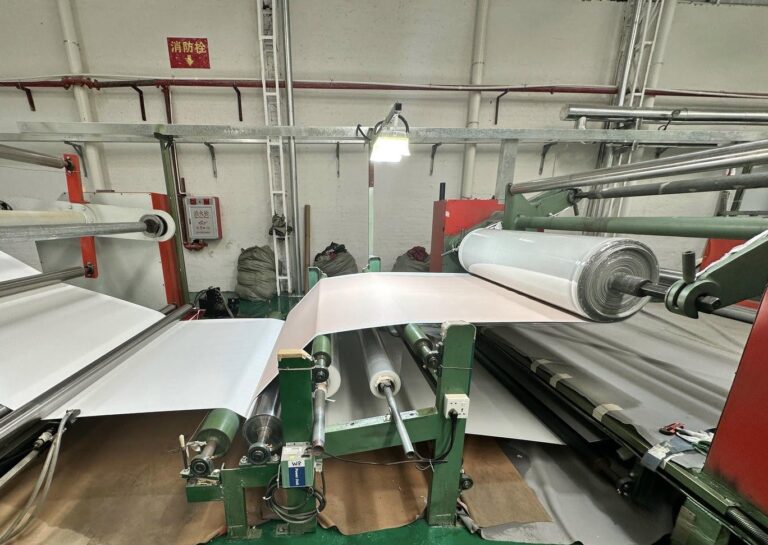
Physical testing laboratory — where grade labels meet actual performance data
Maintenance is the second hidden cost. Full-grain leather requires conditioning every 6-12 months to prevent drying and cracking. It absorbs water — a single spilled glass can leave a permanent watermark. It stains. It scratches. And in commercial environments where cleaning crews use harsh chemicals, full-grain degrades faster than synthetic alternatives. The total cost of ownership over 10 years — including maintenance products, professional cleaning, and eventual replacement of damaged panels — can double the initial material cost.
One of our furniture OEM clients specified full-grain leather for a premium sofa line. Within 18 months, warranty claims for water damage, ink staining, and cracking at stress points reached 12% of units sold. The hides met the full-grain grade specification. They just didn’t meet the real-world performance requirements of a household with children, pets, and coffee cups.
Why Batch Consistency Matters More Than Single-Hide Quality
For B2B procurement, consistency beats peak quality. A sofa manufacturer producing 500 units per month needs every unit to look identical — same color, same grain pattern, same hand-feel, same wear characteristics. Natural leather cannot deliver this. Every hide is a unique biological product. Color variation between hides from the same tannery, same dye batch, and same grade can still reach Delta E 3-5 — visible to the naked eye.
This is where the procurement conversation shifts from “what is the highest quality leather?” to “what is the highest quality material for my manufacturing process?” The answer depends on whether you’re building a single bespoke artisan piece or running a 500-unit-per-month production line. For the latter, batch-to-batch consistency is not a luxury — it’s a manufacturing requirement that natural leather fundamentally cannot meet.
Key insight: A tannery can produce a full-grain hide that tests at 50,000 Martindale cycles. Another tannery’s full-grain tests at 15,000. Both are “highest quality leather.” The spec sheet must specify the test standard and minimum value — not the grade label.
For brands evaluating alternatives, the silicone vs PU comparison provides additional context on how synthetic materials handle consistency requirements.
The Engineered Alternative: Highest Quality Leather Test Results
Silicone leather is an engineered material that delivers the visual and tactile qualities of full-grain leather with the batch consistency that manufacturing demands. The question isn’t whether silicone leather is “real leather” — it’s whether the performance data supports specifying it for applications where natural leather’s variability creates unacceptable manufacturing risk.
In our laboratory testing, TOPSUN silicone leather achieves 200,000+ Martindale abrasion cycles — matching or exceeding the best full-grain hides we’ve tested. UV resistance reaches 1,000+ hours with no fading or yellowing, compared to full-grain leather’s 200-400 hours before visible color shift. Temperature tolerance spans -40°C to 250°C. And every roll leaves the production line within Delta E ≤ 1.0 color accuracy — a standard no natural tannery can meet.

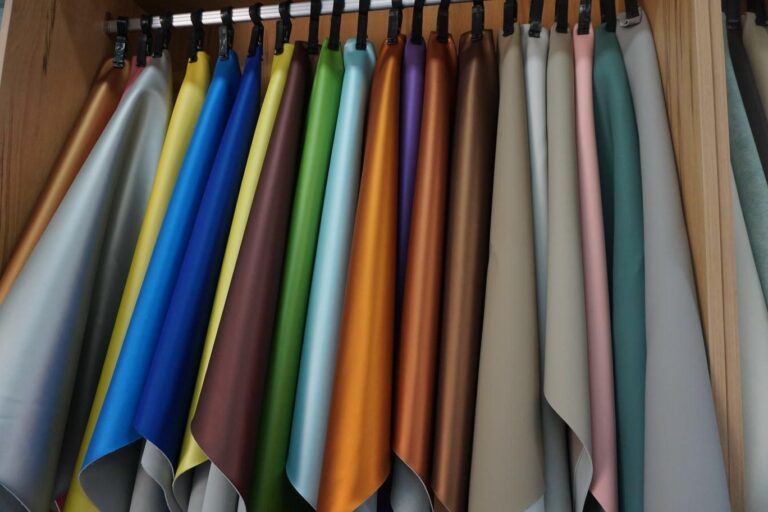
Swatch rack — every color meets Delta E ≤ 1.0 batch-to-batch accuracy
The table below compares five quality tiers using standardized test data rather than marketing labels. When procurement teams specify “highest quality leather,” these are the metrics that should define the specification.
| Quality Tier | Source | Martindale | UV Resistance | Batch Consistency | Maintenance | 10-Year TCO/ft² |
|---|---|---|---|---|---|---|
| Full-Grain (Premium) | Top hide, unsanded | 25,000-50,000 | 200-400 hrs | Delta E 3-5 | Condition every 6-12 mo | $40-100+ |
| Top-Grain | Sanded + finished | 15,000-25,000 | 150-300 hrs | Delta E 2-4 | Condition yearly | $25-50 |
| Corrected-Grain | Heavy sanded + embossed | 10,000-15,000 | 100-200 hrs | Delta E 2-3 | Low | $15-30 |
| Genuine/Bonded | Lower split or shredded | 3,000-8,000 | 50-100 hrs | Delta E 1-3 | None (peels) | $10-20 (frequent replacement) |
| Silicone Leather | Engineered polymer | 200,000+ | 1,000+ hrs | Delta E ≤ 1.0 | None (water-cleanable) | $20-35 (zero replacement) |
The data shows what the “highest quality leather” label cannot: a $50/ft² full-grain hide and a $20/ft² silicone roll can deliver comparable abrasion resistance, but only one offers consistent UV stability, zero maintenance, and predictable per-unit cost. For a most durable leather analysis that includes thermal and hydrolysis data, that guide covers additional failure modes.

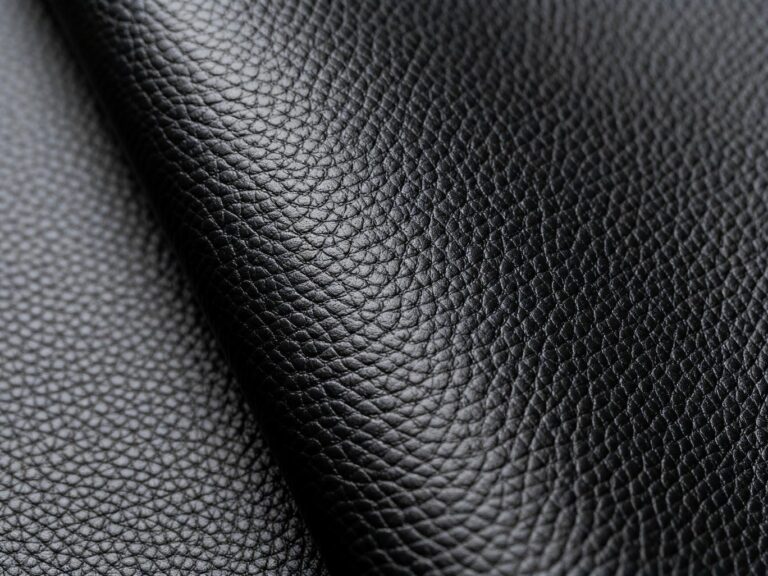
Genuine leather texture — natural beauty that comes with natural inconsistency
How to Specify: Replacing Grade Labels With Test Data
The procurement specification for “highest quality leather” should never rely on a grade label alone. A defensible spec sheet includes:
- Martindale abrasion minimum (e.g., ≥ 50,000 cycles for commercial, ≥ 200,000 for heavy-use) — tested per ISO 12947-2
- UV resistance hours (e.g., ≥ 500 hours no visible change) — tested per ASTM G154
- Color consistency tolerance (Delta E ≤ 2.0 for visible-match applications, ≤ 1.0 for precision)
- Hydrolysis resistance (pass/fail per ISO 1419 jungle test or equivalent)
- Maintenance requirements (conditioning frequency, water sensitivity, chemical compatibility)
- Batch yield percentage (usable material per hide/roll after cutting for pattern matching)
When you specify by test data instead of grade labels, the procurement conversation changes fundamentally. Suppliers who can’t provide test certificates drop out. Suppliers who can — whether they sell full-grain hides or engineered silicone rolls — compete on actual performance. That’s the specification that protects your manufacturing process and your warranty budget.
Frequently Asked Questions
What is the highest quality leather grade for commercial upholstery?
Full-grain leather is the highest natural leather grade, but for commercial upholstery where consistency, maintenance, and warranty exposure matter as much as aesthetics, the “highest quality” specification should be defined by test data — Martindale abrasion cycles, UV resistance hours, and batch consistency tolerance — not by the grade label alone. Silicone leather matches or exceeds full-grain performance in abrasion (200,000+ cycles), UV resistance (1,000+ hours), and consistency (Delta E ≤ 1.0), making it the highest-performing material for applications where natural leather’s variability creates unacceptable risk.
Can silicone leather match the look of full-grain leather?
Yes. TOPSUN offers 100+ embossed grain patterns — including cowhide, pigskin, and sheepskin textures — that replicate the visual and tactile qualities of full-grain leather. The key difference is that every roll delivers identical grain pattern, color, and hand-feel, while natural full-grain hides vary significantly even within the same tannery batch. For applications where the aesthetic of premium leather matters but manufacturing consistency is required, silicone grain-pattern leather provides the best of both worlds. See our full vs semi silicone leather guide for technical details.
The Real Specification for Highest Quality Leather
“Highest quality leather” is a question, not an answer. The answer depends on what your application demands — artisanal beauty or manufacturing consistency, 15-year patina development or zero-maintenance durability, water-sensitive luxury or waterproof performance. Full-grain leather remains the gold standard for aesthetic and tactile quality. But for B2B procurement where consistency, maintenance cost, and warranty exposure drive the specification, test data — not grade labels — should define what “highest quality” means for your production line.
Request Quality Comparison Samples
About TOPSUN
TOPSUN manufactures engineered silicone leather that delivers the visual and tactile quality of full-grain leather with 100% batch-to-batch consistency for furniture, automotive, and hospitality OEMs who cannot tolerate hide-to-hide quality variation in their production lines.
200,000+ Martindale cycles (ISO 12947-2) | Delta E ≤ 1.0 color accuracy | 100+ embossed grain patterns | 500,000+ m monthly capacity | Zero VOC emissions (ISO 16000-6) | 10+ year service life without maintenance