Walk into any leather supplier’s showroom or browse an online catalog, and you will be confronted with a bewildering array of options: different leather types, grades, finishes, textures, and price points. Top-grain, split, bonded, PU, PVC, microfiber, silicone, bicast, nubuck, suede… the list goes on. For someone new to leather sourcing — or even for experienced buyers evaluating new options — it can feel like trying to navigate a foreign language.
The truth is, there is no “best” leather type — there is only the best leather type for your specific application, budget, and performance requirements. A material that is perfect for a luxury handbag might be completely wrong for a boat seat. A material that works great for a hotel lobby sofa might fail in a hospital waiting room. The key is to understand what each type of leather is, how it is made, and where it performs best — so you can match the material to the job.

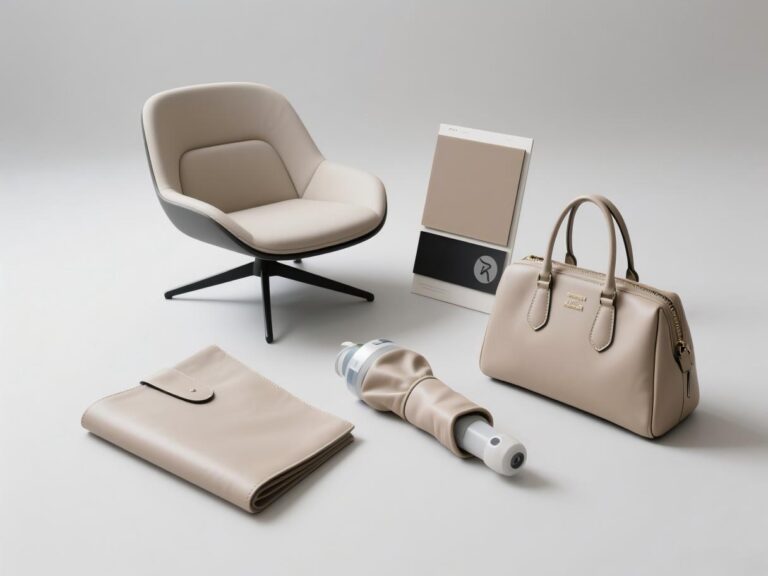
With so many different leather types and colors available, choosing the right one for your application can be overwhelming
Genuine Leather Types
Genuine leather is made from animal hide — almost always cowhide, but also sheep, goat, pig, and other animals. It is a natural material, which means every hide is slightly different and there are natural variations in texture, color, and quality. Genuine leather is graded based on which part of the hide it comes from and how it has been processed.
Full-grain leather is the highest quality grade. It uses the entire top layer of the hide, including the grain (the tight, dense outer surface), without any sanding or buffing to remove imperfections. Full-grain leather develops a patina over time — it darkens and develops character with use, which many people find desirable. It is also the strongest and most durable type of genuine leather. The downside is the high cost and the natural variations — every piece is unique, which can be a problem if you need consistent appearance across a large order.
Top-grain leather is the second-highest grade. The top layer of the hide is sanded or buffed to remove natural imperfections, then a finish coat is applied to create a uniform surface. Top-grain leather is more consistent in appearance than full-grain and more resistant to stains, but it does not develop a patina and is slightly less durable. It is the most common grade used in high-end furniture and accessories.
Split leather comes from the lower layers of the hide, below the top grain. It is weaker, more porous, and has a rougher texture than top-grain. Split leather is often used to make suede (the fuzzy, napped side) or is coated with a polymer layer to make it look like top-grain (this is called “corrected grain” or “bicast” leather). It is less expensive than top-grain but also less durable.
Bonded leather is the lowest grade of “genuine” leather, and whether it even counts as real leather is debatable. It is made from shredded leather scraps and fibers that are bonded together with polyurethane binders and then coated with a polymer surface layer. Bonded leather is cheap but has poor durability — the surface coating can peel and flake off with use. It is most commonly found in budget furniture and accessories.
Synthetic Leather Types
Synthetic leathers — also called faux leather, artificial leather, or leatherette — are man-made materials designed to look and feel like genuine leather. They are made by coating a fabric base (usually polyester or cotton) with a polymer surface layer. The type of polymer used determines the material’s properties.
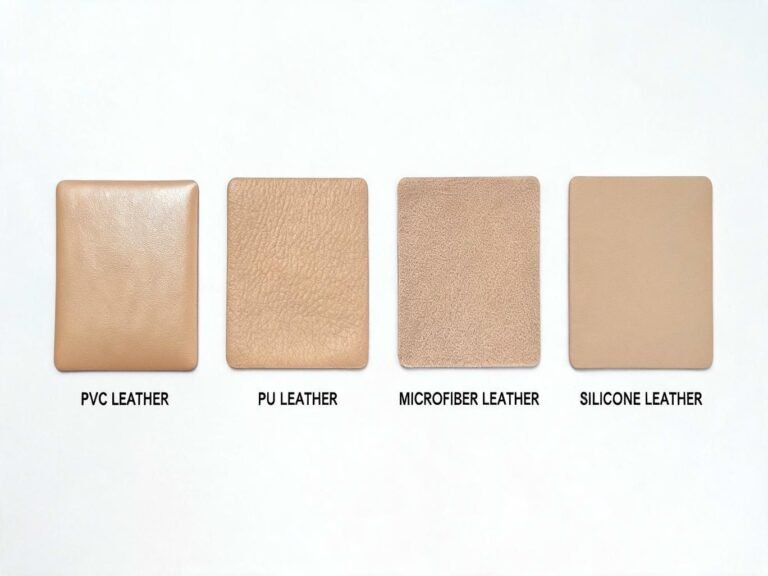
PU leather (polyurethane leather) is the most common type of synthetic leather today. It has a polyurethane coating applied to a fabric backing. PU leather is more breathable and more flexible than PVC, and it has a softer, more natural feel that comes closer to genuine leather. It is also more environmentally friendly than PVC (no chlorine, no phthalates in most formulations). However, PU is less durable than PVC — it can scratch more easily, and it is susceptible to UV degradation and hydrolysis (breakdown from moisture and heat). PU leather is widely used in furniture, automotive interiors, fashion, and accessories.
PVC leather (vinyl leather) is the original synthetic leather, made with a polyvinyl chloride coating. PVC is very durable, completely waterproof, and inexpensive — which is why it dominated the synthetic leather market for decades. However, it has a plastic-like feel, does not breathe at all, and contains phthalate plasticizers that are increasingly regulated due to health concerns. PVC is still used in marine applications, budget furniture, and commercial seating where water resistance and low cost are priorities.
Silicone leather is a newer type of synthetic leather made with a silicone coating instead of PU or PVC. Silicone leather combines the best properties of other synthetic leathers — it is extremely durable, completely waterproof, stain-resistant, UV-stable, and temperature-resistant — while being non-toxic, eco-friendly, and soft to the touch. It is also more expensive than PU or PVC. Silicone leather is growing rapidly in high-end applications like luxury furniture, automotive interiors, healthcare, marine, and outdoor products where performance and longevity matter. Learn more about silicone leather properties and advantages.
Microfiber leather is a premium synthetic leather made from ultra-fine polyester fibers that are tangled together to create a structure similar to real leather’s collagen fibers, then impregnated with a PU binder. Microfiber leather has a suede-like or nappa-like feel that is very close to genuine leather, and it is extremely durable and abrasion-resistant. It is also breathable and flexible. Microfiber leather is used in high-end automotive interiors, premium furniture, and luxury accessories — it is more expensive than PU but generally less expensive than top-grain genuine leather.
| Leather Type | Base Material | Durability | Cost | Best For |
|---|---|---|---|---|
| Full-Grain | Animal hide (top layer) | Excellent | Very high | Luxury goods, heritage products |
| Top-Grain | Animal hide (corrected) | Very good | High | Premium furniture, fashion |
| Split / Suede | Animal hide (lower layer) | Moderate | Medium | Casual fashion, accessories |
| Bonded | Leather fibers + PU binder | Poor | Low | Budget products, short lifespan |
| PU Leather | Polyurethane + fabric | Good | Low-medium | Furniture, fashion, auto |
| PVC Leather | Polyvinyl chloride + fabric | Good | Low | Marine, budget, commercial |
| Silicone Leather | Silicone + fabric | Outstanding | Medium-high | High-performance, healthcare, outdoor |
| Microfiber | Microfiber + PU resin | Excellent | High | Premium auto, luxury furniture |

Different leather types come in different textures, finishes, and colors — matching the material to your application is key
How to Choose the Right Leather Type
With so many options, how do you decide which leather type is right for your project? I recommend working through these six key factors in order. Be honest about your priorities — there is no perfect material, and every choice involves trade-offs.
1. Application and environment. Where will the material be used? Indoor or outdoor? Dry or humid? Climate-controlled or extreme temperatures? Marine, healthcare, and food service applications all have specific requirements. The environment is usually the single biggest factor in material selection, because it determines what performance properties you actually need.
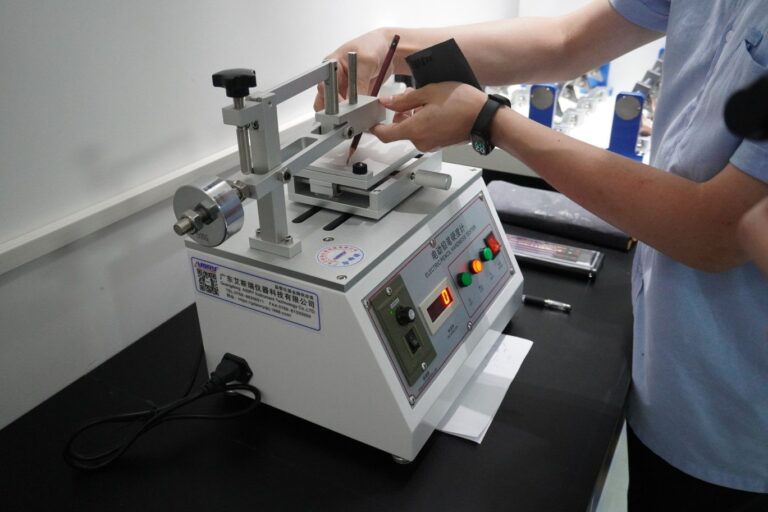
2. Durability requirements. How much use will the product get? A residential sofa that sees a few hours of use a day has very different requirements than a commercial sofa in a hotel lobby that is used 16 hours a day. Consider abrasion resistance (Martindale or Wyzenbeek test results), flex resistance, UV stability, and expected service life. Higher durability usually costs more upfront but saves money over the life of the product.
3. Budget. What can you afford to spend? Leather prices range from less than $5 per square meter for budget PVC to $50+ per square meter for top-grain genuine leather. But remember to consider total cost of ownership, not just upfront cost. A cheaper material that needs to be replaced in 2–3 years may end up costing more than a more expensive material that lasts 10+ years.
4. Aesthetic preferences. What look and feel are you going for? Do you want a natural, organic look with variations and character, or a clean, consistent, modern look? Do you prefer a soft, supple feel or a firm, structured feel? The aesthetic and tactile qualities of the material matter a lot for perceived quality and user satisfaction. For furniture specifically, see our guide to sofa leather selection.
5. Compliance and sustainability. Do you need to meet specific regulatory requirements (REACH, RoHS, California Prop 65, flame retardant standards)? Do you have sustainability targets to meet? These requirements can significantly narrow down your options. Some leather types — particularly PVC and certain genuine leather sources — are problematic from a regulatory or sustainability perspective.
6. Maintenance expectations. How much maintenance are your customers willing to do? Genuine leather needs regular conditioning. PU leather needs gentle cleaning and sun protection. Silicone leather basically just needs an occasional wipe-down. Maintenance requirements directly affect customer satisfaction — a beautiful material that is high-maintenance will disappoint customers who expected something easy to care for.

Automotive interiors are one of the most demanding applications — requiring durability, temperature resistance, and low VOC emissions
Recommendations by Application
To make this more practical, here are my go-to recommendations for the most common application categories — based on performance requirements, cost-effectiveness, and real-world feedback.
| Application | Top Pick | Budget Alternative | Key Requirement |
|---|---|---|---|
| Residential Furniture | PU Leather / Top-Grain | Bonded Leather | Comfort, appearance |
| Commercial Furniture | Silicone Leather | PU Leather | Durability, easy cleaning |
| Automotive | Microfiber / Silicone | PU Leather | Temperature range, UV resistance |
| Marine / Outdoor | Silicone Leather | PVC Leather | Waterproof, UV-resistant |
| Healthcare | Silicone Leather | PU (antibacterial) | Sanitary, disinfectable |
| Fashion / Bags | Top-Grain / Microfiber | PU Leather | Feel, appearance, flexibility |
| Hospitality | Silicone Leather | PU Leather | Stain resistance, cleanability |

Classic leather colors and textures — always order physical samples before making a final decision
The Trend: Performance Synthetics on the Rise
If there is one trend I see clearly in the leather market right now, it is the steady growth of performance synthetic leathers — and silicone leather in particular. The reasons are straightforward: synthetic materials keep getting better, regulations keep getting tighter, and customers keep demanding more performance and lower maintenance.
Genuine leather will always have its place in the luxury market — there is no substitute for the feel, smell, and patina of real leather, and customers who value those qualities will pay a premium for them. But for most commercial and industrial applications, the question is no longer “genuine or synthetic” — it is “which synthetic and why?”
PU leather has already replaced PVC in most mainstream applications, driven by better feel and growing phthalate regulations. Now silicone leather is starting to take share from PU in high-performance applications where durability, cleanability, and temperature resistance matter most. The transition is not happening overnight — silicone is still more expensive — but the total cost of ownership math is compelling, and as production volumes increase, the price gap continues to narrow.
My advice to buyers: do not just buy what you have always bought. Take the time to evaluate new materials, get samples, and run your own tests. The material that was the best choice five years ago might not be the best choice today. And the material that seems too expensive today might save you money in the long run.
Compare Silicone vs. PU Leather
Frequently Asked Questions
Which leather type is the most durable?
If you measure durability as total service life under real-world conditions, silicone leather is currently the most durable option available. It resists abrasion, UV radiation, temperature extremes, stains, and chemicals better than any other leather type — genuine or synthetic. Full-grain genuine leather is also very durable and can last for decades with proper care and maintenance, but it requires regular conditioning and is susceptible to water damage, stains, and UV fading. For low-maintenance, set-it-and-forget-it durability, silicone leather is the clear winner. For a traditional leather look that ages beautifully with care, full-grain genuine leather is hard to beat.
How can you tell different leather types apart?
Telling different leather types apart takes some practice, but there are a few clues to look for. Genuine leather has irregular grain patterns and natural imperfections — if every inch looks exactly the same, it is probably synthetic. Check the edges or back of the material: genuine leather has a fibrous, suede-like backing; synthetic leather has a fabric backing. Smell can also be a clue — genuine leather has a distinctive organic smell, while synthetics have a chemical or plastic smell (though high-quality synthetics may have very little smell). The most reliable method is to check the product label or ask the supplier for material specifications — reputable suppliers should be transparent about what their products are made of. For a deeper dive into synthetic leather types, see our synthetic leather comparison guide.
The Right Leather Is the One That Fits Your Needs
At the end of the day, there is no universally “best” type of leather — there is only the best leather for your specific project. The material that is perfect for one application might be completely wrong for another. The key is to understand the trade-offs, prioritize what matters most for your use case, and make an informed decision.
Start with your application and environment. Be honest about your durability needs and your budget. Consider the total cost of ownership, not just the upfront price. And always, always order physical samples before you commit — photos and descriptions can only tell you so much. The way a material looks, feels, and performs in person is ultimately what matters.
Get Expert Material Recommendations
About TOPSUN
TOPSUN is a silicone leather manufacturer offering high-performance leather alternatives for furniture, automotive, healthcare, marine, and fashion applications — with 100+ stock textures and custom formulation capabilities.
100+ stock textures • 200+ color options • 200,000+ Martindale cycles • -40°C to 250°C range • REACH and RoHS compliant • 60,000+ m² factory