As a luxury accessory product developer who has managed material specification for over 200 designer small leather goods programs — wallets, cardholders, phone cases, key fobs, small pouches — across European and American fashion houses, I can tell you that “designer” is not a marketing term. It’s a set of five measurable specification parameters that separate a €4 key fob from a €400 designer key fob, even when both use the same square centimeter of material. Most B2B buyers specify small leather goods the same way they specify upholstery — by thickness, color, and quantity — and then wonder why their product doesn’t feel designer. The difference is in the parameters they didn’t specify.
What “Designer” Actually Means in Small Leather Goods
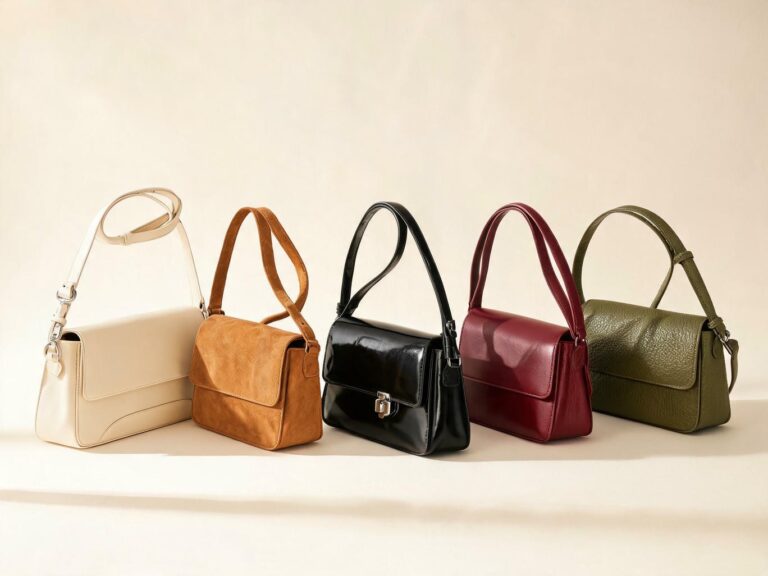
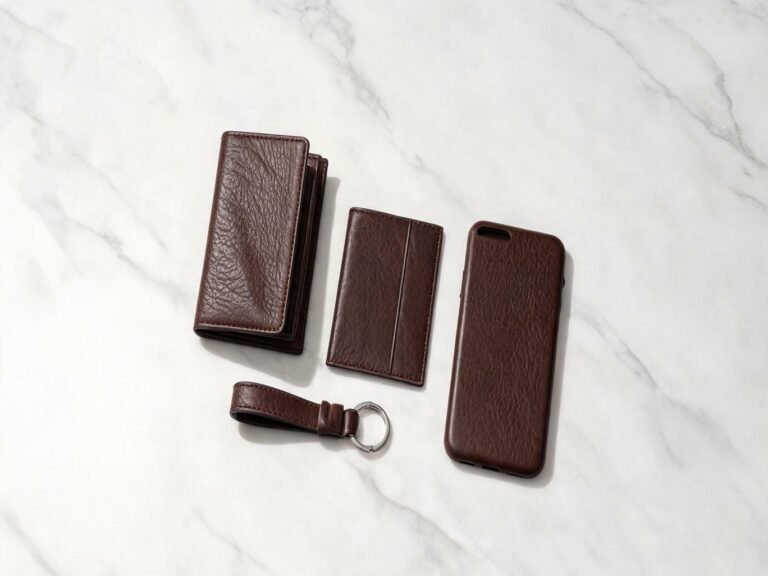
In the B2B leather goods industry, “designer small leather goods” refers to items under approximately 15 × 10 cm — wallets, cardholders, coin purses, phone cases, key fobs, eyewear cases, and small pouches — where the material specification must meet luxury-grade standards rather than utility-grade standards. The distinction matters because small format changes everything: defects that disappear into a 2-meter sofa panel become glaring on a 9-centimeter wallet. Edge-to-surface ratio is dramatically higher, making edge finishing a primary — not secondary — specification. And because these items live in the hand, tactile quality is constant, not occasional.

Bespoke customization — designer small leather goods require material that maintains quality at small scale, where every millimeter of surface and edge is visible to the consumer.
Luxury brands — Gucci, Prada, Hermès — typically specify top-grain calfskin or goatskin at 0.8-1.2mm thickness for wallet exteriors, using fabric or canvas linings rather than leather interiors to maintain a slim profile. The tech pack for a designer wallet specifies not just the material type, but the tanning method (chrome or vegetable), the finish (aniline, semi-aniline, or pigmented), the color match tolerance (Pantone reference with Delta E limit), the embossed texture pattern, and the edge finishing method. A standard B2B purchase order that lists only “genuine leather, 1.0mm, black” is missing every parameter that makes the product designer-grade.
The 5 Parameters That Define Designer-Grade Small Leather Goods
After auditing hundreds of small leather goods programs, I’ve identified five specification parameters that consistently separate designer-grade products from standard-grade. Each parameter is measurable, specifiable in a tech pack, and verifiable through physical testing. Together, they define what “designer” means in material terms.
| Parameter | Standard Grade | Designer Grade | How to Specify | Cost Impact |
|---|---|---|---|---|
| 1. Thinness Tolerance | 1.2-1.5mm; ±0.2mm variation across roll | 0.8-1.2mm; ±0.05mm tolerance for consistent panel weight | Specify nominal thickness + tolerance band in tech pack; verify with ISO 2286-2 caliper measurement | +15-25% material cost (tighter tolerance = lower yield) |
| 2. Edge Finishing | Raw edge or simple burnish; visible fiber fraying | Painted edge (multi-layer polymer resin, sanded between coats) or precision-skived fold | Specify edge type (painted/burnished/folded), paint color match, layer count (3-5 minimum for designer) | +30-50% labor cost (edge finishing is 40% of small goods labor) |
| 3. Color Matching | Visual match; Delta E ≤ 3.0 acceptable | Pantone/RAL reference; Delta E ≤ 1.0; batch-to-batch consistency verified | Specify Pantone code, Delta E tolerance, and acceptable batch variation in tech pack | +10-20% material cost (color-accurate production reduces yield) |
| 4. Surface Consistency | Natural variation acceptable; minor scars, insect bites, neck wrinkles | Zero visible defects in 15×10cm panel area; uniform grain across entire surface | Specify defect tolerance per panel area; require A-grade hide selection or synthetic consistency | +40-60% for genuine leather (yield drops to 30-40%); synthetic achieves 95%+ yield |
| 5. Tactile Hand-Feel | Functional; firmness and drape not specified | Specified softness (Nappa/saffiano/cross-grain finish); temperature response; drape angle | Specify finish type, softness range, and provide physical reference swatch for approval | +20-35% (specialized finishing processes and calibration) |

Scratch resistance testing — designer small leather goods face constant friction in pockets and bags. Surface consistency must survive daily wear without visible degradation.
Why Specifying Small Leather Goods Is Different from Upholstery
Most B2B material specification guides focus on large-format applications — furniture, automotive, marine — where the material covers square meters and defects blend into the overall surface. Small leather goods invert this logic. A wallet exterior panel is typically 9 × 10 cm. At that scale, a single insect bite, neck wrinkle, or color variation that would be invisible on a sofa becomes the first thing the consumer sees.
Three structural differences make small leather goods specification unique:
First, edge-to-surface ratio. A sofa cushion has perhaps 4 meters of edge per square meter of surface. A wallet has approximately 38 cm of edge per 90 cm² of surface — nearly 10× the edge ratio. Edge finishing, which is a secondary concern in upholstery, becomes a primary specification parameter. A poorly finished edge on a wallet is visible every time the consumer opens it; a poorly finished edge on a sofa is rarely seen.
Second, defect tolerance. Genuine leather is a natural material with inherent variation. For large-format applications, this variation adds character. For small goods, it creates inconsistency — two wallets from the same hide can look like they came from different materials. This is why luxury brands either use A-grade calf hides (at 3-4× the cost of standard cowhide) or turn to synthetic materials that offer 95%+ yield consistency.
Third, tactile intimacy. A sofa is touched occasionally. A wallet is held constantly. Surface temperature, friction coefficient, and moisture response are felt with every interaction. Materials that feel “plastic” or “sticky” on a sofa are tolerable; on a wallet held in the hand for hours, they’re disqualifying. This is why hand-feel — a parameter most spec sheets don’t even mention — is the single most important factor in consumer perception of designer quality.
Surface finishes — designer small leather goods require material that maintains tactile quality and visual consistency at small scale, where every millimeter is visible.
How TOPSUN Engineers Silicone Leather for Designer Small Goods
TOPSUN’s silicone leather addresses the five designer parameters through material engineering rather than hide selection. The Ultra Thin Collection produces silicone leather at 0.23-0.8mm — thinner than traditional calf hide, with ±0.05mm tolerance maintained through precision coating control. The Designer Collection offers exclusive embossed patterns, metallic finishes, and pearlescent finishes — with custom embossing rollers produced in 7-10 days for brand-specific textures.

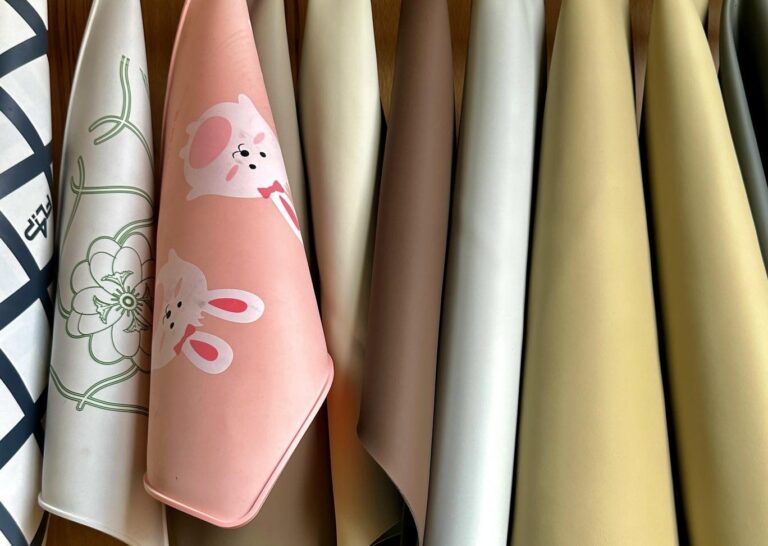
Color range — TOPSUN offers unlimited Pantone and RAL color matching with Delta E ≤ 1.0 accuracy, achieving designer-grade color consistency that natural hide sourcing cannot guarantee.
For designer small leather goods, silicone leather offers a structural advantage that genuine leather cannot match: zero-defect surface consistency at 95%+ yield. Because silicone is an engineered polymer — not a natural hide — every panel has identical grain, color, and surface quality. Color matching achieves Delta E ≤ 1.0 accuracy with batch-to-batch consistency. Surface finishes include 100+ texture options (cowhide, pigskin, sheepskin patterns) with metallic and pearlescent finishes for designer collections. The material’s tactile quality — softness, temperature response, and drape — is engineered into the polymer formulation, not dependent on hide origin or tanning variability.
For brands that require documentation, TOPSUN provides: Pantone-matched color samples, A4 swatches shipped free worldwide via DHL/FedEx, custom embossing development in 7-10 days, and technical data sheets specifying Martindale abrasion resistance of ≥ 200,000 cycles, UV stability of 1,000+ hours, and temperature range of -40°C to 250°C. The material is certified ISO 10993-5 biocompatibility (safe for direct skin contact), REACH compliant, OEKO-TEX Standard 100, and EN 71 toy-safe — certifications that cover the full range of small leather goods from luxury wallets to children’s accessories.

Fashion application — silicone leather’s engineered consistency makes it ideal for designer small goods where natural hide variation would create unacceptable batch-to-batch differences.
Frequently Asked Questions
What thickness is best for designer small leather goods?
For wallet exteriors and cardholders, 0.8-1.2mm is the designer standard — thin enough for a slim profile but thick enough to maintain structural integrity. Luxury brands typically use top-grain calfskin at 2-3 oz (0.8-1.2mm) for exteriors and fabric linings for interiors to avoid bulk. For phone cases, 0.5-0.8mm is preferred. For key fobs and small pouches, 1.0-1.5mm provides better structure. The tolerance should be specified at ±0.05mm for designer grade, verified per ISO 2286-2.
What edge finishing method do luxury brands use for small leather goods?
Luxury brands primarily use painted edge finishing — applying 3-5 layers of polymer-based edge paint, with sanding between each layer, to create a smooth, glossy edge. This method is used by Hermès, Celine, and most European fashion houses. Alternatively, precision-skived folded edges (where the material edge is thinned to 0.1-0.2mm and folded inward) provide a clean finish without paint. Raw edges with simple burnishing are standard-grade, not designer-grade.
Can synthetic leather achieve designer-grade quality for small goods?
Yes — and in some parameters, synthetic leather outperforms genuine hide. Silicone leather achieves 95%+ defect-free yield (vs 30-40% for A-grade calf hide), Delta E ≤ 1.0 color consistency across batches, and engineered tactile quality that doesn’t vary with hide origin. For designer small leather goods where consistency, color matching, and surface perfection are critical, synthetic materials eliminate the natural variation that makes genuine hide sourcing expensive and unpredictable at small scale.