An automotive trim supplier we consulted was rejecting 12% of every leather cut to order shipment — not because the material was wrong, but because the cutting tolerance drifted from ±0.1mm to ±0.3mm across a 500-meter run. That 0.2mm shift turned perfectly good leather into scrap on the assembly line, where robotic stitching stations expected parts within a 0.15mm window. The root cause wasn’t the leather. It was a dull die on clicker press #3 that no one had flagged for maintenance. This is the kind of detail that separates profitable leather cut to order programs from money-losing ones — and most buyers never ask about it until parts start failing at their end.
Request Custom Cut Leather Samples

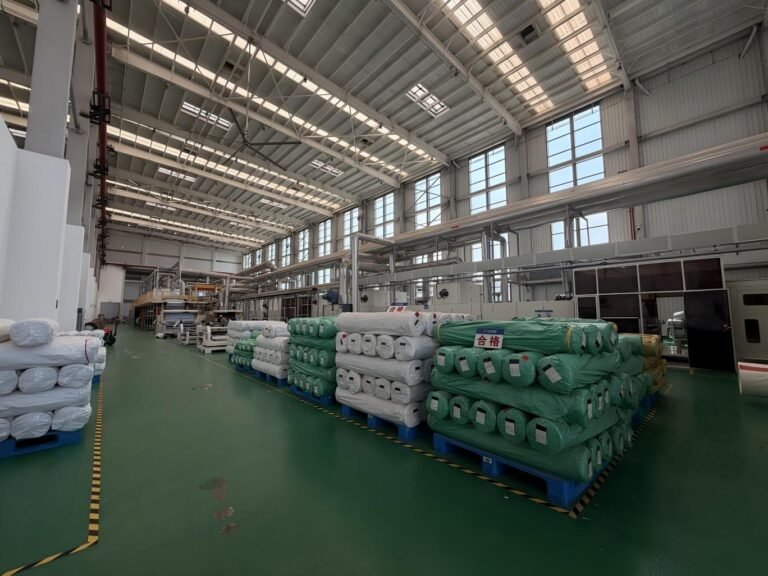
Precision slitting and rewinding line — where leather cut to order tolerance is set and verified before shipment
Leather Cut to Order: Three Cutting Methods Compared
When you request leather cut to order, the supplier chooses from three primary cutting methods. Each has a tolerance range, a volume threshold, and a cost structure that directly affects your part quality and unit economics.
| Parameter | Die Cutting (Clicker Press) | CNC Knife Cutting | Laser Cutting |
|---|---|---|---|
| Tolerance | ±0.2mm (sharp die) ±0.5mm (worn die) | ±0.1mm | ±0.05–0.15mm |
| Best Volume Range | 5,000+ identical parts | 100–10,000 parts, mixed shapes | Prototyping, intricate patterns |
| Die/Tooling Life | 500,000 cuts per steel rule die | No die — software-driven | No die — beam-driven |
| Material Yield (Synthetic) | 75–80% (manual nesting) | 85–92% (auto nesting) | 80–88% (software nesting) |
| Edge Quality | Clean, slight compression at edges | Clean, no compression, no heat damage | Potential scorching on heat-sensitive materials |
| Setup Time | 2–4 hours per new die | 15–30 minutes (CAD upload) | 15–30 minutes (CAD upload) |
The table tells you why most B2B leather cut to order programs default to die cutting for high volume and CNC for mid-volume or mixed-shape orders. But the tolerance column is where buyers get blindsided. A steel rule die starts at ±0.2mm when freshly sharpened, but after 50,000 cuts the edge deflects, tolerance drifts to ±0.4mm, and nobody tells you. If your assembly process requires ±0.15mm — robotic stitching, adhesive bonding jigs, ultrasonic welding — you need to specify die maintenance frequency in your purchase order, not just the tolerance spec.

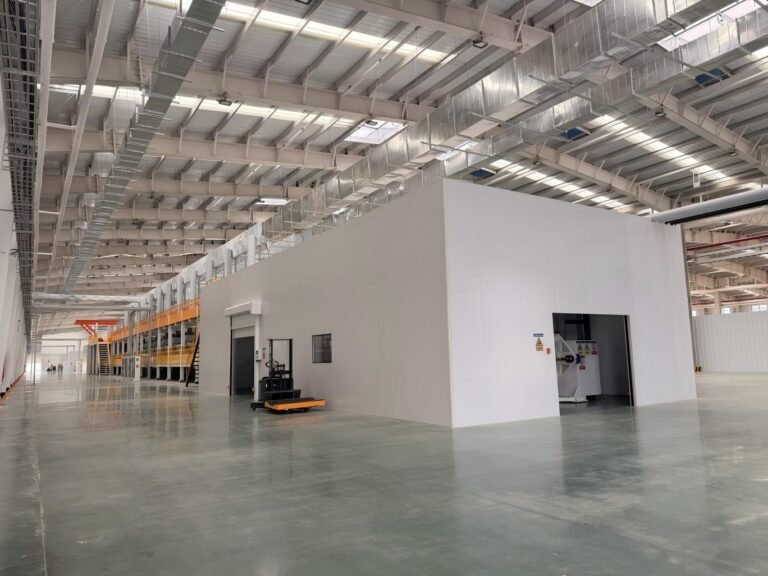
Cutting line with release film roller — material tension control directly affects cut-to-order dimensional accuracy
5 Specs That Define a Leather Cut to Order Program
When you specify leather cut to order, you’re not just ordering material — you’re ordering a manufacturing process. These five specifications determine whether your parts arrive ready for assembly or arrive as scrap.
1. Dimensional Tolerance Window
State the tolerance explicitly: ±0.1mm for precision applications (automotive trim, electronics covers), ±0.2mm for standard furniture and bags. Don’t accept “industry standard tolerance” on a quote sheet — that phrase means whatever the supplier decides on the day of cutting. Require a dimensional inspection report with the first article and every batch, measured with calipers calibrated to ISO 17025 standards. TOPSUN provides cut-to-order silicone leather with CNC tolerance held at ±0.1mm across the full 1,350mm roll width, verified by in-line laser measurement.
2. Nesting Strategy and Material Yield
Nesting — how parts are arranged on the leather sheet to minimize waste — can swing your material cost by 15–25%. Manual nesting on a die cutting table typically yields 75–80% material utilization for synthetic leather. CNC auto-nesting software analyzes the part geometry and rolls material dynamically, achieving 85–92% yield. On a 500-meter order at $12/meter, moving from 78% to 88% yield saves 50 meters of leather — $600 in material alone, before considering the reduced scrap disposal cost. Ask your supplier what nesting software they use and request a yield projection before the order is placed.
3. Edge Finish Specification
The cut edge of leather isn’t just a boundary — it’s a functional surface. For applications where the edge is visible (wallet edges, card slots, visible trim), specify “sealed edge, no fraying.” Silicone leather cuts clean with no fiber exposure because the silicone coating is continuous through the material — unlike PU leather, where cutting exposes the fabric backing and requires edge paint or folding. For invisible edges (hidden under stitching or hardware), “clean cut, no specification” is acceptable and costs less.
4. Roll Width and Cut Direction
Silicone leather is available in 1,350–1,800mm widths. The cut direction — parallel or perpendicular to the roll — affects material behavior after cutting. Parts cut parallel to the roll grain have consistent flexibility; parts cut across the grain may curl or flex differently. For multi-part assemblies (like a car seat with bolsters, center panels, and side trim), specify the cut direction for each part to ensure consistent assembly behavior. This is a specification that experienced suppliers handle automatically, but many cut-to-order services simply cut wherever nesting is most efficient without considering directional stability.
5. Batch-to-Batch Consistency Protocol
Your first 500 parts are perfect. The second 500 are 2mm wider. This happens when the supplier switches dies, recalibrates the CNC, or changes material batches without a documented handoff. Require a first-article inspection (FAI) for every batch, not just the first one. The FAI should measure 10 critical dimensions per part type and compare against the original CAD file. TOPSUN’s cut-to-order process includes FAI for every batch with CMM (coordinate measuring machine) verification, and all measurement data is archived for 24 months for traceability.
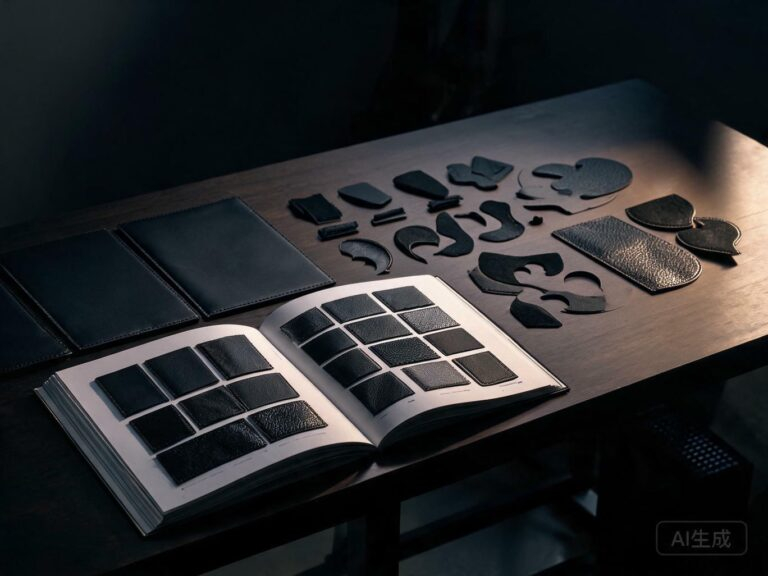
Substrate bonding and precision cutting — silicone leather maintains clean edges without fraying after cutting
Leather Cut to Order: Material Selection Impact on Cutting Performance
The material you choose for leather cut to order doesn’t just affect the finished product — it fundamentally changes how the material behaves on the cutting table. Here’s what to expect across the three most common synthetic leather types:
| Cutting Behavior | Silicone Leather | PU Leather | PVC Leather |
|---|---|---|---|
| Edge After Cut | Sealed, no fraying, no backing exposed | Fabric backing exposed, requires edge treatment | Backing visible, may delaminate at cut edge |
| Blade Wear | Low — silicone is soft on blades | Moderate — adhesive layers accumulate | High — plasticizers coat and dull blades |
| Cutting Speed | Standard — no special speed reduction needed | 10–15% slower to prevent tearing | 20% slower, blade temperature monitored |
| Thermal Cutting (Laser) | Clean edge, no discoloration, no toxic fume | Edge browning, solvent fume emission | Heavy smoke, HCl gas, edge charring |
| Post-Cut Dimensional Stability | Stable — no relaxation or shrinkage | May shrink 0.5–1% as material relaxes | May shrink 1–2%, especially at elevated temperature |
The dimensional stability row is why silicone leather is increasingly specified for leather cut to order programs in automotive and electronics — the part you measure today is the same part you’ll measure next week. PU and PVC both relax after cutting, which means the tolerance you specify on the cutting table isn’t the tolerance you get at assembly. For tight-tolerance programs, either specify a 24-hour relaxation period before final inspection, or choose a material that doesn’t move.
About TOPSUN: Cut to Order Capabilities
TOPSUN operates 10+ automated cutting and coating lines across 60,000+ m² of manufacturing space in Dongguan, Yichang, and Xiangyang. Our cut-to-order service supports CNC knife cutting at ±0.1mm tolerance and die cutting for high-volume programs. We hold ISO 10993-5 biocompatibility certification, REACH compliance, and FDA 21 CFR 177.2600 food-contact compliance — meaning your cut parts carry certifications valid across automotive, medical, and food-contact applications without additional testing. Monthly capacity exceeds 500,000 meters, with lead times of 7–15 days and free A4 swatches shipped worldwide via DHL/FedEx. Tour our production facility or request cut samples to verify tolerance and edge quality before placing your order.
Leather Cut to Order: Cost Drivers You Control
The per-part cost of leather cut to order isn’t just material price divided by parts per sheet. Here are the levers that actually move your unit cost — and most buyers only pull the first one.
- Material price per meter — Negotiate, but this is the most visible and least controllable lever. Suppliers have a floor.
- Nesting yield — Each 5% yield improvement on a 500m order saves 25m of material. This is where experienced suppliers earn their margin.
- Part count per nesting sheet — Redesign parts to share sheet space. A wallet panel and a card slot cut from the same sheet reduce total material by 12%.
- Die amortization — A $400 steel rule die amortized across 50,000 parts adds $0.008 per part. Across 5,000 parts, it’s $0.08. Know your volume before choosing die vs CNC.
- Reject rate — A 5% reject rate at your assembly line means you’re buying 5% more leather than you ship. Tighter tolerance specs and better edge quality reduce this to under 1%.
- Lead time flexibility — Rush orders (under 7 days) carry 15–25% expedite fees. Batch your orders to hit standard 7–15 day lead times.
The buyers who achieve the lowest per-part cost aren’t the ones who negotiate the cheapest material — they’re the ones who optimize the entire cut-to-order process from nesting to reject rate. A $1/meter premium on material that yields 10% more usable parts and cuts reject rate from 5% to 1% delivers a lower total cost than the cheapest material with poor nesting and high waste.
Leather Cut to Order: Frequently Asked Questions
What is the minimum order quantity for leather cut to order?
TOPSUN’s MOQ for custom-cut silicone leather is 500 meters. For CNC-cut parts without custom die tooling, the minimum is typically 100 pieces per part type. Die-cut parts require a minimum of 5,000 pieces to amortize the $300–$500 tooling cost.
How accurate is CNC leather cutting?
CNC oscillating knife cutting achieves ±0.1mm positioning accuracy across the full working area. Repeatability — the ability to produce 100 identical parts — is ±0.05mm when material tension is controlled. Laser cutting achieves ±0.05mm but risks thermal damage on some materials.
Does silicone leather require edge sealing after cutting?
No. Silicone leather has a continuous coating through the full material thickness, so cutting exposes no fabric backing and requires no edge paint, folding, or sealing. This reduces post-cut processing time by 100% compared to PU leather, which requires edge treatment for any visible edge.
Can I get a dimensional inspection report with my cut-to-order shipment?
Yes. TOPSUN provides a first-article inspection report with CMM data for every batch. The report includes 10 critical dimensions per part type, measured against your CAD file. Additional in-process inspection checkpoints are available for automotive and medical programs requiring PPAP documentation.
The Bottom Line on Leather Cut to Order
Leather cut to order is a manufacturing process, not a material purchase. The tolerance you specify, the cutting method your supplier selects, the nesting strategy they employ, and the material stability after cutting all determine whether your parts arrive assembly-ready or arrive as expensive scrap. Specify tolerance in writing — don’t accept “industry standard.” Require a nesting yield projection before the order is placed. Choose a material that holds dimensions after cutting, not one that shrinks 2% overnight. And require batch-level FAI, because the supplier who only inspects the first batch is the supplier whose quality drifts without anyone knowing. Get these specifications right, and leather cut to order becomes a predictable, cost-controlled process. Get them wrong, and you’ll find out at your assembly line — when it’s too late.
Ready to specify your leather cut to order program?
TOPSUN provides CNC-cut and die-cut silicone leather with ±0.1mm tolerance, CMM-verified FAI for every batch, and free A4 samples shipped worldwide. Contact info@topsunsiliconeleather.com or WhatsApp +44 744 461 7933.
Related: Die Cut Leather Tolerance Guide | Leather Sample Ordering Guide | Custom Texture Design | Technical Data Sheet