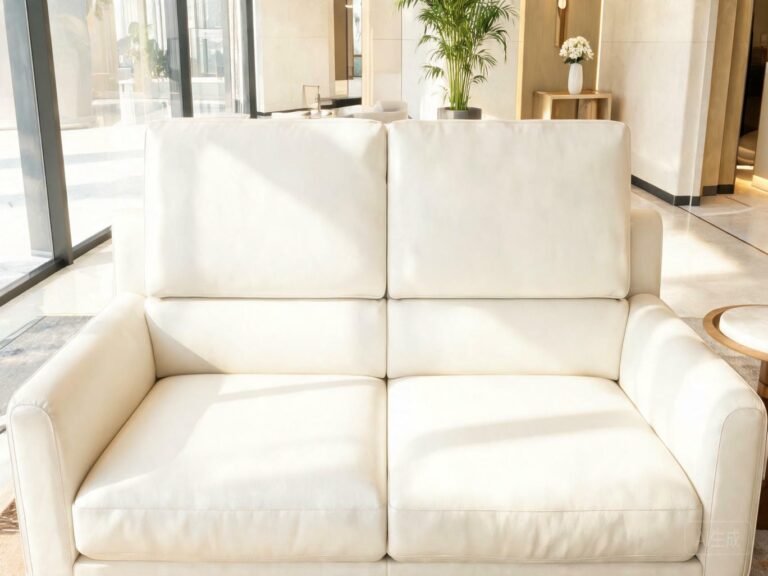
You specify a beautiful cream faux leather sofa for a hotel lobby or residential project. The samples arrive, the color is perfect — soft, warm, elegant. You sign off. Eighteen months later, the armrests and cushion tops have yellowed to a dingy, uneven beige that clashes with the cream drapes and off-white walls you so carefully coordinated.
This is the dirty secret of light-colored synthetic leather: most cream and white PU formulations simply can’t hold their color long-term. UV exposure, body oils, cleaning chemicals, and even the manufacturing process itself cause yellowing that’s irreversible. For designers and specifiers, this means callbacks, reupholstery costs, and client disappointment — all for a problem that should have been caught at the material selection stage.
What Causes Cream Faux Leather to Yellow?
The yellowing effect in light-colored faux leather isn’t just one problem — it’s usually a combination of three chemical processes happening simultaneously. Understanding which one is attacking your upholstery is the first step toward preventing it.
1. UV-induced photo-oxidation. Polyurethane — the coating used in most PU faux leather — breaks down when exposed to ultraviolet radiation from sunlight or even strong indoor lighting. The polymer chains shorten and rearrange, creating chromophores that absorb blue light and make the material appear yellow. This is most visible on cream and white shades because the base color is light enough to show the shift. Darker leathers experience the same degradation, but it’s less visible.
2. Migration of additives. Many PU and PVC formulations use plasticizers, stabilizers, and processing aids that can migrate to the surface over time. On cream-colored materials, these additives can leave a yellowish or brownish film that’s difficult to clean off. This happens even without sunlight — it’s purely a material chemistry issue.

Cream and neutral leather swatches — color consistency across production batches is critical for design projects
3. Heat and humidity aging. High temperatures accelerate the chemical breakdown of PU coatings. In warm climates or near windows that get direct afternoon sun, the combined effect of heat and UV light can cut the color-stable lifespan of cream faux leather in half. Humidity adds another dimension — moisture can cause hydrolysis of the PU layer, which also contributes to discoloration.
Designer tip: Always request accelerated weathering test data (ISO 105-B06 light fastness) for cream and white faux leather before specifying. Grade 4–5 means minimal fading; Grade 3 or below will show visible yellowing within 1–2 years in most indoor environments.
Cream Faux Leather Options Compared: PU, PVC, and Silicone
Not all cream faux leather is created equal. The base polymer — PU, PVC, or silicone — determines not just how the material feels, but how long the cream color stays true. Here’s how the three main types stack up for light-colored upholstery:
| Performance Factor | Cream PU Leather | Cream PVC Vinyl | Cream Silicone Leather |
|---|---|---|---|
| Color Stability (Indoor) | 1–2 years before yellowing | 2–3 years, slight amber shift | 10+ years, Delta E ≤ 1.0 |
| UV Resistance | Poor — yellows fast | Moderate | Excellent — 1,000+ hours |
| Stain Resistance | Moderate — absorbs oils | Good — wipe clean | Excellent — non-porous |
| Hand / Feel | Soft, leather-like | Stiffer, plastic feel | Supple, premium hand |
| Additive Migration | Common — causes yellow film | Plasticizer migration over time | None — inert material |
| Cleaning Chemicals | Damaged by alcohol/bleach | Limited chemical resistance | Bleach and alcohol safe |
The key insight here is that silicone leather’s molecular structure is fundamentally different from PU and PVC. Silicone is an inorganic polymer (silicon-oxygen backbone) that doesn’t form yellowing chromophores under UV exposure the way organic carbon-based polymers do. This is why cream silicone leather maintains its color accuracy — measured as Delta E ≤ 1.0 — for 10+ years, even in high-light environments.

Color fastness testing machine — verifying cream shade stability under accelerated light exposure
Why Cream Color Is the Hardest Shade to Get Right
Cream isn’t just one color — it’s a spectrum of warm off-whites, each with different undertones. There’s ivory cream with yellow undertones, bone cream with gray undertones, butter cream with golden undertones, and greige cream with brown-gray undertones. Getting the exact shade your design calls for requires precise color matching — and maintaining that shade over time is even harder.
For B2B buyers specifying cream upholstery for furniture projects, the real challenges show up in three places:
- Batch-to-batch consistency. Slight color differences between production lots are considered normal in the faux leather industry. But on cream-colored pieces, even a tiny Delta E shift is visible to the naked eye. If you’re upholstering a 200-seat restaurant and the chairs arrive in three slightly different cream shades, you’ve got a problem.
- Body oil and sunscreen staining. Cream shows every mark. Headrests, armrests, and seat cushions absorb body oils and sunscreen lotions, leaving dark, oily stains that are hard or impossible to remove from porous PU leather. This is a particular issue in hospitality, healthcare, and fitness settings.
- Cleaning product damage. The stronger cleaners you need to keep cream upholstery looking fresh are exactly the ones that damage PU coatings. Alcohol-based disinfectants, bleach solutions, and citrus cleaners all accelerate yellowing and surface degradation on PU cream faux leather.
Explore Furniture Applications

Cream-colored furniture upholstery creates a warm, airy atmosphere — but maintaining the shade long-term requires the right material
See how silicone leather sofas handle stains, UV exposure, and daily wear while maintaining color consistency
Specifying Cream Faux Leather: 5 Things to Verify Before You Buy
If cream or off-white faux leather is on your specification sheet, don’t rely on a swatch and a promise. Verify these five things with actual test data from your supplier:

Cream and neutral tone leather samples available for specification and color matching
- Light fastness rating (ISO 105-B06). Grade 4–5 is the minimum for high-light interiors; anything lower will yellow. For silicone leather, expect Grade 4–5 or better with 1,000+ hours of accelerated UV testing.
- Batch-to-batch color consistency. Ask for the manufacturer’s Delta E specification between production lots. Delta E ≤ 1.0 is excellent; Delta E 1–2 is acceptable for most projects; Delta E > 2 means you’ll see visible shade differences across pieces.
- Stain resistance data. Get test results for common cream upholstery enemies: coffee, red wine, body oil, sunscreen, and makeup. The material should pass with no permanent staining after standard cleaning.
- Chemical resistance. Verify the material can withstand the cleaning products your maintenance team actually uses. For commercial projects, that usually means alcohol, bleach, and quaternary ammonium disinfectants.
- Warranty on color. Does the supplier guarantee color fastness for a specific period? A 10-year color warranty tells you the manufacturer stands behind their material’s long-term shade stability.
Frequently Asked Questions
Can yellowed cream faux leather be restored?
Once PU faux leather has yellowed from UV damage or chemical breakdown, the change is usually irreversible. Surface cleaners and conditioners might temporarily improve appearance, but they don’t fix the underlying polymer degradation. The only real solution is to prevent yellowing by choosing a material with proven color stability, like silicone leather, from the start.
Is cream faux leather a good choice for high-traffic commercial spaces?
Cream can work beautifully in commercial spaces — if you choose the right material. Standard PU cream faux leather will show wear, stains, and yellowing within 1–2 years in high-traffic areas. But cream silicone leather with its non-porous surface, stain resistance, and 10+ year color stability is increasingly popular in hotels, restaurants, and offices that want the light, airy look of cream without the maintenance headaches.
Make Cream Work for Your Project
Cream and off-white faux leather will always be a designer favorite — the warm, versatile neutral makes spaces feel larger, brighter, and more inviting. But the color yellowing problem has plagued PU and PVC faux leather for decades, and most suppliers still don’t adequately address it.
Silicone leather changes the math on cream upholstery. With inherently UV-stable chemistry, zero additive migration, and a non-porous surface that repels stains, cream silicone leather stays true to its shade for 10+ years. For designers and specifiers, that means fewer callbacks, lower replacement costs, and happy clients whose cream furniture actually looks cream years down the road.
We can match any cream shade from Pantone or RAL with Delta E ≤ 1.0 accuracy, and provide physical A4 samples so you can see the exact color and texture before committing. Custom color matching is included for orders above our standard 500m MOQ.
About TOPSUN
TOPSUN creates color-stable cream silicone leather for furniture and interior design projects — engineered to maintain shade accuracy and resist yellowing, staining, and degradation in high-traffic and high-light environments.
Pantone and RAL matching with Delta E ≤ 1.0, batch-to-batch consistency guaranteed, 100+ texture options, REACH compliant, ISO 10993 biocompatibility certified.