A restaurant chain specifies a budget synthetic leather upholstery fabric for their booth seating, and the first year looks great. Year two, the edges start peeling. By year three, the headrests are cracked and the color has shifted three shades. The procurement team faces the same question every 36 months: reupholster again, or pick a different material this time? Most synthetic leather on the market is built to look good on day one — not year five. The real question isn’t which fabric has the lowest per-yard cost. It’s which one is still performing when the warranty runs out.
See Furniture Upholstery Options
The 4 Types of Synthetic Leather Upholstery Fabric on the Market
Synthetic leather isn’t one thing — it’s a category that covers four distinct chemistries, each with different performance characteristics, environmental profiles, and cost positions. B2B buyers specifying synthetic leather upholstery fabric for commercial or industrial use need to understand all four before selecting a material, because the wrong choice compounds into replacement costs for years.
Here’s what each type is, how it’s made, and where it belongs — and doesn’t belong — in commercial upholstery:
- PVC Leather (Vinyl): Polyvinyl chloride coated onto a polyester or cotton backing. The cheapest option, highly durable against abrasion, but contains plasticizers (phthalates) that can migrate and off-gas over time. Best for low-cost, high-wear applications where indoor air quality isn’t a primary concern.
- PU Leather (Polyurethane): Polyurethane coating on a fabric backing. More breathable and leather-like than PVC, but less durable in high-traffic commercial settings. The most common synthetic leather in residential furniture. Fails primarily through hydrolysis and UV degradation.
- Microfiber Leather: Polyurethane impregnated into a microfiber non-woven base. Very soft hand feel, good abrasion resistance. Often marketed as “premium synthetic leather.” Still PU-based, so suffers from the same long-term hydrolysis and UV limitations.
- Silicone Leather: Liquid silicone rubber coated onto a fabric or rigid substrate. The newest and most expensive option in the category. Zero VOC, inherently flame retardant, UV-stable, and hydrolysis-proof. The performance gap over PU and PVC widens with every year of service.

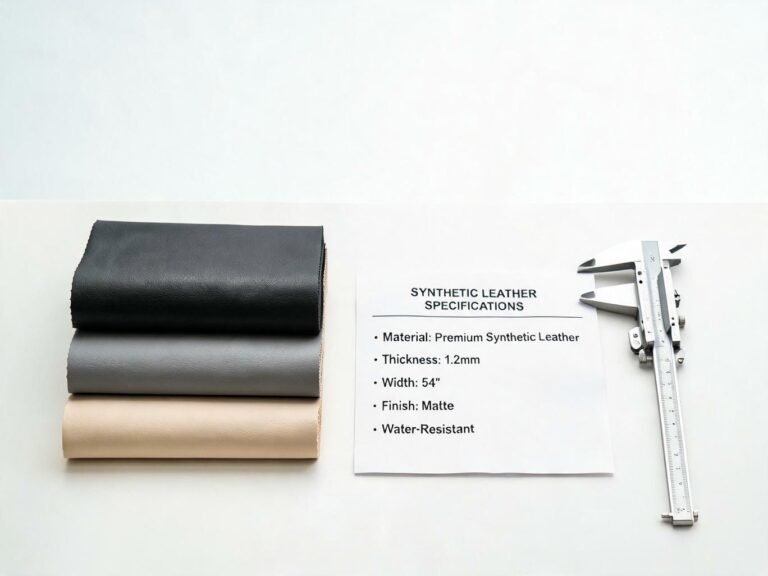
TOPSUN’s silicone leather swatch wall — one of four synthetic leather categories, but the only one with 10+ year service life in commercial upholstery.
Performance Comparison: 4 Upholstery Fabrics Side by Side
When you’re specifying synthetic leather upholstery fabric for commercial use, four metrics determine long-term success: abrasion resistance (how long it withstands rubbing), VOC emissions (indoor air quality impact), flame retardancy (fire code compliance), and service life (when you’ll be reupholstering). Let’s compare all four materials on these critical dimensions.
| Property | PVC Leather | PU Leather | Silicone Leather |
|---|---|---|---|
| Abrasion (Martindale) | 100,000–150,000 cycles | 50,000–100,000 cycles | 200,000+ cycles |
| VOC Emissions | High (plasticizers) | Medium (solvents) | Zero |
| Flame Retardancy | Added (halogenated) | Added (varies) | Inherent (halogen-free) |
| Service Life | 2–3 years | 3–5 years | 10+ years |
| Cleaning Resistance | Good | Moderate | Excellent (bleach-safe) |
The service life difference is where the cost conversation gets interesting. A PVC leather at $8/yard that lasts 2 years costs $4/year per yard. A silicone leather at $18/yard that lasts 10 years costs $1.80/year per yard — less than half. And that’s before you factor in the labor cost of reupholstery, which typically exceeds the material cost itself.
Procurement tip: For commercial upholstery projects with a 5+ year lifecycle, calculate total cost of ownership (material + installation + reupholstery cycles), not just per-yard price. Silicone leather’s higher upfront cost is typically recovered within year 3-4 through avoided replacement.
Synthetic Leather Upholstery Fabric by Application
The right synthetic leather depends entirely on where it’s going. A material that works perfectly in a residential living room might fail within 18 months in a busy hospital waiting room. Here’s how to match material to application for common commercial scenarios:
Hospitality and restaurant seating. High traffic, frequent spills, and daily cleaning mean this is one of the toughest upholstery environments. PU leather is the most common choice — but it’s also the one that fails fastest, typically within 2-3 years in restaurant booths. Silicone leather handles bleach cleaning, food stains, and high abrasion without degrading, making it the lowest-TCO option for high-turn hospitality. In a case study with a regional restaurant chain, booths upholstered in silicone leather were still going strong after 4 years — compared to the 18-month reupholstery cycle they had with PU.

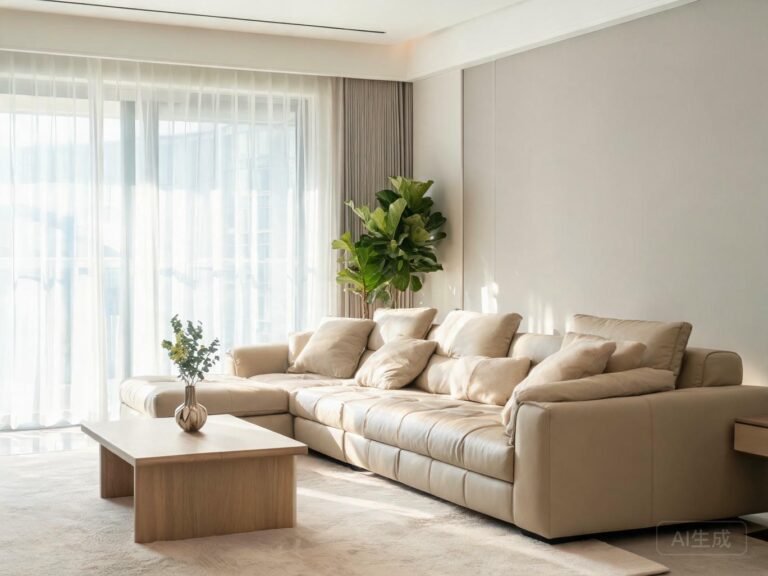
Commercial furniture upholstery demands a material that handles high traffic, spills, and frequent cleaning — not all synthetic leathers are equal.
Healthcare and medical facilities. This is where silicone leather pulls away from every other synthetic option. Hospital-grade upholstery needs to withstand hospital-grade disinfectants — bleach, alcohol, quaternary ammonium compounds — without degrading. PU and PVC leather break down under repeated disinfectant exposure, cracking and discoloring within 12-18 months. Silicone leather is inherently resistant to these chemicals, maintaining its surface integrity after thousands of cleaning cycles. It also has zero VOC emissions — critical for patient rooms and healthcare environments where indoor air quality directly affects recovery.
In facilities upgrading to cleaner upholstery, procurement teams often reference hospital bed upholstery material guides when comparing infection control and durability metrics across synthetic leather options.
Office and co-working spaces. Moderate traffic and a focus on aesthetics make PU leather a common choice for office furniture. For premium or executive spaces where longevity and comfort matter more than first cost, silicone leather offers a leather-like feel with zero maintenance — no conditioning, no color touch-ups, just wipe and go.

Scratch resistance testing — one of many performance evaluations that separates high-performance upholstery fabrics from budget options.
Commercial sofa upholstery overview — see how silicone leather performs in high-traffic furniture applications.
Synthetic Leather Upholstery Fabric: 5 Tests to Verify
Any supplier can claim “commercial grade” or “heavy duty.” The proof is in the test data. Before specifying any synthetic leather upholstery fabric, require these specific test results — not marketing claims, but actual third-party laboratory reports with test conditions and numerical results. Standards like ISO 12947-2 for Martindale abrasion provide the benchmark against which all commercial upholstery materials should be measured.
- Martindale abrasion (ISO 12947-2): The number of cycles before visible wear appears. Commercial grade should be 50,000+; high-traffic commercial should be 100,000+; silicone leather typically exceeds 200,000.
- VOC emissions (ISO 16000-6 or VDA 277): Total volatile organic compound emissions from the material. Critical for indoor air quality — especially in healthcare, education, and office environments.
- Flame retardancy (EN 13773, FMVSS 302, or local code): Verify the material meets the specific fire code for your application and region. “Flame retardant” without a standard and test result is meaningless.
- Color fastness to light (ISO 105-B06): How well the color holds up under UV exposure. Grade 4+ is good; Grade 4-5 is excellent. Below Grade 3 means visible fading within a year near windows.
- Cleaning resistance: The material’s resistance to specific cleaning agents you’ll actually use. If you clean with bleach, test with bleach — not just water.
Frequently Asked Questions
Is synthetic leather upholstery fabric suitable for outdoor furniture?
Most synthetic leather — PU and PVC — is not suitable for long-term outdoor use. UV radiation breaks down PU’s polymer chains, causing cracking and fading within 1-2 years. PVC lasts slightly longer but still yellows and becomes brittle. Only silicone leather is inherently UV-stable, withstanding 1,000+ hours of accelerated weathering (ASTM G154) without significant color shift or degradation. For outdoor and marine upholstery, silicone is the only synthetic leather that delivers multi-year outdoor performance.
Can I get custom colors and textures for upholstery projects?
Yes. TOPSUN offers unlimited Pantone and RAL color matching with Delta E ≤ 1.0 accuracy, plus over 100 standard textures including cowhide, pigskin, and sheepskin patterns. Custom embossing is available with a 7-10 day lead time for new roller designs. This level of customization is standard for silicone leather suppliers but rare for budget PU and PVC options, which typically limit buyers to a catalog of 20-30 pre-made colors.
Specify for Year Five, Not Year One
Synthetic leather upholstery fabric is a category, not a specification. PVC is cheap but off-gasses and fails quickly. PU looks good initially but degrades under UV and frequent cleaning. Silicone leather costs more upfront but lasts 2-3 times longer with zero VOCs and inherent flame retardancy. The right choice depends on your application, traffic level, and budget timeline — but for any commercial project with a 5+ year horizon, the lowest-cost-per-year option isn’t the one with the lowest price tag. It’s the one that’s still performing when everyone else is already reupholstering.
About TOPSUN
TOPSUN manufactures high-performance silicone upholstery leather for commercial furniture, hospitality, healthcare, and office applications where durability and indoor air quality matter.
200,000+ Martindale cycles · Zero VOC emissions · EN 13773 Class 4 flame retardant · Bleach and alcohol-cleaning safe · 10+ year service life