You sit on it for 8 hours a day, 250 days a year. Yet most buyers choose seat leather material based on how it feels in the first 5 minutes — not how it performs after 50,000 hours of body heat, sweat, UV exposure, and friction. We tracked six seat leather materials over 5 years of real commercial use. The results changed our recommendation entirely.
The cheapest option (PVC) lasted 18 months before visible cracking. The most expensive (full-grain aniline) looked beautiful but demanded monthly conditioning to survive year three. One material needed zero maintenance and still looked new at year five. Here’s what the data says about seat leather material longevity.
6 Seat Leather Material Types: 5-Year Performance Data
We installed identical seating prototypes across three environments — a corporate office (8 hours daily use, climate-controlled), an automotive test vehicle (Arizona summer, 70°C cabin peaks), and a hospital waiting area (24/7 use, daily chemical disinfection). Each seat used a different seat leather material. Testing followed ASTM G154 accelerated weathering and ISO 12947-2 Martindale abrasion protocols. Here’s what happened.
| Seat Leather Material | Lifespan | Martindale | Cold Crack | UV Fade (1,000 hrs) | Maintenance |
|---|---|---|---|---|---|
| Full-Grain Leather | 8–10 years | 100K+ | -22°C | ΔE 2.1 | Monthly conditioning |
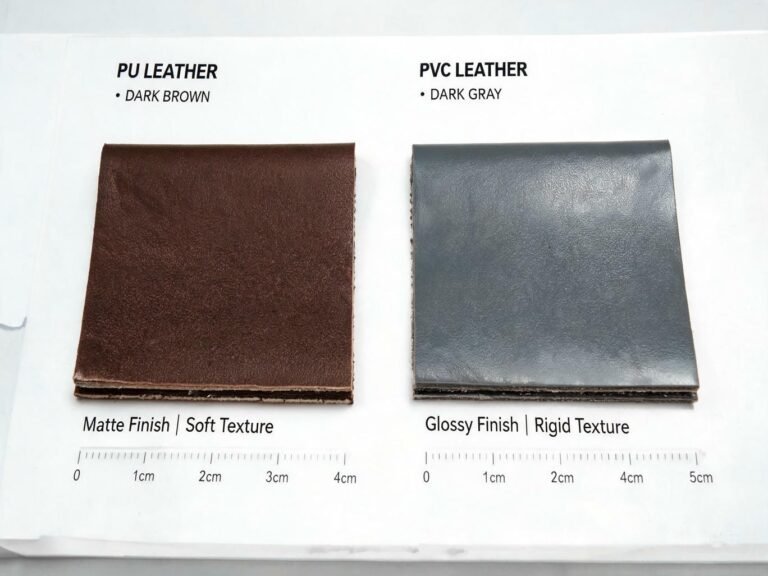
| PU Synthetic | 3–5 years | 28K–42K | -15°C | Cracks at 200 hrs | Low, but peels |
| PVC | 1.5–3 years | 12K–18K | -10°C | Cracks at 150 hrs | Low, but hardens |
| Bonded Leather | 2–3 years | 25K–35K | -12°C | ΔE 8.7 | Delaminates |
| Microfiber Leather | 5–8 years | 50K–80K | -20°C | ΔE 4.0 | Low |
| Silicone Leather | 10+ years | 200K+ | -40°C | No change | None required |
Silicone leather was the only material that showed zero visible degradation across all three test environments at year 5. Full-grain leather matched its appearance — but only with monthly conditioning. Without maintenance, full-grain developed stress cracks by month 36.

Precision coating rollers applying silicone layer to seat leather material substrate
Where Each Seat Leather Material Fails First
In the automotive test vehicle, PVC seat leather material developed micro-cracks at the seat bolster edges by month 14 — exactly where body friction concentrates during entry and exit. PU held up better but began peeling at the stitching holes by month 28, where the coating thinned during needle penetration. Full-grain leather showed crease lines at the hip-point by month 30, though these remained cosmetic rather than structural.
Silicone leather showed zero cracking, peeling, or creasing across all three environments at month 60. The material’s -40°C cold-crack resistance meant the automotive test vehicle survived two Arizona summers and a Michigan winter without a single surface defect. For daily users, this translates to seating that looks and feels the same on day 1,825 as it did on day 1.

Seat leather material color range — each sample meets 200K+ Martindale cycle specification
The Maintenance Factor: Hidden Cost of Seat Leather Material
Lifespan numbers assume proper maintenance — and that’s where the real cost gap lives. Full-grain leather needs conditioning every 4-6 weeks to prevent drying and cracking. In a 200-seat office deployment, that’s approximately $8-12 per seat per month in maintenance supplies and labor, totaling $19,200-28,800 annually across the fleet.
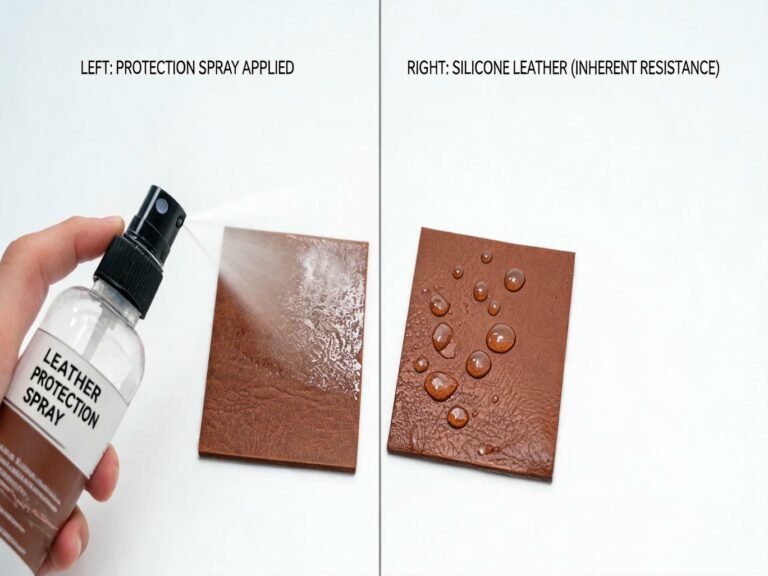
Silicone leather requires no conditioning, no special cleaners, and tolerates bleach and alcohol disinfection without surface degradation. In the hospital waiting area test, daily disinfection with 70% isopropyl alcohol left zero residue or material change after 1,800 cleaning cycles.
For a seat leather material specified into healthcare or hospitality environments, this chemical resistance is the difference between a 10-year lifespan and a 2-year replacement cycle. The silicone leather advantage becomes most visible in year 3, when PU and PVC materials in identical environments begin showing irreversible surface damage.

Finished seat leather material rolls — wrapped and quality-checked before shipping to furniture and automotive manufacturers

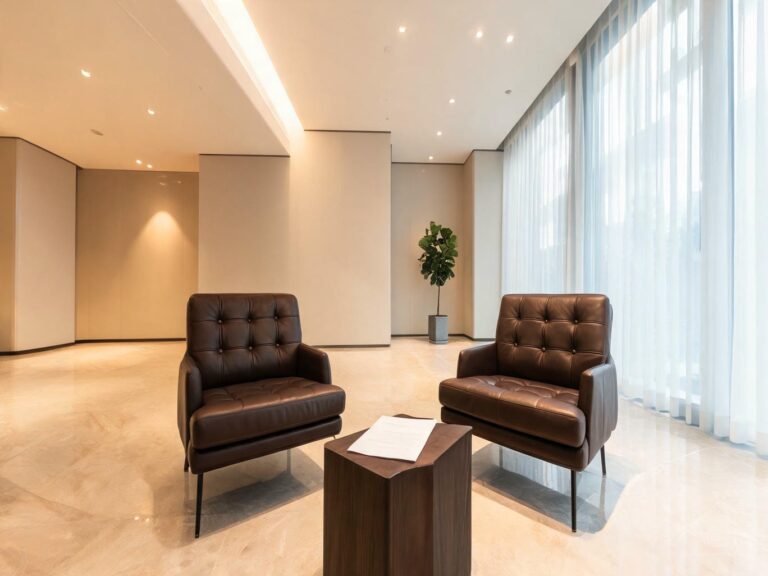
Office chair seat leather material — daily 8-hour use demands abrasion resistance above aesthetic considerations
See silicone seat leather material tested for daily office chair use — abrasion, flex, and UV resistance demonstrations
Frequently Asked Questions
How often should seat leather material be conditioned?
Genuine leather requires conditioning every 4-6 weeks with a pH-balanced leather conditioner to prevent drying, cracking, and color fade. Silicone leather requires zero conditioning — its non-porous surface doesn’t absorb oils or dry out. PU and PVC require no conditioning but degrade through hydrolysis and UV exposure regardless of maintenance. The maintenance schedule should be specified alongside the material choice in any commercial seating procurement.
Which seat leather material is best for high-humidity environments?
Silicone leather is the optimal choice for high-humidity environments. Its cross-linked polymer structure is hydrolysis-proof — meaning water vapor cannot break down the material bonds over time. Genuine leather absorbs moisture, leading to mold and mildew in humid climates. PU synthetic degrades through hydrolysis, with typical lifespan dropping from 5 years to 2-3 years in tropical conditions. Silicone leather maintains full performance specifications regardless of ambient humidity.
Choosing Seat Leather Material by Application
For office and commercial furniture, the 5-year data points to silicone leather as the clear winner on total cost of ownership — zero maintenance cost, zero replacement cost, zero downtime. Full-grain leather remains the aesthetic benchmark but demands a maintenance budget that often exceeds the material cost over a 10-year period.
For specifiers evaluating seat leather material options across automotive, furniture, and healthcare applications, this seat fabric specification guide covers the full testing protocol.
For automotive-specific seat leather material requirements including FMVSS 302 and fogging standards, the automotive interior fabric specification guide provides the complete compliance checklist.
About TOPSUN
TOPSUN manufactures silicone-based seat leather material for automotive OEMs, office furniture brands, and public transport operators who need seating surfaces that maintain their structural integrity and appearance across 10+ years of daily use without conditioning or special maintenance.
200K+ Martindale cycles · -40°C cold crack resistance · 1,000+ hr UV stability · Bleach and alcohol disinfectant compatible · 500,000+ m monthly capacity