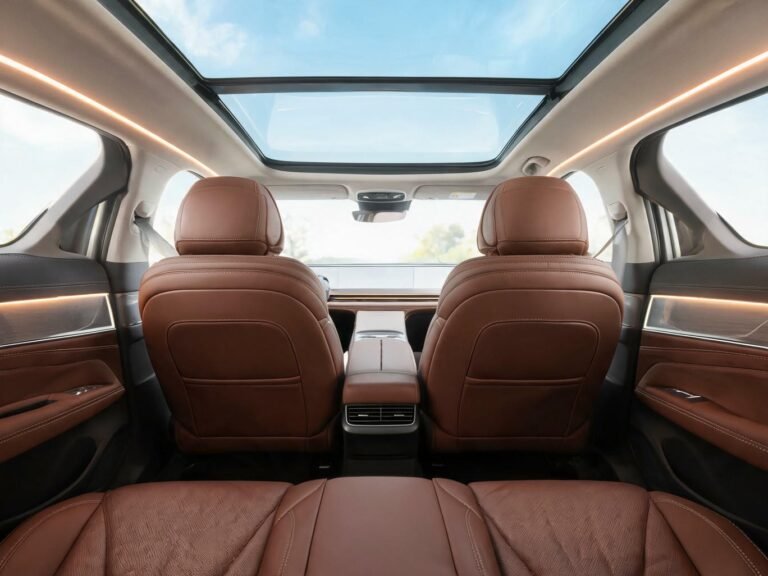
Leather upholstery is one of the most impactful — and most expensive — decisions a furniture specifier makes. The right material elevates a space, stands up to years of use, and keeps maintenance teams happy. The wrong one starts looking worn within months, generates customer complaints, and needs replacement long before its time.
The challenge is that “leather upholstery” covers a huge range of materials — from $80-per-yard full-grain aniline hide to $5-per-yard vinyl that peels in two years. And because so many different materials call themselves “leather” or “leather-like,” it’s easy to end up specifying something that doesn’t match the project’s actual needs.
This guide walks through every major leather upholstery material, where it performs best, and where it fails. Whether you’re specifying for a luxury residence, a busy hotel lobby, or a healthcare waiting room, here’s what you need to know.
Browse Furniture & Sofa Applications
Genuine Leather Upholstery: Grades and Finishes
Genuine leather for upholstery isn’t one material — it’s a category with multiple grades and finishes, each with very different performance characteristics and price points.

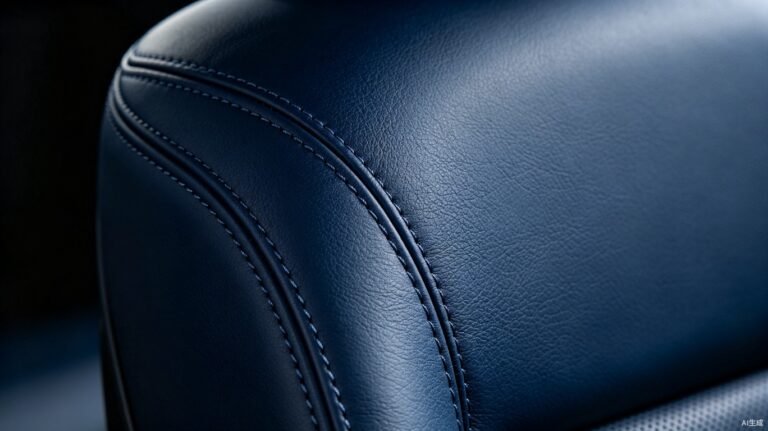
Genuine leather upholstery creates a luxurious look but requires careful matching of grade to use case
| Grade / Finish | What It Is | Stain Resistance | Best For |
|---|---|---|---|
| Full-Grain Aniline | Top layer of hide, dyed only — no protective coating | Very low — absorbs everything | Luxury low-traffic spaces |
| Full-Grain Semi-Aniline | Full grain with light protective topcoat | Moderate — some protection | High-end residential |
| Top-Grain Pigmented | Sanded top grain with full pigment coating | Good — surface barrier | Family homes, light commercial |
| Corrected Grain | Lower-grade hide, embossed with artificial grain | Good — heavy coating | Budget commercial |
| Bonded Leather | Shredded leather fibers + PU binder on fabric backing | Poor — delaminates | Low-usage, temporary furniture |
The biggest mistake specifiers make with genuine leather upholstery is choosing a grade that’s too high for the traffic level. Aniline leather looks incredible in a showroom — the natural grain, the soft hand, the way it develops patina. But put that same material in a hotel lobby or a family room, and within 18 months you’re looking at a piece that’s stained, worn unevenly, and impossible to restore to its original appearance.
Designer rule: Match the leather grade to the traffic level, not the budget. A high-traffic commercial space needs pigmented top-grain or better — not aniline leather that will look terrible in a year, no matter how much you spent on it.
Synthetic Leather Upholstery: PU, PVC, and Silicone
Synthetic leathers have come a long way from the shiny vinyl booths of the 1980s. Today’s synthetic upholstery materials can be visually indistinguishable from genuine leather at arm’s length — and in performance categories like stain resistance and cleanability, many outperform the real thing.

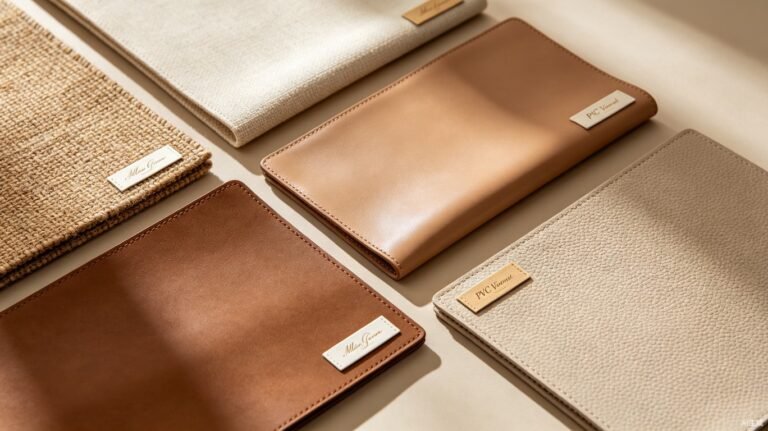
Synthetic leather upholstery comes in consistent colors and textures across every production run
PVC / Vinyl Leather — The budget option. PVC leather is durable and cheap, and it was the standard for commercial upholstery for decades. But it has significant drawbacks: it’s not breathable (gets sticky in warm weather), it can off-gas VOCs especially when new, and the plasticizers migrate out over time, causing cracking and a sticky feel. Best for budget, low-expectation applications.
PU Leather — The mid-range workhorse. PU leather has a softer, more leather-like feel than PVC and better flexibility. It’s the most common synthetic upholstery material in mid-range furniture. The downside: PU breaks down over time through hydrolysis — exposure to moisture (sweat, humidity) causes the polyurethane polymer to degrade from within. In high-humidity climates or high-sweat applications, PU upholstery can start cracking and peeling in 2–5 years.
Silicone Leather — The premium performance option. Silicone upholstery is the newest category, and it’s growing fast in commercial, healthcare, and hospitality sectors. The silicone surface is chemically inert, meaning it doesn’t react with sweat, sunscreen, disinfectants, or common stains. It’s inherently hydrolysis-resistant, UV-stable, and antimicrobial. The trade-off: higher upfront cost than PU, and a slightly different feel than genuine leather (some people describe it as “cooler” to the touch).
See Healthcare Upholstery Applications
Watch silicone leather handle coffee, wine, and ink stains — wipe clean with just water
Performance Comparison: Real-World Durability
Lab tests only tell you so much. What really matters is how upholstery materials hold up after years of real people sitting on them, spilling on them, and cleaning them. Here’s how the major categories compare on the metrics that drive replacement cycles.
| Performance Metric | Genuine Top-Grain | PU Leather | Silicone Leather |
|---|---|---|---|
| Abrasion (Wyzenbeek) | 100,000–200,000+ cycles | 50,000–100,000 cycles | 200,000+ cycles |
| Stain resistance | Moderate (pigmented) / Low (aniline) | Good — wipes clean | Excellent — non-porous |
| Hydrolysis resistance | Good (natural fiber) | Poor — fails in 2–5 years | Excellent — inherently resistant |
| UV / fade resistance | Poor — fades in direct sun | Moderate — pigmented coating helps | Excellent — UV stable |
| Cleanability (hospital-grade) | Poor — harsh cleaners damage surface | Moderate — some cleaners attack PU | Excellent — bleach-cleanable |
| Antimicrobial property | No — porous surface harbors bacteria | No — additives wash out | Yes — molecular (99.9% reduction) |
| Expected service life (commercial) | 5–10 years (with conditioning) | 3–7 years | 10–15+ years |

In healthcare and commercial settings, cleanability and hygiene are as important as durability
Here’s what jumps out from the comparison: silicone leather wins on almost every performance metric, and its service life in commercial applications is 2–3x longer than PU. The catch — and there’s always a catch — is upfront cost. Silicone leather typically costs 30–80% more per yard than standard PU. But when you calculate total cost of ownership (material + installation + replacement downtime), silicone often comes out ahead because you’re replacing it half as often.
Matching Material to Project Type
There’s no “best” leather upholstery material — there’s only the best material for a specific project. Here’s our recommendation by project type:
| Project Type | Recommended Material | Why |
|---|---|---|
| Luxury residential, low traffic | Full-grain aniline leather | Patina is a feature; natural beauty |
| Family home, daily use | Top-grain pigmented or silicone leather | Stain resistance and durability needed |
| Hotel / hospitality | Silicone leather (commercial grade) | High traffic, easy cleaning, consistent appearance |
| Healthcare / medical | Silicone leather (healthcare grade) | Bleach-cleanable, antimicrobial, infection control |
| Office / co-working | Top-grain or silicone leather | Professional look + durability |
| Restaurant / food service | Silicone leather | Food & drink spills, easy wipe-down |
| Budget / temporary | PU leather (avoid bonded) | Lowest cost, acceptable for 2–3 years |
What to Verify Before You Specify
Before you commit to a leather upholstery material for any project, verify these five things with your supplier:
- Wyzenbeek or Martindale rating — Contract grade minimum: 100,000 double rubs. Heavy commercial: 200,000+. If a supplier can’t give you a number, assume it’s below 50,000.
- Flame retardancy certification — Commercial projects require CAL 117, NFPA 260, or BS 5852. Get the actual certificate, not just a claim.
- Hydrolysis resistance — Critical for humid climates and high-sweat applications. Ask for the test method and hours of resistance.
- Cleanability — What cleaners can be used? For healthcare, verify bleach cleanability (1:10 bleach solution minimum).
- Color consistency guarantee — Especially important for large orders with multiple pieces. Genuine leather will have natural variation; synthetic should be near-perfect.
And of course, always order a physical sample and test it under real conditions. Put a cup of coffee on it. Wipe it with a disinfectant wipe. Rub it with a denim cloth 100 times. You’ll learn more from two minutes of hands-on testing than from reading a 20-page spec sheet.
The Right Material Makes All the Difference
Good leather upholstery specification isn’t about picking the most expensive material or the most authentic one. It’s about matching the material’s strengths to the project’s actual conditions — traffic level, cleaning frequency, environmental factors, and budget.
Genuine leather will always have its place in luxury low-traffic settings where patina is desirable and maintenance is diligent. But for the majority of commercial and high-use residential projects, the performance advantage of silicone leather is becoming harder to ignore — longer service life, better cleanability, zero VOCs, and consistent appearance across every piece.
If you’re working on a project and trying to decide between upholstery materials, the fastest way to evaluate is to get samples and test them yourself. See how they feel. See how they clean. See how they hold up to real use. The right material will make itself obvious.
Request Upholstery Material Samples
About TOPSUN
TOPSUN supplies premium silicone leather upholstery for hospitality, healthcare, commercial, and residential furniture — offering specifiers a high-performance, easy-to-clean material with consistent quality across every project.
200K+ Wyzenbeek cycles · Bleach-cleanable · Antimicrobial (99.9%) · Zero VOC · Flame retardant options · 54″ wide rolls · Custom colors & textures