A silicone leather UV resistance test tells you whether the material you’re sourcing will still look right after three summers on a yacht deck — or whether it’ll chalk and yellow like the PU you replaced. The answer lives in two numbers: xenon-arc exposure hours and a Delta E value. Most procurement teams never ask for either, and that’s exactly why outdoor upholstery fails early. Here’s what the test actually measures, which standards matter, and how to read a supplier’s report without taking their word for it.
What a Silicone Leather UV Resistance Test Really Measures
UV testing doesn’t just ask “does it fade?” It accelerates years of sunlight into weeks and measures four things: color shift, surface degradation, gloss loss, and tensile strength retention. The centerpiece metric is Delta E (ΔE) — the total color difference between the unexposed sample and the exposed one. A Delta E below 2.0 is imperceptible to the human eye. Anything above 3.0 is visibly different. Above 5.0, the material has clearly degraded.
In our testing lab, silicone leather holds a Delta E of 0.5–1.5 after 1,500 hours of xenon-arc exposure. Standard PU leather reaches ΔE 5–12 at just 500 hours. That gap isn’t marketing — it’s molecular. Silicone’s Si–O–Si inorganic backbone contains no carbon-carbon double bonds, so UV radiation has nothing to attack. PU’s C=O and C=C bonds, by contrast, are directly UV-sensitive and break down under sustained exposure.

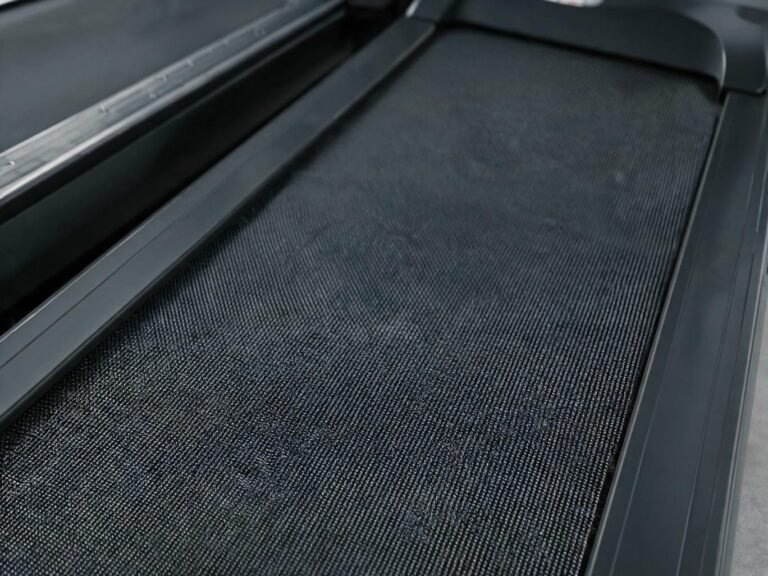
Color fastness testing equipment used to measure UV-induced color shift (Delta E) in silicone leather samples.
Key takeaway: If a supplier claims “UV resistant” but can’t produce a Delta E number from a xenon-arc test, the claim is unverified. Always ask for the actual ΔE value and exposure hours — not adjectives.
ASTM G154 vs ISO 4892-2: Which Standard Matters
Two standards dominate UV weathering tests, and they’re not interchangeable. ISO 4892-2 uses xenon-arc lamps that replicate the full solar spectrum — including visible, infrared, and UV — making it the more realistic test for outdoor applications. ASTM G154 uses fluorescent UV (QUV) lamps at 340 nm, which simulate only the UV portion of sunlight. Both are valid, but xenon-arc is generally considered the more aggressive and representative test.
A standard test cycle runs 102 minutes of UV exposure followed by 18 minutes of water spray, repeated continuously. The chamber temperature typically holds at 63°C during light phases. What matters for procurement is the total exposure duration: 500 hours is the bare minimum for any outdoor-adjacent product. 1,000 hours is the threshold for sustained outdoor use. Premium silicone leather should clear 1,500 hours with no cracking, no chalking, and Delta E under 2.0.

Physical testing laboratory where xenon-arc and QUV weathering tests are conducted to ISO and ASTM standards.
Silicone Leather vs PU Under Xenon-Arc: The Data Gap
When you put silicone leather and PU side by side in the same xenon-arc chamber, the performance gap is dramatic. Here’s what the data looks like at comparable exposure points — pulled from our internal testing and cross-referenced with published hydrolysis and UV resistance data:
| Material | Xenon-Arc Hours | Delta E (ΔE) | Surface Condition | Gloss Retention |
|---|---|---|---|---|
| Silicone leather | 1,500h+ | 0.5–1.5 | No change | 90–95% |
| UV-stabilized PU | 500h | 2–5 | Minor chalking | 60–75% |
| Standard PU | 300–500h | 5–12 | Chalking, cracking | 40–60% |
| PVC vinyl | 200–800h | 3–8 | Chalking, stiffening | 50–70% |

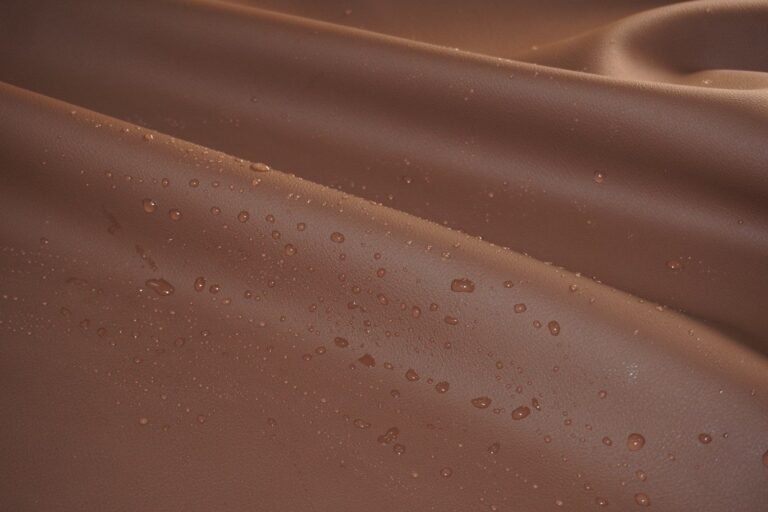
Outdoor UV exposure is the real-world equivalent of xenon-arc testing — silicone leather maintains color stability where PU degrades.
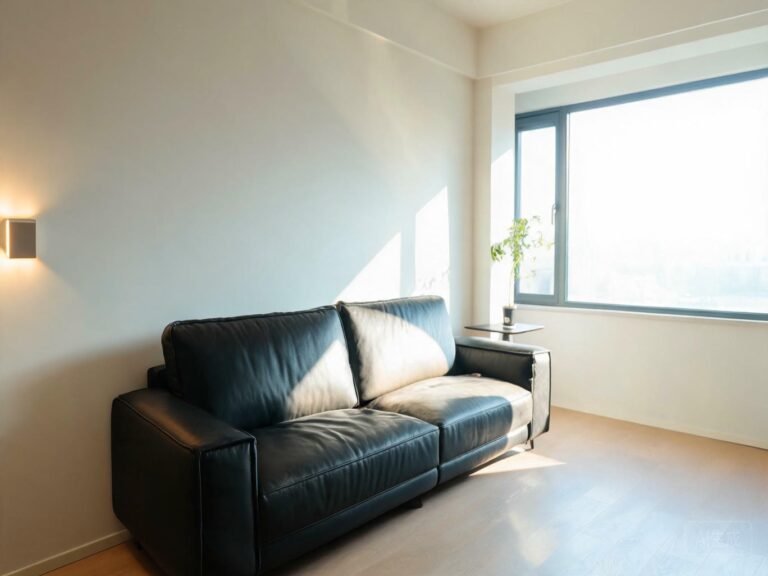
The practical implication: a PU cushion on a sunny yacht deck will show visible fading and surface cracking within 12–18 months. Silicone leather in the same environment holds its color and surface integrity for 8–10+ years. For marine and outdoor applications where replacement means reupholstering furniture in the field, that lifespan difference drives the entire cost equation.
Watch silicone leather undergo color fastness testing — see why Delta E stays under 2.0 after prolonged UV exposure.
How to Audit a Supplier’s UV Test Report
Here’s the uncomfortable part. In our experience sourcing teams ask for abrasion and fire test data routinely — but UV resistance reports get skipped more often than not. When a supplier says “UV resistant,” that phrase has no technical meaning until it’s backed by a test report with specific parameters. Here’s what to verify on any UV test report before it goes into your qualification file:
- Which standard was used? ISO 4892-2 (xenon-arc) is preferred for outdoor realism. ASTM G154 (QUV) is acceptable but less aggressive. If neither is named, the test doesn’t exist.
- How many exposure hours? Demand at least 1,000h for sustained outdoor use. Anything under 500h tells you nothing about real-world performance.
- What’s the Delta E value? Under 2.0 is excellent. 2.0–3.0 is acceptable for non-premium applications. If the report lists no ΔE, it’s incomplete — color change is the primary failure mode.
- Is it third-party tested? Reports from SGS, Intertek, or TÜV Rheinland carry verifiable report numbers. In-house lab data is a marketing document, not a qualification document.
One of our clients — a marine furniture OEM — was sourcing PU leather that claimed “excellent UV stability.” When we requested the test report, the supplier provided an in-house document with no standard cited, no exposure hours, and a qualitative rating of “good.” We ran the same material through ISO 4892-2 xenon-arc testing in our lab: ΔE 8.4 at 500 hours with visible chalking. They switched to silicone leather, which tested at ΔE 1.2 under the same conditions. This is why the color fastness test and the numbers behind it matter more than any spec sheet claim.
For a complete overview of all performance testing — including abrasion resistance, hydrolysis, and thermal stability alongside UV data — request the full technical data sheet. It consolidates every test result with standard references in one document.
The Bottom Line on UV Test Data
A silicone leather UV resistance test is the difference between speculating about outdoor performance and proving it. The numbers that matter are straightforward: 1,500+ hours of xenon-arc exposure, Delta E under 2.0, no surface degradation, and a third-party report with a verifiable number. If your supplier can’t produce those four data points, you’re buying a claim — not a material. For applications where sunlight exposure is constant — yacht decks, outdoor furniture, automotive interiors, RV upholstery — that distinction determines whether the product lasts a decade or a single season.
About TOPSUN
TOPSUN manufactures UV-stable silicone leather for marine, outdoor, and automotive applications where sustained sunlight exposure is non-negotiable. Our silicone leather is tested to 1,500+ hours of xenon-arc exposure with Delta E under 2.0, verified by SGS third-party laboratories.
ISO 10993 biocompatibility certified | REACH 247 SVHC compliant | FDA food-contact safe | EN 13773 Class 4 flame retardant | ASTM G154 / ISO 4892-2 UV tested