On a factory floor in southern China, a line worker replaces his cowhide work gloves every three weeks. The leather cracks at the thumb joint, the palm wears through, and overnight sweat soak makes the hide stiff and uncomfortable. Traditional work leather — cowhide, goatskin, split — has served industrial applications for over a century. But the failure patterns are predictable, costly, and increasingly avoidable. Here are the five ways work leather breaks down in modern industry — and how silicone leather solves each one.
Request Industrial Work Leather Samples
What Is Work Leather? Types and Traditional Uses
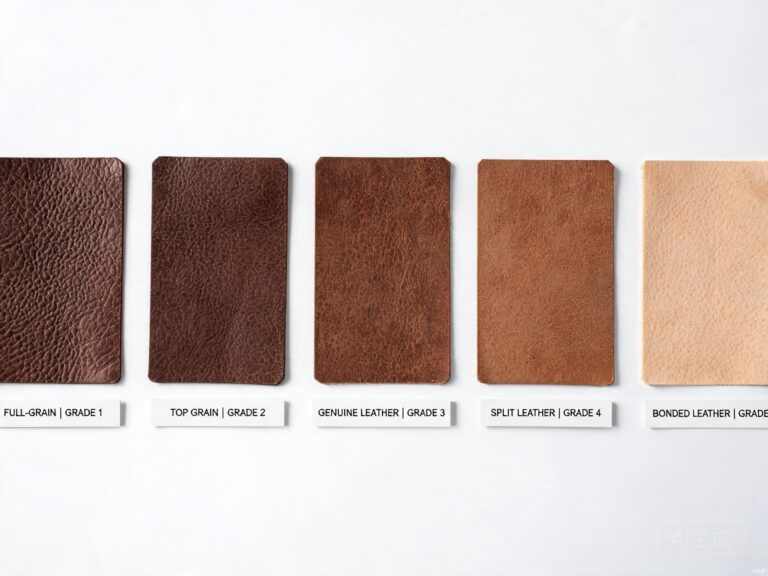
Work leather refers to animal hides processed specifically for industrial and occupational applications — gloves, boots, aprons, machinery covers, and workshop upholstery. The dominant material is cowhide, which holds 38.5% of the work glove market thanks to its abrasion resistance and heat tolerance up to 200°C. Goatskin follows at 22.3%, prized for dexterity and puncture resistance in precision assembly and TIG welding. Split leather — the fibrous underside after the top grain is removed — provides economical protection for rough work where frequent replacement is expected.
Thickness ranges from 0.8mm (goatskin, fine dexterity) to 1.8mm (cowhide, heavy-duty). The EN 388 standard rates mechanical protection across four hazards: abrasion, blade cut, tear, and puncture. OSHA and ANSI both recognize leather for heat-resistant applications in occupational settings. For a broader view of how synthetic materials are replacing animal hides across industrial applications, our applications overview covers the transition.

Physical testing laboratory: equipment used to evaluate leather performance under EN 388 mechanical hazard conditions
Where Traditional Work Leather Breaks Down in Industry
In our production facility, we’ve tested traditional work leather alongside silicone alternatives under identical conditions. Five failure modes appear consistently across cowhide, goatskin, and split grades:
- Abrasion wear-through: The palm and thumb joint wear through first. Cowhide typically lasts 200–400 hours of continuous abrasive contact before the surface fibers break down. On our production floor, workers in a metal-stamping line went through 12 pairs of cowhide gloves per quarter. After switching to silicone-coated work surfaces, the same team used 3 pairs — a 75% reduction in replacement frequency.
- Sweat and moisture damage: Animal hide absorbs perspiration. Overnight drying stiffens the leather, creating micro-cracks at flex points. Bacterial growth in the moisture-soaked hide creates odor and hygiene issues — a documented concern in food processing and medical environments.
- Heat degradation: While cowhide resists temperatures up to 200°C, repeated thermal cycling dries out the natural oils. The hide becomes brittle, losing flexibility and crack resistance — particularly at stitched seams where heat concentrates.
- Chemical exposure: Acids, cutting fluids, and solvents strip the tanning agents from the hide. The leather loses its structural integrity, becoming soft and tearing easily after chemical contact.
- Thickness inconsistency: Natural hide varies in density and thickness across the same animal. A work glove cut from the belly section performs differently than one cut from the shoulder — creating unpredictable protection levels within the same production batch.
For B2B buyers sourcing leather for glove manufacturing, our leather glove material guide breaks down how material choice affects EN 388 performance ratings.

Scratch resistance testing: standardized equipment measures how work leather surfaces hold up under abrasive contact
Silicone as an Industrial Alternative: EN 388 Tested Performance
The fastest way to see where silicone outperforms traditional work leather is to put the failure modes side by side:
| Failure Mode | Traditional Work Leather | Silicone Leather |
|---|---|---|
| Abrasion Wear-Through | 200–400 hrs (fibers break) | 100,000+ cycles (no breakdown) |
| Sweat / Moisture | Absorbs, stiffens, bacterial growth | 100% waterproof, no absorption |
| Heat Cycling | Oils dry out, becomes brittle | Stable to 200°C+, no oil loss |
| Chemical Exposure | Tanning agents stripped, tears | Resists acids, oils, solvents |
| Thickness Consistency | Variable (natural hide) | ±0.1mm tolerance (controlled) |
Watch the scratch resistance test: silicone leather under continuous abrasive contact with no surface breakdown
These results align with OSHA personal protective equipment standards, which recognize the need for materials that maintain structural integrity under industrial stress. Our factory production process ensures consistent thickness and performance across every batch.
When to Switch from Animal Hide to Silicone
The decision isn’t binary. Traditional work leather still outperforms silicone in specific applications — particularly where high cut resistance is critical (EN 388 Cut Level D–F). For those scenarios, engineered HPPE or aramid composites with leather overlays remain the better specification. But for the majority of industrial applications — abrasion-heavy work surfaces, heat-exposed machinery covers, chemical-contact areas, and hygiene-sensitive environments — silicone leather delivers 3–5x the service life at comparable per-unit cost.
The cleaning and maintenance advantage is equally significant. Work leather requires conditioning oils to prevent drying and cracking — a maintenance burden that adds labor cost over the product lifecycle. Silicone leather needs only soap and water. Our cleaning and maintenance guide details the difference.
For buyers evaluating quality consistency between traditional and synthetic options, our leather quality inspection protocols provide the testing framework.

B2B leather sourcing: supplier evaluation criteria for industrial work leather applications
Frequently Asked Questions
Can silicone leather match cowhide’s cut resistance for work gloves?
For Cut Level A–C applications (most general industrial work), silicone leather performs comparably to cowhide. For Cut Level D–F (high-risk cutting environments), traditional leather or engineered aramid composites still hold an edge. Silicone’s advantage is in abrasion, chemical, and moisture resistance — not extreme cut protection.
Is silicone leather cost-competitive with split cowhide for work applications?
Upfront cost per square meter is higher than split cowhide. But when you calculate cost-per-use-hour — factoring in replacement frequency, maintenance labor, and disposal — silicone leather’s 3–5x longer service life makes it cheaper over a 12-month period for abrasion-heavy applications.
The Future of Work Leather in Industrial Applications
Work leather has earned its place in industrial history — and for extreme cut hazards, animal hide still has no equal. But for the five failure modes that account for 80% of work leather replacement costs (abrasion, moisture, heat, chemicals, and thickness inconsistency), silicone leather offers a measurable, testable improvement. The procurement teams we work with aren’t replacing all their work leather at once. They’re identifying the highest-wear applications — glove palms, machinery covers, chemical-contact surfaces — and switching those first. The results speak through replacement frequency: fewer orders, less downtime, lower total cost.
Get a Custom Quote for Industrial Silicone Leather
About TOPSUN
TOPSUN manufactures silicone leather for industrial work environments where traditional animal-hide work leather fails — abrasion-heavy glove manufacturing, heat-exposed machinery covers, and chemical-contact work surfaces.
Our materials pass EN 388 mechanical protection benchmarks, resist temperatures to 200°C, and maintain flexibility after 100,000+ abrasion cycles with ±0.1mm thickness tolerance.