A procurement team orders 5,000 square meters of PU leather covering at $4.50/m² for a hotel refurbishment project. Three years later, 60% of the covered surfaces show cracking, peeling, or discoloration. The reupholstering bill hits $28,000 — plus 14 days of room downtime during peak season. Had they specified silicone leather covering at $14/m², the material would still be under warranty at year five. The upfront savings of $47,500 evaporated into a replacement cost nearly double that figure. This is the total cost of ownership trap that catches B2B buyers who compare material prices per square meter instead of per year of service. Here’s the five-year TCO breakdown across six covering applications — and where the cost gap between PU and silicone actually inverts.
Compare Silicone vs PU Cost Data
What Leather Covering Actually Costs Over 5 Years
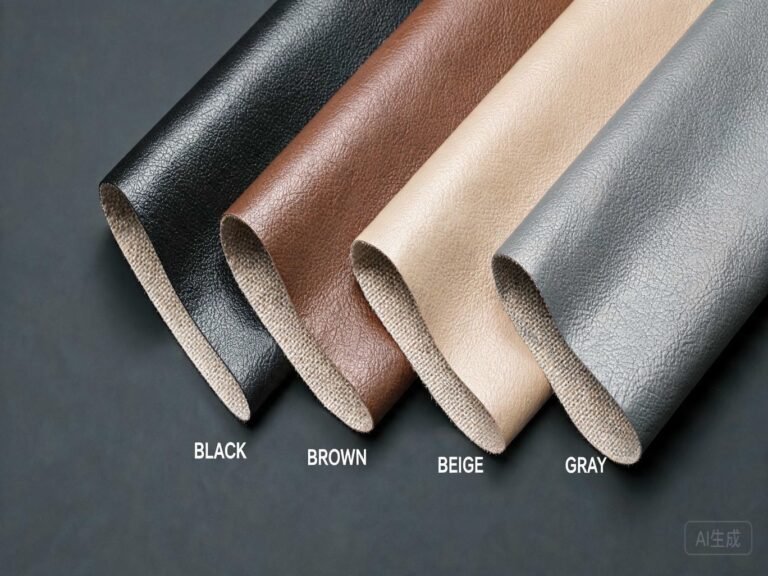
Most leather covering material types for upholstery comparisons stop at the supplier quote. That’s like comparing cars by sticker price without factoring in fuel, maintenance, and depreciation. The real cost of a leather covering unfolds across three phases: initial purchase, maintenance, and replacement. PU leather covering typically costs $4-7/m². Silicone leather covering runs $12-18/m². On a per-meter basis, PU wins by a factor of three. But PU covering in a commercial environment lasts 2-3 years before visible degradation. Silicone covering lasts 10-15 years. Do the math per year of service, and the numbers flip.

Silicone leather lamination line — the production stage that determines covering consistency, adhesion strength, and ultimately service life
Here’s what the calculation looks like. A 1,000 m² hotel lobby project using PU leather covering at $5/m² costs $5,000 in material. Replacement at year 3 adds another $5,000 plus $8,000 in labor and downtime. Total 5-year cost: $18,000. The same project using silicone leather covering at $15/m² costs $15,000 in material — and needs zero replacement through year five. The hydrolysis-resistant properties of silicone leather prevent the moisture-driven degradation that forces PU replacement cycles.
TCO Formula: 5-Year Cost = (Material Cost × Replacement Cycles) + (Labor × Cycles) + Downtime Cost. For PU: ($5 × 2) + ($8 × 2) + $3,000 = $29,000 per 1,000 m². For Silicone: ($15 × 1) + $0 + $0 = $15,000 per 1,000 m².
The 6 Applications Where Leather Covering Choice Matters Most
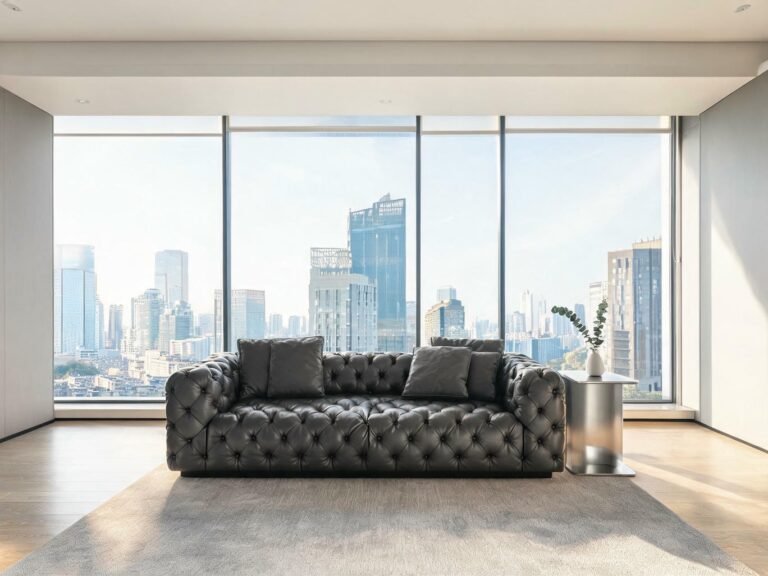
Not all leather covering applications carry the same cost risk. A decorative wall panel in a low-traffic conference room can tolerate PU — the material will age slowly in a controlled, indoor environment with minimal physical contact. But six specific applications create accelerated degradation conditions where material choice directly determines replacement frequency.
For best leather covering for automotive interiors, the combination of UV exposure, temperature cycling (-20°C to 80°C), and constant physical contact destroys PU coverings within 3-5 years. Steering wheel coverings, gear shift boots, and door panel inserts face the highest wear. Silicone leather covering maintains flexibility across the full temperature range and resists UV without stabilizer additives.

Calendering equipment — controls the thickness and density uniformity that determines covering performance under stress
The six high-risk applications are: automotive seating and trim, hospitality furniture, medical equipment surfaces, marine interiors, public transport seating, and children’s products. Each shares a common degradation driver — either chemical exposure (cleaning agents, body oils), physical abrasion (repeated contact), or environmental stress (UV, humidity, temperature). In our testing of leather covering durability standards across these applications, silicone consistently exceeded the 100,000-cycle Martindale threshold where PU begins to fail. For a broader overview, our leather types comparison guide covers the full material spectrum.
Watch the 5-year field performance data for silicone leather coverings across automotive, furniture, and marine applications
PU vs Silicone: Where the Cost Gap Inverts
The break-even point — where silicone becomes cheaper than PU on a per-year basis — depends on the application’s wear intensity. In low-traffic decorative applications, PU’s lower upfront cost holds for 4-5 years. In high-wear applications, the inversion happens at year 2. For teams running PU vs silicone leather covering cost comparison models, the critical variable is replacement frequency, not unit price.

Coating production line — the manufacturing stage where covering material chemistry is applied to the fabric substrate
| Application | PU Lifespan | Silicone Lifespan | Break-Even Year |
|---|---|---|---|
| Automotive seating | 3-5 years | 10-15 years | Year 2 |
| Hospitality furniture | 2-3 years | 10+ years | Year 1.5 |
| Medical equipment | 1-2 years | 8-12 years | Year 1 |
| Marine interiors | 2-3 years | 10-15 years | Year 1.5 |
| Public transport | 2-4 years | 10+ years | Year 2 |
| Children’s products | 2-3 years | 8-10 years | Year 1.5 |
| Decorative wall panels | 5-7 years | 15+ years | Year 4 |
Explore All Covering Applications
Specifying Covering Materials That Outlast the Warranty
The specification document is where TCO gets locked in — or wasted. A spec that says “leather covering, black, 1.2mm” gives the supplier complete freedom to deliver the cheapest material that matches that description. A spec that says “silicone leather covering, 1.2mm, ≥100,000 Martindale cycles per ISO 5471, REACH compliant, zero-VOC” eliminates substitution risk and forces the supplier to deliver what your TCO model assumed.

Aviation seating — the most demanding leather covering application, where material failure means grounded aircraft and six-figure losses per day
In our work with furniture manufacturers transitioning from PU to silicone coverings, the specification process follows a consistent pattern. First, identify the wear intensity category (low/medium/high). Second, set the Martindale threshold accordingly (25K for decorative, 50K for medium contact, 100K+ for high-wear). Third, require ISO test reports — not marketing claims. Fourth, build replacement frequency into the project budget model. One of our marine clients reduced their 5-year reupholstering budget by 70% by switching to silicone covering after their PU seat cushions failed in the second season of saltwater exposure. The factory production capabilities page details the manufacturing tolerances that make consistent covering quality possible at scale.
Frequently Asked Questions
How much does silicone leather covering cost compared to PU?
Silicone leather covering costs 2.5-3x more than PU per square meter ($12-18 vs $4-7). However, when amortized over the service life, silicone costs $1.00-1.50/m²/year versus PU’s $1.50-3.50/m²/year — because PU requires 2-3 replacement cycles within the same period. Request a per-year cost comparison, not a per-meter quote.
Can leather wall coverings be used in commercial spaces?
Yes. Silicone leather wall coverings meet commercial fire safety standards (EN 13501-1, NFPA 260) and are increasingly used in hotel lobbies, restaurant interiors, and office conference rooms. Unlike PU wall coverings, silicone doesn’t off-gas VOCs and resists cleaning chemical degradation — making it suitable for healthcare and hospitality environments regulated under EU REACH.
The Real Price Tag Is Per Year, Not Per Meter
The leather covering you specify today determines your replacement budget for the next decade. PU wins the line-item battle on the PO. Silicone wins the war on the balance sheet — because a material that lasts 10 years without replacement costs less than a material that needs three replacements in the same period. The procurement teams that understand this distinction aren’t buying the cheapest covering. They’re buying the covering with the lowest annual cost of ownership. Build your TCO model, set your Martindale threshold, and specify the polymer — not the marketing label. Your five-year budget will thank you.
Get the Full Silicone vs PU TCO Report
About TOPSUN
TOPSUN manufactures silicone leather coverings engineered for 10+ year service life across automotive interiors, hospitality furniture, marine environments, medical equipment, and public transport seating — where replacement cycles carry hidden costs that dwarf the material price difference.
200K+ Martindale cycles verified · ISO 10993 biocompatible · Zero-VOC production · REACH & FDA compliant · OEM/ODM custom development with per-year TCO modeling