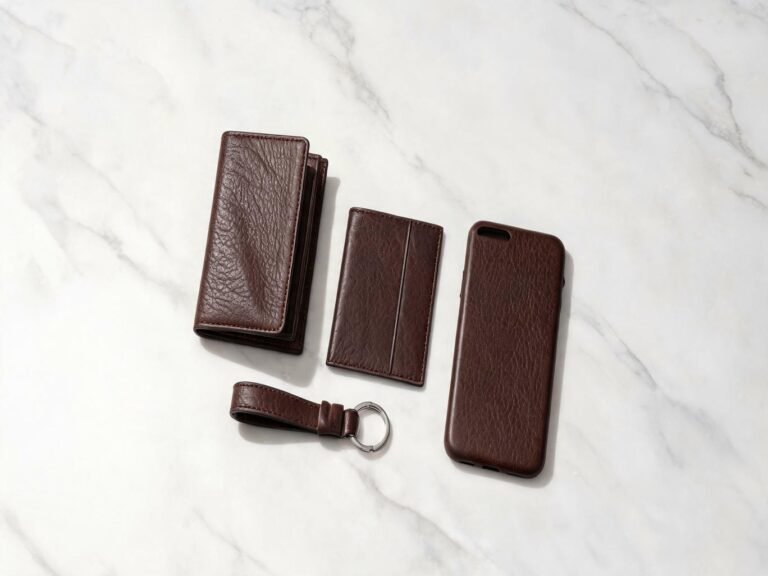
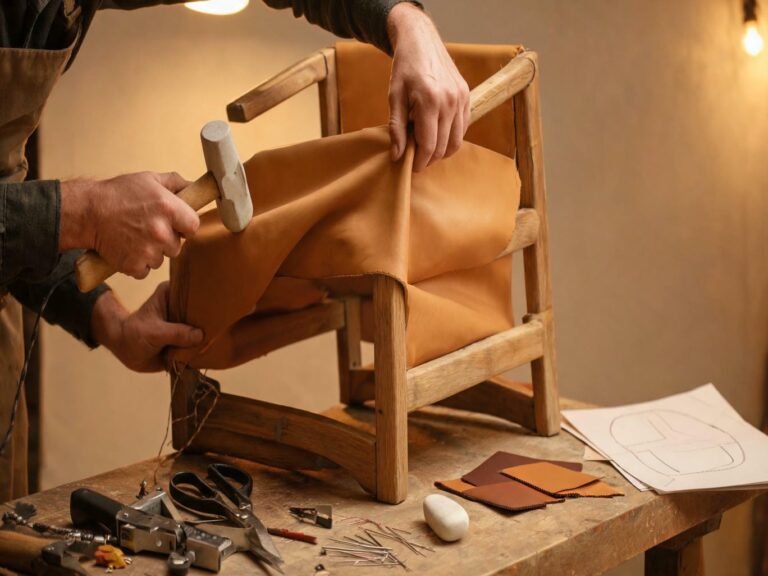
The short answer to whether grain leather is real leather is yes — both full grain and top grain come from the outermost layer of an animal hide, making them genuine animal leather in every regulatory and trade sense. The problem is that the word “genuine” has been co-opted as a quality label when it is not one. For specifiers selecting upholstery, accessories, or automotive trim, the real question is not whether grain leather is real, but which grade of real leather you are actually buying — and how to verify it before the invoice locks you in. Here are the six specs that separate full-grain from bonded leather.
Grain Leather Is Real Leather — Here Is What That Means
When we say grain leather is real leather meaning, we are referring to the corium-to-grain junction — the dense outer surface of the hide where the fiber structure is tightest. Full grain leather retains this surface untouched, including natural marks, scars, and pore structure. Top grain leather starts from the same layer but is sanded or buffed to remove imperfections, then finished with a pigment coating and sometimes re-embossed with an artificial grain pattern.

Grain-pattern swatches — the embossed texture specifiers evaluate when matching real-grain appearance in synthetics.
Both are real leather. The difference is that full grain keeps the strongest natural fibers intact, which is why it develops a patina and lasts decades, while top grain trades a small amount of structural strength for a more uniform, stain-resistant surface. Neither is synthetic — but the moment you see “genuine leather” on a spec sheet without a grade qualifier, you are likely looking at a lower split, not a grain layer.
The Four Grades: Full Grain, Top Grain, Genuine, Bonded
The grain leather grades hierarchy runs from strongest to weakest across four tiers. Understanding where each sits is the foundation of every sourcing decision — and the source of most specification disputes.
| Grade | Source Layer | Surface | Durability | Patina |
|---|---|---|---|---|
| Full Grain | Outermost, untouched | Natural, un-sanded | Highest | Excellent |
| Top Grain | Outermost, sanded | Corrected, re-finished | Very High | Minimal |
| Genuine | Inner splits | Artificially stamped | Moderate | None |
| Bonded | Scrap fibers | PU-coated pulp | Low | None |
In our experience working with furniture and accessory brands, the most common sourcing error is assuming “genuine leather” means “good leather.” It does not. Genuine is the third tier — split from the weaker inner layers, heavily processed, and stamped with an artificial grain to mimic the surface that full grain retains naturally. For the full chemistry of how modern synthetics compare, the silicone leather introduction covers the material-science side.
How to Verify Grain Leather Is Real Leather
Once you know the grades, the next question is how to identify real grain leather in a supplier sample. The reliable method is cross-section inspection: cut a swatch and look at the edge. Real grain leather shows a fibrous gradient from the dense outer grain to the looser corium beneath. Bonded leather shows a homogeneous pulp with no fiber gradient. Top grain shows the sanded transition line where the surface was buffed.

Sample rack — the physical reference specifiers use to verify grain, fiber structure, and finish quality before approving a lot.
Other checks include the burn test (real leather chars and smells like burnt hair; synthetics melt and smell like plastic), the water-drop test (full grain absorbs slowly; PU and PVC bead up), and checking for Leather Working Group certification on the supplier’s traceability documentation. None of these are perfect alone, but together they make it very hard to pass bonded or split leather as full grain.
Texture variety showcase — see how embossed silicone replicates full-grain, lychee, and nappa patterns at production scale.
Why “Genuine Leather” Misleads B2B Buyers
The label problem is the reason this article exists. “Genuine leather” sounds like a guarantee, but in trade practice it means only that the material contains some animal hide fiber — it does not specify which layer, what grade, or how it was processed. A bonded leather product containing 10% hide fiber and 90% polyurethane binder can legally carry the “genuine leather” stamp in many markets.

Genuine leather texture — visually similar to full grain, but the fiber structure and lifespan are fundamentally different.
For specifiers, the fix is to require grade-specific language in the PO: “full grain,” “top grain,” or “corrected grain” — never just “genuine.” The top grain leather guide on our site breaks down the top-grain grade in detail.
For the broader label gaps, the genuine vs top grain comparison covers where “genuine” stops meaning quality and starts meaning “lowest real-leather tier.”
Specifier tip: Require the supplier to state the hide layer (full grain / top grain / split / bonded) and the tanning method in writing. “Genuine leather” alone is not a specification — it is a marketing term.
Frequently Asked Questions
Is top grain leather better than full grain?
Not better — different. Full grain is stronger and develops a patina because it keeps the natural surface intact. Top grain is sanded smooth for a more uniform look and better stain resistance, but it sacrifices some structural density. For a heritage bag or sofa meant to age, full grain wins. For a product where uniform appearance and easy cleaning matter more, top grain is the smarter spec.
Can silicone leather replicate grain leather texture?
Yes, convincingly. Silicone leather is embossed from engraved molds that reproduce full-grain, lychee, pebble, and nappa patterns with tactile accuracy. The difference is under the surface — silicone does not have the fiber gradient of real hide, but it also does not crack, peel, or require animal sourcing. For specifiers who need the grain look without the maintenance or ethical cost, custom texture design can match most reference swatches.
Specifying With Confidence
So, grain leather is real leather — but knowing that is only the starting point. The six specs that matter are the grade (full grain, top grain, genuine, bonded), the source layer, the surface treatment, the tanning method, the certification trail, and the cross-section fiber structure. Specify those, and you will never mistake bonded pulp for full-grain hide again. For projects where the grain appearance matters more than the animal origin, silicone vs PU alternatives now replicate that texture without the grading ambiguity.
About TOPSUN
TOPSUN produces silicone-coated leather with custom-embossed grain textures engineered for specifiers who need full-grain appearance without the sourcing, maintenance, and ethical constraints of animal hide.
Mold-engraved grain replication (lychee, pebble, nappa, pull-up) · Color-matched to ΔE < 1.5 · REACH and OEKO-TEX certified · OEM/ODM texture development from reference swatch.