Anyone sourcing USA leather furniture in 2026 is doing math they didn’t have to do five years ago. Tariffs on leather imports from China, Vietnam, Italy, and India have pushed product prices up nearly 22% — Yale’s Budget Lab ranks leather among the hardest-hit categories — while California’s TB 117-2013 flammability rule and CARB Phase 2 formaldehyde limits set a compliance floor that applies nationwide in practice. For B2B buyers, the question isn’t just “domestic or imported?” anymore. It’s whether the leather you specify clears both the tariff math and the US regulatory bar at the same time. Silicone leather, imported as a pre-compliant cover and assembled on domestic frames, is quietly becoming the route that solves both.
USA Leather Furniture: What the Tariff Math Actually Looks Like
The headline number is straightforward: leather products imported from the major source countries now carry roughly a 22% tariff load, and the Yale Budget Lab expects that to persist for one to two years. That hit lands on top of an already wide cost spread — a domestic furniture sofa in full-grain leather runs $680–$1,100 per seat FOB, while an imported fabric three-seater starts around $380–$650. Tariffs have narrowed that gap by lifting the import side, and some domestic brands report moving 50% of their fabric sourcing to US suppliers, particularly in North Carolina. But full-grain leather made entirely in the US still carries a premium base cost the tariff math doesn’t erase. The real opportunity isn’t in replacing one extreme with the other — it’s in splitting the difference.

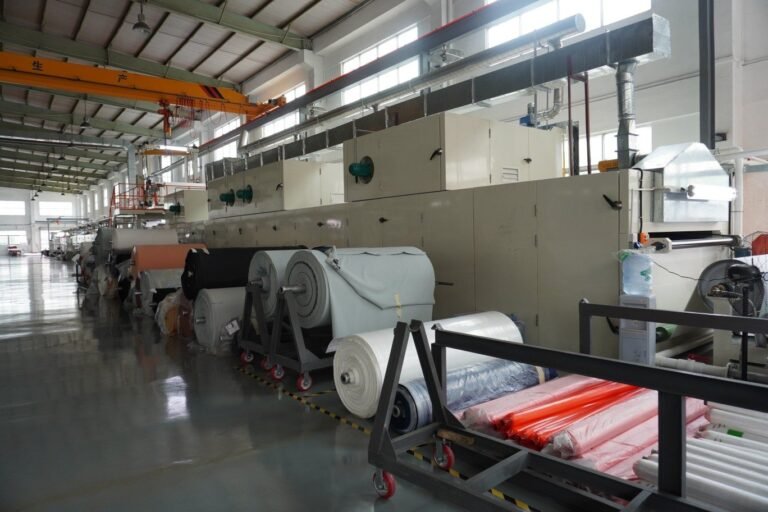
Production floor staging multi-color leather rolls for US-market furniture orders.
CAL 117, CARB Phase 2, and the US Compliance Floor
Here’s the part that catches importers off guard. The US has no single federal flammability standard for upholstered furniture, but California’s Technical Bulletin 117-2013 — a smolder-resistance test with no open-flame requirement — functions as the de facto national rule because the state is such a large market. On top of that, CARB Phase 2 caps formaldehyde emissions from composite wood, and the CPSC (Consumer Product Safety Commission) enforces additional chemical limits. Commercial buyers in hospitality and contract settings go further, specifying CAL 133 or its ASTM E1537 equivalent for room-scale burn performance. The USTR (US Trade Representative) tariff schedules stack on top of all this. We’ve watched buyers who specified conventional imported PU discover, mid-shipment, that a CARB Phase 2 formaldehyde failure held their container at port — a cost no per-unit FOB quote accounts for.
Imported vs Made-in-USA Leather Furniture: 5-Year TCO
Total cost of ownership is where the import-versus-domestic debate actually gets decided, and the per-unit FOB number is the smallest part of it. The table below breaks down what each route really costs over five years once tariffs, compliance risk, and rework are included. The route that wins isn’t the cheapest at the factory gate — it’s the one that arrives pre-compliant so the compliance cost line drops toward zero.
| Sourcing Route | Per-Unit FOB | Tariff Add | Compliance Cost | 5-Year TCO |
|---|---|---|---|---|
| Domestic (US-made) | $680–$1,100 | $0 | Low (built to spec) | High (premium) |
| Import (China/Vietnam) | $380–$650 | +22% | Medium (CAL 117/CARB) | Medium |
| Silicone leather import | $450–$700 | +22% | Low (pre-compliant) | Lowest |
The insight from our factory production data: a cover that arrives PFAS-free, REACH-compliant, and CAL 117-ready clears customs and the showroom floor in one pass, with no port-side rework.
You can see why in this breakdown of USA leather sofa sourcing, where the compliant import consistently undercuts the full-domestic route on five-year cost.

Finished-goods warehouse staging pre-compliant leather rolls for US-bound shipments.
The Market Is Shifting Toward Eco-Leather
The US upholstered furniture market is leaning into leather. Industry analysis projects leather growing at a 5.78% CAGR, outpacing the broader market, as buyers equate full-grain heft with durability and luxury. At the same time, eco-leather and plant-based alternatives are climbing because a growing share of shoppers want leather visuals without animal content — a demand signal that favors silicone and bio-based covers over conventional PU. For specifiers weighing full vs semi silicone leather, the eco-leather trend effectively rewards the material that delivers the leather look, passes US chemical rules, and sidesteps the animal-content debate at once.
Sourcing USA Leather Furniture Without the Tariff Trap
The sourcing model that’s winning isn’t pure domestic or pure import — it’s hybrid. Import the pre-compliant silicone leather cover, then assemble it on US-built hardwood frames with domestic foam and suspension. That route carries the same ~22% tariff as any imported leather, but the compliance cost collapses because the cover arrives PFAS-free and CAL 117-ready. A practical furniture TCO guide will show the same pattern at the line-item level: the lowest five-year cost belongs to whoever spends the least time and money proving compliance after the container lands.

Stretch-wrapped finished leather rolls staged for export to US furniture assembly partners.

Commercial leather sofa finished with a pre-compliant imported cover on a domestic frame.
Imported silicone leather carries the same ~22% tariff as conventional leather — but because it arrives PFAS-free, REACH-compliant, and CAL 117-ready, the compliance cost line drops to near zero. That’s where the 5-year TCO actually flips in its favor.
Frequently Asked Questions
Does all leather furniture sold in the US need to pass CAL 117?
Legally, TB 117-2013 binds only in California, but because the state is such a large market, manufacturers build to it nationwide. In practice, any leather furniture sold across the US meets the smolder-resistance standard. Commercial buyers in hospitality and contract settings additionally specify CAL 133 or its ASTM E1537 equivalent for room-scale burn performance.
Are tariffs making USA leather furniture cheaper than imports?
Not exactly. Tariffs narrowed the gap by adding ~22% to imported leather, which helps domestic fabric sourcing compete. But full-grain leather furniture made entirely in the US still carries a premium base cost. The lowest 5-year TCO often comes from importing pre-compliant silicone leather covers and assembling them on domestic frames — capturing the compliance savings that pure domestic or pure conventional-import routes both miss.
The Real USA Leather Furniture Equation
Sourcing USA leather furniture in 2026 is a two-variable problem: tariff load and compliance floor. Pure domestic solves compliance but pays a premium base; pure conventional import saves on FOB but eats the 22% tariff and risks a port-side compliance failure. The hybrid route — pre-compliant silicone leather covers on domestic frames — is where those two costs meet at their lowest combined point. For buyers who want the leather look, the eco-leather trend, and a clean US customs pass in one specification, that’s the math that actually works. To map it to your own order, start with a custom sourcing conversation.
About TOPSUN
TOPSUN supplies silicone leather to furniture brands serving the US market, with CARB Phase 2, CAL 117, and TB 117-2013 compliance built into every shipment bound for domestic assembly.
Our PFAS-free, low-VOC formulations clear US flammability and chemical standards without reformulation, and our OEM/ODM customization supports the hybrid import-cover, domestic-frame model that delivers the lowest 5-year TCO for USA leather furniture.