When cars stop requiring drivers and start becoming mobile living rooms, everything about interior design changes. Seats swivel. Steering wheels retract or disappear. Surfaces that used to be touched occasionally get touched constantly — and sometimes slept on, eaten off, or used as work surfaces. The silicone leather automotive future isn’t just about finding another material to cover seats; it’s about rethinking what interior surfaces need to do when the car becomes a space rather than a machine.
In this article, we’ll look at how autonomous vehicles and eVTOL (electric vertical takeoff and landing) aircraft are rewriting the requirements for interior materials, and why silicone-based materials are uniquely positioned to meet those new demands.
Why Autonomous Vehicles Need Different Interior Materials
The shift from driver-centric to rider-centric interiors is more fundamental than it first appears. When everyone is a passenger, the entire usage profile of a car interior changes. Here are the key shifts that affect material specification.
More Contact Hours, More Touch Points
In a traditional car, you interact with the steering wheel, the seat, and occasionally the door armrest. In an autonomous car, you might be leaning against the door, resting your feet on the seat across from you, using a fold-out table, or reclining flat for a nap. Every surface becomes a potential touch point — and every touch point needs to stand up to much more frequent contact. Abrasion resistance that was acceptable for a driver’s seat becomes insufficient when the same material is used across armrests, tables, footrests, and headrests in a robo-taxi that runs 20 hours a day.
Hygiene and Shared Mobility
If autonomous vehicles are used as shared mobility platforms — which most experts expect will be the first large-scale deployment — hygiene becomes a top priority. Different riders, different eating habits, different levels of personal cleanliness. The interior needs to be cleanable quickly and thoroughly between rides, and ideally have inherent antimicrobial properties that reduce microbial growth between cleanings. This is a fundamentally different requirement than a personal car interior, which only needs to satisfy one owner’s standards.
Indoor Air Quality Becomes Critical
When you’re actively driving, you might not notice subtle VOC emissions from interior materials — you’re focused on the road. When you’re trying to work, read, or sleep in a moving vehicle, air quality matters enormously. Headaches, drowsiness, and general discomfort from off-gassing materials don’t just create a bad user experience; they could become a safety issue if riders exit the vehicle feeling worse than when they got in. For shared autonomous fleets, interior air quality is also a hygiene and regulatory question.

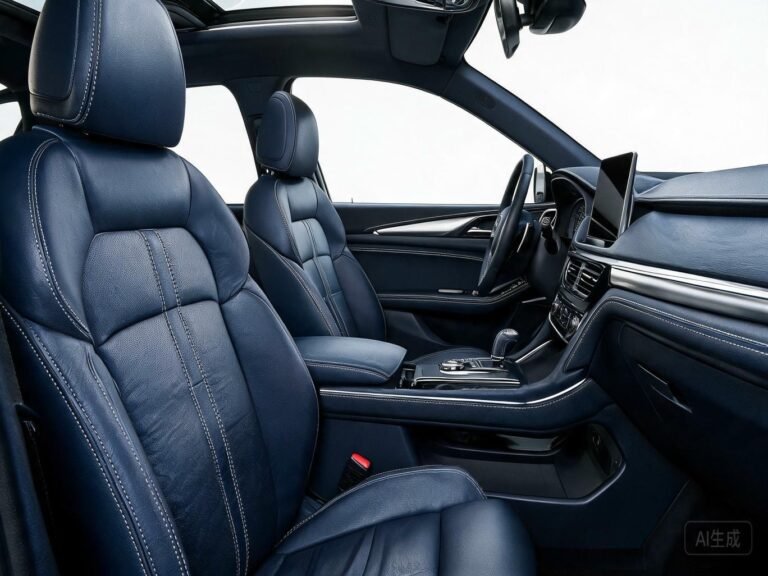
Advanced silicone leather manufacturing process — precise coating and curing technology enables material properties tailored for future mobility applications.
Technical data point: Silicone leather has been measured with VOC emissions below 0.01 ppm — orders of magnitude lower than traditional PU and PVC materials. That’s not just a marketing claim; it’s a fundamental difference in chemistry. Silicone is an inert material that doesn’t off-gas plasticizers, solvents, or other volatile compounds the way organic polymers do. For enclosed spaces like autonomous vehicle cabins, this is a game-changer.
Silicone Leather Properties for Next-Gen Interiors
So what makes silicone leather uniquely suited for autonomous and electric vertical takeoff vehicles? It comes down to a combination of properties that no other single material can match. Let’s break them down from an engineering perspective.
Thermal Stability Across Extreme Temperature Ranges
Traditional interior materials have a comfort zone — typically around room temperature — and their properties degrade outside that range. PU leather gets stiff and brittle in cold weather and soft and sticky in extreme heat. Genuine leather dries out and cracks if it gets too hot. Silicone leather stays flexible and stable from -50°C to +250°C, which covers virtually any temperature a vehicle interior might experience, from a winter night in Norway to a summer day in Dubai. For eVTOL aircraft that experience rapid altitude changes and temperature shifts, this thermal stability is not a luxury — it’s a requirement.
Inherent Cleanability Without Topical Coatings
Silicone has a low surface energy, which means liquids and oils bead up instead of soaking in. Coffee, soda, ketchup, lipstick — even permanent marker can be wiped off with a simple cleaning solution without leaving a stain. And because this cleanability is inherent to the material itself, it doesn’t wear off the way topical stain-resistant coatings do. After 50,000 cleaning cycles (which a high-usage shared vehicle might reach in a year), the material cleans just as well as it did on day one. For fleet operators, this means less time between rides and lower long-term maintenance costs.
Antimicrobial Surface Properties
Silicone doesn’t provide the nutrients that bacteria and fungi need to grow, so microbial populations on silicone surfaces are naturally lower than on organic materials. Combined with easy cleanability, this creates a surface that stays hygienic longer between cleanings. For shared mobility applications — where you don’t know who sat in the seat before you — this is both a real benefit and a strong marketing message. Riders feel safer knowing the interior is easy to keep clean.
Durability Under High-Use Conditions
A personally owned car might see 1–2 hours of use per day. A robo-taxi might see 16–20 hours of use per day, with different riders getting in and out constantly. That’s an order of magnitude more wear and tear. Silicone leather’s durability — measured in hundreds of thousands of abrasion cycles, not thousands — means interiors can stay looking good for years of heavy use. In a fleet model where vehicles are revenue-generating assets, longer interior life directly translates to higher uptime and lower operating costs.

High-temperature curing ovens in the production process — silicone materials are engineered to remain stable across extreme temperature ranges from -50°C to +250°C.
eVTOL and Flying Cars: A Whole New Set of Requirements
If autonomous cars push interior material requirements, eVTOL and personal air vehicles rewrite the rulebook entirely. When you’re flying at altitude in a small cabin, the stakes are higher and the constraints are different.
Fire Safety Under Aviation Standards
Aviation interior materials must meet stringent flammability requirements — FAR 25.853 for commercial aircraft, and equivalent standards for the emerging eVTOL category. The test isn’t just whether the material burns; it’s about heat release rate, smoke density, and toxic gas emission. Silicone performs exceptionally well here: it’s inherently fire-resistant (no need for flame retardant additives), produces minimal smoke, and when it does burn, the primary combustion product is silica (sand) rather than toxic fumes. For aircraft applications where evacuation time is measured in seconds, low smoke toxicity isn’t just a spec — it’s a matter of survival.
Weight Reduction Matters More Than Ever
In a car, saving a few kilograms improves efficiency slightly. In an aircraft, every kilogram directly affects range, payload, and battery size. Lightweight interior materials are a strategic priority for eVTOL developers. Silicone leather can be manufactured in thinner gauges while maintaining performance — a 0.8mm silicone leather can deliver the same durability as a 1.2–1.5mm traditional leather or PU. That weight savings adds up quickly when you’re covering every seat, wall panel, and armrest in a passenger cabin.
Pressure and Temperature Cycling
Aircraft cabins experience pressure and temperature changes that ground vehicles never see. Even pressurized cabins cycle between ground-level and cruise pressure with every flight. Materials that are stable on the ground might delaminate, shrink, or develop off-gassing problems under repeated pressure cycling. Silicone’s inherent stability — both thermal and chemical — makes it well-suited to these conditions. The silicone polymer structure doesn’t change with pressure fluctuations the way some organic polymer coatings can.
| Requirement | Traditional Car Interior | Autonomous Vehicle | eVTOL / Aircraft |
|---|---|---|---|
| Abrasion cycles | 10,000–30,000 | 100,000–500,000 | 50,000–200,000 |
| VOC level | Moderate (VDA 277) | Very low (premium cabins) | Ultra-low (enclosed cabin) |
| Fire safety standard | FMVSS 302 | FMVSS 302 + enhanced | FAR 25.853 |
| Temperature range | -30°C to +80°C | -40°C to +100°C | -55°C to +150°C |
| Cleaning frequency | Weekly/monthly | Multiple times per day | After every flight |
| Weight sensitivity | Low | Medium (EV range) | High (payload/range) |

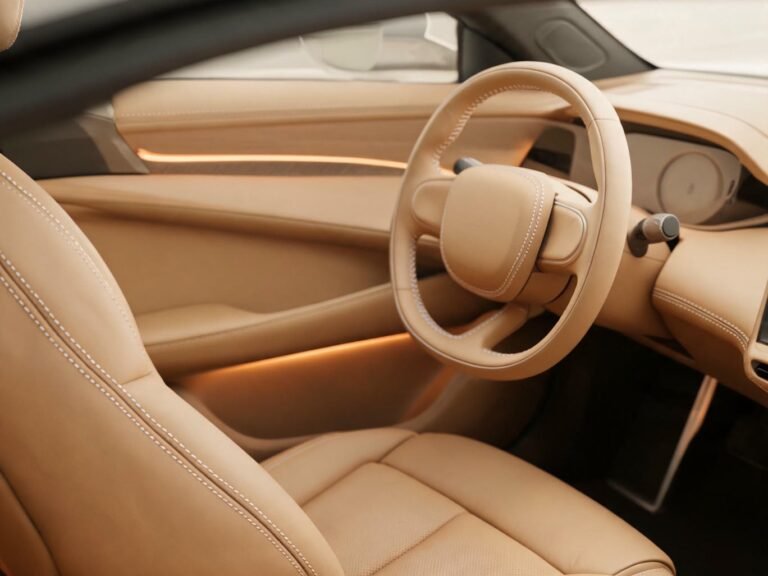
The smart cabin of the future — interior surfaces will do more than just look good; they’ll integrate seamlessly with the vehicle’s technology and user experience.
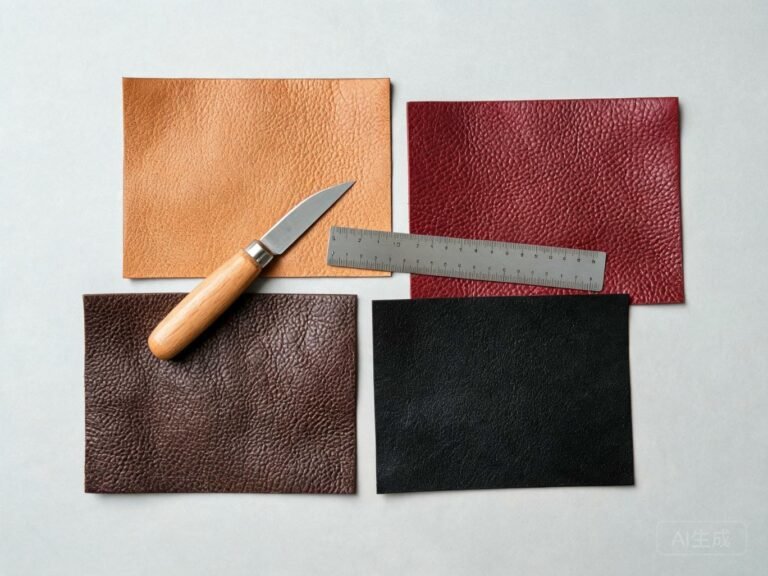
Next-generation silicone leather materials — engineered for the future of mobility with advanced performance properties.
What This Means for Material Suppliers and OEMs
The transition to autonomous and air mobility isn’t going to happen overnight — but the material decisions are being made right now. Vehicle programs have 3–5 year development cycles, and the materials specified for 2028 models are being tested today. Here’s what forward-thinking teams should be doing.
Start Testing Now, Even If Production Is Years Away
Silicone leather is a relatively new category in automotive interiors, and most OEM material libraries haven’t fully integrated it yet. The companies that get ahead will be the ones who start testing and qualifying silicone materials now, so when the next-generation platform needs a low-VOC, high-durability, easy-to-clean interior material, it’s already in the qualified supplier list. Waiting until the requirement lands on your desk means starting from zero and losing 12–18 months to testing and validation.
Think Beyond Seat Covers
In future vehicles, interior surfaces aren’t just decorative — they’re functional. Think about seat surfaces that incorporate heating and sensors, door panels with integrated touch controls, headliners with acoustic properties. Silicone leather’s stability and compatibility with other materials make it a good substrate for smart surface integration. The material that covers the seat today might be part of the user interface tomorrow. When you’re evaluating material suppliers, ask not just about what they can do today, but about their R&D roadmap for functional surfaces.
Consider the Full Lifecycle
The economics of shared mobility change the cost equation. In a personally owned car, the interior material is a one-time cost that gets amortized over 10–15 years. In a fleet model, the interior is part of the vehicle’s revenue-generating equipment, and downtime for refurbishment directly reduces revenue. A more expensive material that lasts twice as long and requires half the maintenance isn’t a cost increase — it’s a cost reduction. Make sure your business case reflects the total cost of ownership, not just the upfront per-meter price.
Engineering reality check: Silicone leather isn’t a drop-in replacement for traditional automotive leather in every application. It has different stretch properties, different adhesion characteristics, and different sewing requirements. The earlier you involve your material supplier in the design process, the better the results will be — they can help you optimize the design for the material’s strengths rather than trying to force it into a leather-shaped box.
The Interior Is the New Exterior
In the age of autonomous driving and urban air mobility, what’s inside the vehicle matters more than what’s under the hood. Passengers won’t choose a robo-taxi or eVTOL based on horsepower or acceleration — they’ll choose based on comfort, cleanliness, and overall experience. The interior materials are a huge part of that experience.
Silicone leather is positioned to play a major role in this transition because it solves the core problems that future interiors present: low VOC for enclosed spaces, easy cleanability for shared use, thermal stability for extreme conditions, and durability for high-utilization fleets. The companies that start exploring these materials now will be the ones defining the standard for what “premium” means in the next generation of mobility.
Explore High-Performance Materials
About TOPSUN
TOPSUN engineers high-performance silicone leather materials for next-generation mobility applications, working with automotive OEMs, Tier 1 suppliers, and eVTOL developers to qualify materials that meet the unique demands of autonomous and air vehicle interiors.
Low-VOC formulation per VDA 277 and ISO 10580, wide temperature range stability testing, flame retardant formulations for aviation standards, custom material development for program-specific requirements, accelerated aging and durability testing.