When you’re sourcing upholstery materials for a product line, the decision between faux leather and genuine leather looks simple on the surface — one is cheaper, one is “premium.” But dig into the total cost of ownership, and the math gets interesting. What seems like the budget option often ends up costing more over three years, while the “premium” choice might not deliver the consistency you’re paying for. The difference between faux leather and genuine leather goes far beyond price per meter — it impacts your supply chain, quality control, warranty exposure, and compliance risk.
In this procurement-focused guide, we’ll break down the real cost drivers that most sourcing teams miss, compare performance on the metrics that actually matter for B2B applications, and give you a decision framework you can apply to your next material selection.
The Hidden Costs Behind Genuine Leather Sourcing
Genuine leather has a premium reputation, and in some applications, that reputation is earned. But for high-volume B2B production, the raw material cost is just the beginning. Here’s what adds up when you source genuine leather at scale.
Inconsistency Drives Up Waste
Every hide is different. Natural variations in thickness, grain, scars, and color mean you can only use about 60–70% of a typical leather hide for quality production. The rest becomes waste — and you’re paying for the whole hide. In furniture production, for example, a single sofa might require hides from 3–4 different animals, and matching the color and grain across all pieces adds another layer of complexity and rejection rate.
Supply Chain Volatility
Leather prices are tied to the global meat industry, which means they swing with factors completely unrelated to your business — cattle disease outbreaks, trade tariffs, even dietary trends in major consuming countries. A 20% price increase in raw hides can blow your material budget for the entire quarter, and there’s often little warning. Lead times are also less predictable because you’re dependent on tanneries that batch-process hides rather than running continuous production.
Compliance and Traceability Risk
Regulatory pressure on leather supply chains is increasing, from deforestation concerns in the Amazon to animal welfare requirements and chemical restrictions on tanning processes. If you’re selling into EU or US markets, you need full traceability — and getting that from a multi-tiered supply chain of ranchers, traders, tanneries, and finishers is expensive and resource-intensive. One misstep and you’re looking at delayed shipments, regulatory fines, or brand damage.

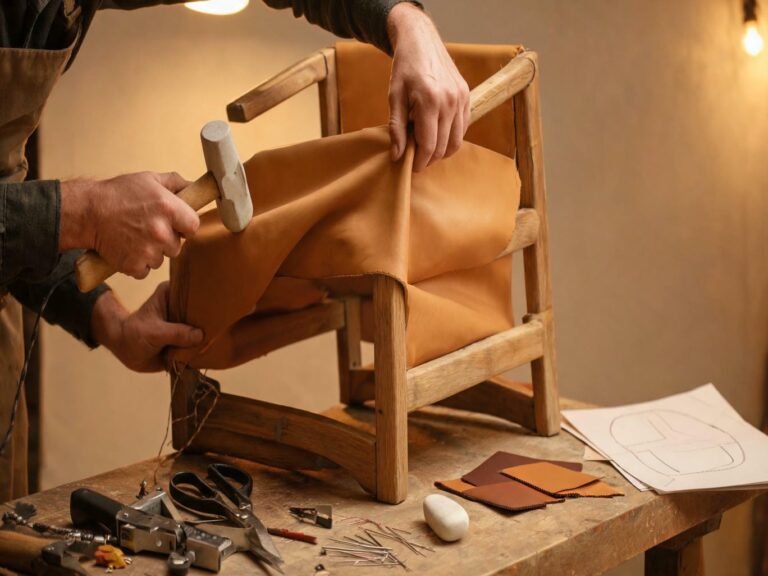
Uniform grain structure in high-performance faux leather — every meter is identical, eliminating natural variation waste.
Procurement stat: The global synthetic leather market reached approximately $16.6 billion USD in 2025 and continues steady growth, driven by OEM demand for consistent quality, predictable pricing, and simplified compliance. PU leather alone accounts for the majority of synthetic leather volume, with silicone-based products growing fastest in premium segments.
Where Faux Leather Wins on Total Cost of Ownership
The upfront per-meter cost of quality faux leather is already lower than mid-grade genuine leather — typically 30–60% less. But the real savings come from the things that don’t show up on a purchase order. Here’s where the TCO advantage really adds up.
Near-Zero Material Waste
Because faux leather is manufactured in uniform rolls, you can nest your cutting patterns with 90%+ utilization. There are no natural scars to work around, no thickness variations to cause sewing problems, and no color mismatches between batches when you have good quality control. For a high-volume furniture program, going from 65% utilization with leather to 92% with faux leather can save you 25% on effective material cost alone — before you even factor in the lower per-meter price.
Predictable Supply and Pricing
Faux leather factories run continuous production, which means lead times are predictable — usually 2–4 weeks for standard colors, 4–6 weeks for custom orders. Pricing is stable because it’s tied to petrochemical inputs rather than agricultural commodity cycles. For procurement teams, that means you can lock in annual pricing with confidence, plan production schedules without surprises, and avoid the budget whiplash that comes with leather price volatility.
Customization Without the Premium
Want a specific color to match your brand? A custom grain texture? Special performance properties like flame retardancy or stain resistance? With genuine leather, custom finishes mean minimum orders that tie up inventory and budgets. With faux leather, customization is baked into the manufacturing process — you can match a Pantone color, develop a custom texture, and dial in performance specifications without the same cost and MOQ barriers.

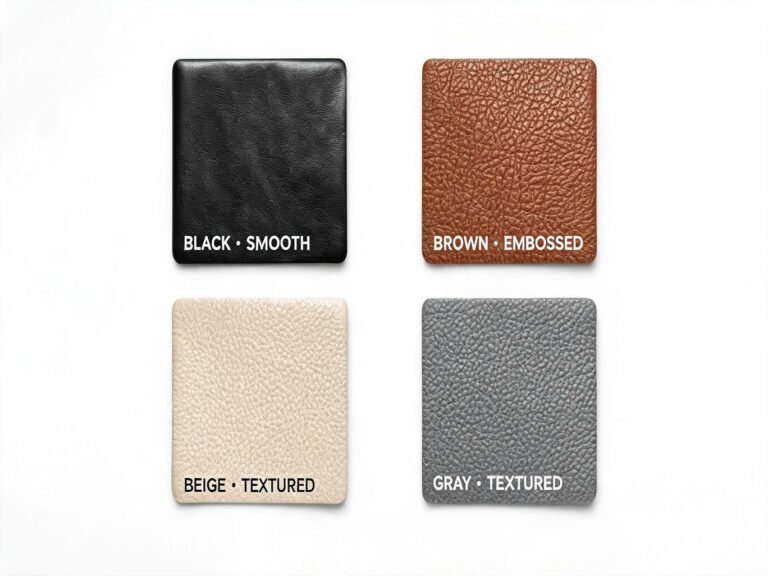
Full color range of faux leather options — consistent across every batch, with custom color matching available for OEM programs.
Performance Comparison: What Actually Matters for B2B Buyers
Price and supply chain are important, but none of it matters if the material doesn’t perform. Let’s compare genuine leather, standard PU faux leather, and high-performance silicone faux leather on the metrics that procurement teams actually care about for commercial applications.
| Cost Factor | Genuine Leather (Mid-Grade) | PU Faux Leather | Silicone Faux Leather |
|---|---|---|---|
| Raw cost per m² | $25–$50 | $8–$18 | $15–$30 |
| Material utilization | 60–70% | 85–92% | 88–95% |
| Effective cost per usable m² | $36–$71 | $9–$21 | $16–$34 |
| Batch-to-batch consistency | Variable — natural variation | Good with QC controls | Excellent — fully controlled |
| Typical lead time | 6–12 weeks | 2–4 weeks (stock) | 3–5 weeks (stock) |
| Price stability | Volatile — tied to cattle markets | Stable — oil-based inputs | Stable — silicone inputs |
| Compliance complexity | High — multi-tier supply chain | Moderate — chemical controls | Low — single source traceability |
| 5-year TCO index | 100 (baseline) | 45–60 | 55–75 |
Here’s the thing most procurement teams miss: the “faux leather” category isn’t monolithic. Standard PU leather is the budget option and it comes with trade-offs — it can crack and peel over time, it doesn’t handle extreme temperatures well, and the chemical profile might not meet all regulatory requirements. Silicone faux leather sits in the middle — more expensive than PU, but with durability and chemical safety that approaches or exceeds genuine leather at a lower effective cost.

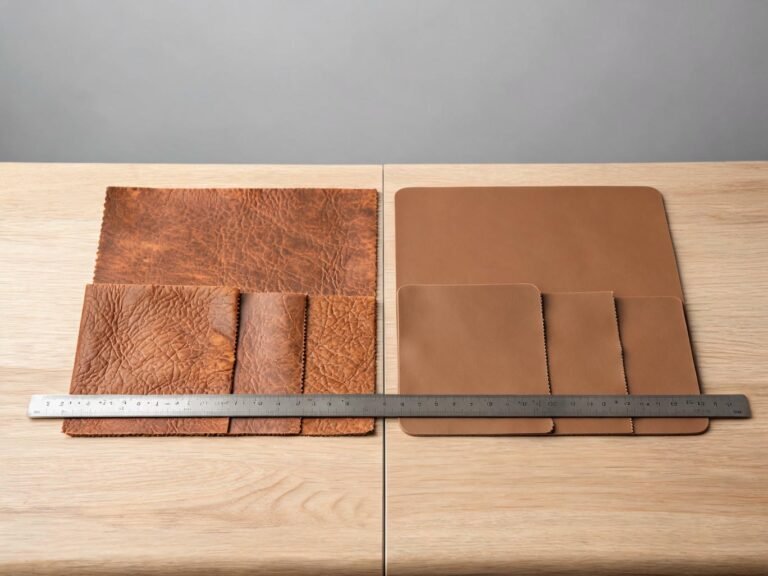
Side-by-side material evaluation — procurement teams should test against their specific application requirements, not just rely on “leather = premium” assumptions.
Silicone leather vs traditional materials — see the performance difference in durability, stain resistance, and temperature testing.
Making the Call: A Decision Framework for Procurement Teams
There’s no one-size-fits-all answer — the right material depends on your product, market, and brand positioning. Here’s the decision framework we walk through with our OEM clients.
Choose Genuine Leather If…
You’re selling into the ultra-premium luxury segment where “genuine leather” is a non-negotiable marketing claim, your production volumes are low enough that material inconsistency is manageable, and you have the resources to handle a complex, multi-tier supply chain with full traceability. Even then, it’s worth evaluating whether a premium faux leather could deliver the same perceived quality at lower cost.
Choose PU Faux Leather If…
Cost is the primary driver and your application doesn’t demand extreme durability or chemical safety. Budget furniture, entry-level automotive interiors, and fashion accessories are all places where PU makes sense. Just make sure you’re working with a supplier who can meet your certification and compliance requirements — quality varies dramatically in the PU market.
Choose Silicone Faux Leather If…
You want the durability and premium feel of genuine leather without the supply chain headaches and cost volatility. Silicone leather excels in high-use commercial applications — hospitality furniture, medical healthcare surfaces, public seating — where cleanability, durability, and low VOC emissions are critical. It’s also the choice if you need consistent quality across high production volumes with predictable lead times and pricing.
Procurement tip: When evaluating suppliers, don’t just compare per-meter cost. Ask for a 5-year total cost of ownership analysis that includes waste factor, rework rate, warranty claims, and replacement costs. The material with the lowest per-meter price rarely has the lowest TCO.
Frequently Asked Questions
Is faux leather lower quality than genuine leather?
Not necessarily — it depends on what you mean by “quality” and which tier of each material you’re comparing. Top-grade silicone faux leather can outperform mid-grade genuine leather on durability, stain resistance, color consistency, and chemical safety. Genuine leather has advantages in breathability and the “natural” aesthetic that some buyers prefer. The key is to define your performance requirements first, then evaluate materials against those requirements — not against a generic “leather is better” assumption.
Can faux leather match the premium feel of real leather?
High-quality faux leather, especially silicone-based varieties, can match and sometimes exceed the tactile experience of mid-grade genuine leather. The texture, softness, and drape can be engineered to very specific standards, and because it’s manufactured, every batch feels the same. Where genuine leather still has an edge is in the subtle, organic variation that some consumers associate with luxury — but that’s a marketing and branding question, not a quality question. For most commercial applications, consumers can’t tell the difference without a side-by-side comparison.
Stop Paying for the “Leather” Label
The difference between faux leather and genuine leather isn’t about “real vs. fake” — it’s about which material delivers the best value for your specific application. For most B2B procurement teams, the combination of lower effective cost, predictable supply, consistent quality, and simpler compliance makes high-quality faux leather the smarter choice. Genuine leather still has its place in the ultra-premium segment, but the gap is narrowing every year as synthetic materials improve.
If you’re evaluating materials for a new product line or considering switching from genuine leather to a synthetic alternative, we’d be happy to walk through a detailed TCO analysis tailored to your specific application. Our team can provide test data, sample sets, and cost comparisons that help you make the case internally — whether you end up choosing our material or not.
About TOPSUN
TOPSUN manufactures high-performance silicone faux leather for furniture, automotive, and marine OEMs seeking consistent quality and predictable supply across high-volume production programs.
Batch-to-batch color consistency verification, MOQ flexibility for mixed SKU programs, REACH and RoHS compliance documentation, total cost of ownership analysis support for procurement teams.