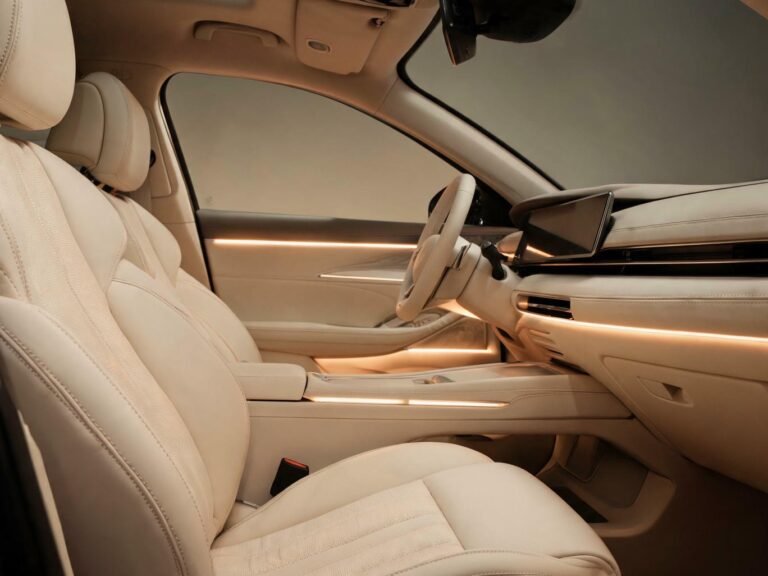
Tesla made headlines by eliminating leather from all its vehicles. BMW followed with its “vegan interior” options across multiple model lines. Porsche, Mercedes, and Volvo now offer full animal-free interior packages. This isn’t a fringe movement — vegan automotive leather is becoming a standard option in the premium segment, and the material choice behind these programs matters more than the marketing label suggests.
Not All Vegan Leather Is Created Equal
“Vegan leather” is a marketing term, not a material specification. It simply means no animal-derived ingredients. Under that umbrella, you’ll find materials with vastly different performance profiles:
- PVC (vinyl) — the cheapest option. Contains plasticizers, can off-gas VOCs, and has poor UV resistance. Some brands still use it but are phasing it out
- PU leather — the most common vegan option. Decent initial quality but susceptible to hydrolysis and yellowing over time
- Mushroom / apple / cactus leather — innovative bio-based materials. Strong sustainability story but limited automotive-grade durability data and scalability
- Silicone leather — inorganic silicone polymer coating. No plasticizers, no hydrolysis, excellent UV and heat resistance. The premium vegan option

The challenge for automotive buyers is that two cars labeled “vegan interior” might use completely different materials with different durability, feel, and environmental profiles. The vegan leather explained article on our site breaks down these differences in detail.
Request Vegan Material Samples
Why Premium Brands Are Choosing Silicone-Based Vegan Leather
| Factor | Why It Matters for Premium Vehicles |
|---|---|
| No Hydrolysis | Vehicles in humid/tropical markets keep their interior quality. PU’s #1 failure mode is eliminated |
| Zero VOC | No new-car smell concerns. Passes GB/T 27630 and European indoor air standards |
| UV Stability | No yellowing on dashboards and door panels — maintains the premium look |
| Consistent Batch Quality | Unlike genuine leather (which varies by hide), every roll is consistent |
| Color Freedom | Any color achievable with excellent batch-to-batch consistency |
The real cost comparison: When you factor in genuine leather’s yield loss (30–40% of each hide is waste), sorting and grading labor, and the shorter service life of PU alternatives, silicone leather’s price point becomes more competitive than it appears on a per-meter basis. The total cost of ownership — including warranty reserves for interior replacements — often favors silicone.
Consumer Perception: Vegan Is No Longer a Compromise

Five years ago, choosing a vegan interior meant accepting a downgrade in perceived quality. That perception has shifted dramatically. A 2025 survey by McKinsey found that 65% of luxury car buyers in Europe consider sustainability when making a purchase decision — and 40% would pay a premium for verified sustainable interiors.
The key is that the material must feel genuinely premium. Drivers who pay for a luxury vehicle expect soft-touch surfaces, rich color, and refined texture. Luxury vegan leather brands are investing heavily in surface engineering to match or exceed the tactile quality of genuine leather.
Silicone leather achieves this through its fine-particle surface treatment, which mimics the micro-texture of premium full-grain leather. The difference? It maintains that texture for the vehicle’s lifetime, whereas genuine leather’s grain wears smooth in high-contact areas.
Frequently Asked Questions
Is silicone leather certified vegan?
Silicone leather contains no animal-derived ingredients. The silicone polymer is synthesized from silica (sand), and the base fabrics are typically polyester or microfiber. For programs that require formal vegan certification (such as PETA-Approved Vegan), we can provide full material composition declarations to support the certification process.
Can vegan leather match the smell of genuine leather?
Silicone leather is odorless — which is actually an advantage. The “leather smell” that some buyers associate with luxury is, in reality, the off-gassing of tanning chemicals. For OEMs focused on in-cabin air quality (per WHO indoor air quality guidelines), an odorless material is preferred. If a subtle scent is desired, it can be introduced through the vehicle’s fragrance system rather than the material itself.
What’s the lead time for custom vegan leather for an automotive program?
Color and texture matching typically takes 2–3 weeks for lab samples, followed by production sample confirmation. Full production runs can begin 4–6 weeks after sample approval. For custom material programs, we recommend starting the sample phase at least 12 weeks before your PPAP (Production Part Approval Process) deadline.

The Material Behind the Label
“Vegan” tells buyers what the material isn’t. But for sourcing decisions, you need to know what it is — and how it performs over the vehicle’s lifetime. Vegan automotive leather made from silicone polymer delivers the premium feel, durability, and environmental compliance that modern vehicle programs demand, without the compromises that come with PVC, PU, or bio-based alternatives still finding their footing in automotive applications.
Discuss Your Vegan Interior Program
About TOPSUN
TOPSUN is a silicone leather manufacturer serving automotive OEMs and tier-1 suppliers with vegan, PVC-free interior materials. Our products are used in seats, dashboards, door panels, and steering wheels by brands across Europe, Asia, and the Americas.
Certifications: REACH, RoHS, ISO 9001, FDA. Full material declarations available. Testing per DIN 75201, ISO 12947, QUV, and automotive OEM specifications.