Faux leather durability is a top concern for B2B buyers. You need materials that last. You need data you can trust. This guide gives you real testing results and clear comparisons.
Many buyers ask: how long does faux leather last? The answer depends on the material type. Not all synthetic leathers perform equally. Some fade in two years. Others last over a decade.
At TOPSUN, we manufacture silicone leather with proven performance. Our clients work in automotive, furniture, marine, and medical sectors. They demand durability. We deliver it.
In this article, you will learn:
- How faux leather durability is measured
- How silicone, PU, and PVC compare
- Real-world performance data
- Which material suits your application
What Is Faux Leather?
Durable faux leather is a synthetic alternative to animal leather. It is made from plastic polymers or silicone. It mimics the look and feel of real leather. It offers consistent quality and lower cost.
There are four main types:
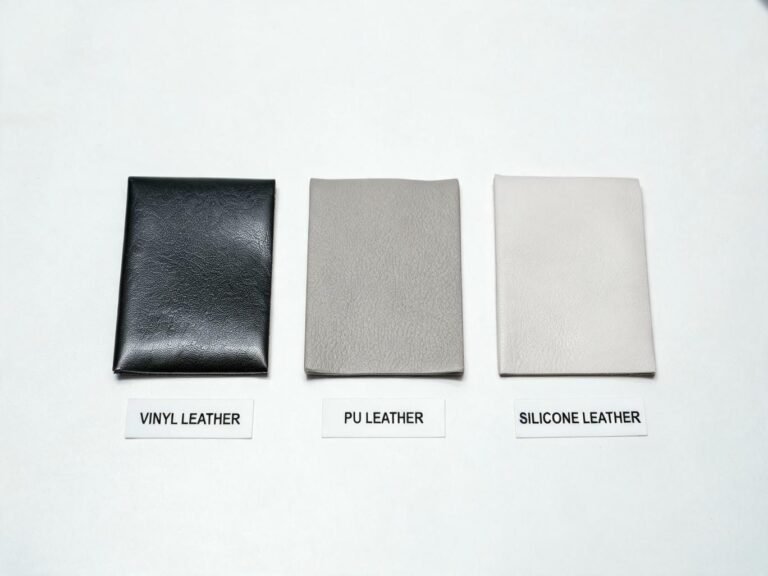
- PU leather: Polyurethane coated fabric. Flexible and soft. Common in fashion and furniture.
- PVC leather: Polyvinyl chloride coated fabric. Rigid and durable. Used in upholstery and automotive.
- Microfiber leather: Ultra-fine fibers bonded together. High-end feel. Good abrasion resistance.
- Silicone leather: Silicone polymer coated fabric. Premium performance. Best durability and environmental profile.
Each type has different strengths. Silicone leather leads in longevity. PU and PVC offer lower upfront cost. Microfiber balances feel and performance.
How Durability Is Tested
Faux leather how long does it last depends on test results. Labs use standardized methods. These tests simulate real-world wear.
Key testing methods include:
- Martindale abrasion test: Measures cycles until surface failure. Higher numbers mean better wear resistance.
- Tensile strength test: Measures force to break material. Reported in N/mm.
- Tear strength test: Measures force to tear fabric. Reported in Newtons.
- Hydrolysis resistance test: Exposes material to heat and humidity. Measures weeks until degradation.
- UV resistance test: Exposes material to ultraviolet light. Measures color fastness and surface integrity.
- Temperature cycling: Tests performance from extreme cold to extreme heat.
These tests follow ISO standards and industry norms. Results are repeatable. Buyers can compare materials objectively.

Laboratory testing ensures consistent faux leather durability across batches.
Faux Leather Durability Comparison
Synthetic leather durability varies widely. The table below shows real data. Use it to choose the right material for your project.
| Material Type | Martindale Cycles | Temperature Range | Waterproof | UV Resistance | Hydrolysis Resistance | Estimated Lifespan | Best Applications |
|---|---|---|---|---|---|---|---|
| Silicone Leather | 200,000+ | -40C to 250C | Yes | Excellent | 10+ weeks at 70C/95% RH | 10-15+ years | Automotive, marine, medical, aviation, luxury furniture |
| PU Leather | 10,000-30,000 | -10C to 60C | Limited | Moderate | Poor | 2-5 years | Fashion accessories, low-cost furniture, packaging |
| PVC Leather | 15,000-30,000 | -10C to 60C | Yes | Moderate | Poor | 3-5 years | Commercial seating, automotive economy grade, bags |
| Microfiber Leather | 50,000-100,000 | -20C to 80C | Limited | Good | Moderate | 5-8 years | Shoes, handbags, mid-range furniture |
| Real Leather | Variable | -30C to 80C | No | Poor | N/A | 5-10 years | Luxury goods, heritage furniture, fashion |
Silicone leather outperforms all alternatives. It lasts 3x longer than microfiber. It lasts 5x longer than PVC. It lasts 7x longer than PU. Learn more about differences here.
Silicone Leather Performance Data
Artificial leather durability reaches its peak with silicone technology. TOPSUN silicone leather is engineered for extreme conditions.
Our test results include:
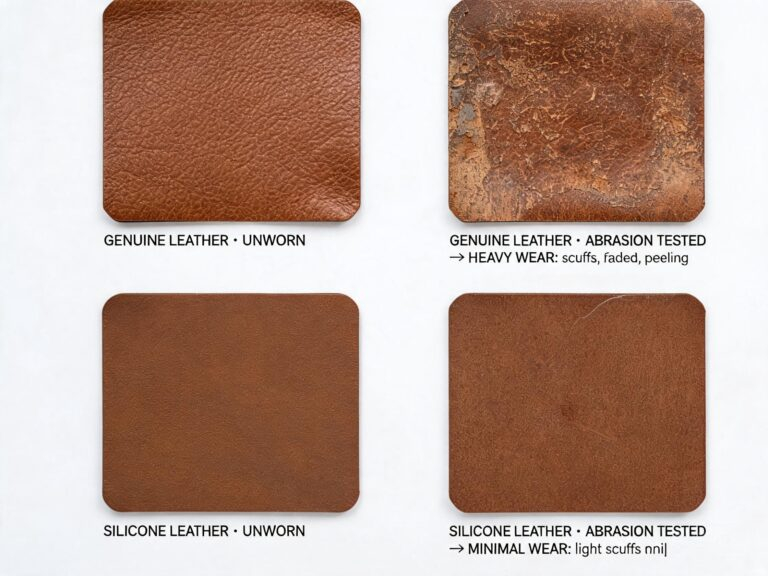
- Abrasion resistance: 200,000+ Martindale cycles. No surface failure.
- Tear strength: 20 N minimum. Resists tearing under stress.
- Tensile strength: 15-25 N/mm. Maintains shape under load.
- Temperature range: -40C to 250C. No cracking. No melting.
- Waterproof: 100% waterproof. No absorption.
- UV resistance: No fading after prolonged sun exposure.
- Hydrolysis resistance: 10+ weeks at 70C and 95% relative humidity.
These numbers are verified by SGS and internal labs. Every batch is tested. Every batch meets spec.

Silicone leather maintains integrity after 200,000+ abrasion cycles.
Watch silicone leather pass flexing and performance tests.
PU vs PVC Durability
Durable vegan leather buyers often compare PU and PVC. Both are common. Both have limits.
PU leather:
- Softer hand feel. Better drape.
- 10,000 to 30,000 Martindale cycles.
- 2 to 5 year lifespan in normal use.
- Poor hydrolysis resistance. Fails in humid climates.
- Not ideal for outdoor or marine use.
PVC leather:
- More rigid. Better structural support.
- 15,000 to 30,000 Martindale cycles.
- 3 to 5 year lifespan in normal use.
- Waterproof but poor breathability.
- Can crack in cold temperatures.
Neither matches silicone leather. Both degrade faster. Both need replacement sooner. Both create higher lifetime costs.
Real-World Applications
Faux leather last long when matched to the right use case. Here is how different sectors benefit from durable materials.
Automotive interiors: Seats and dashboards face heat, UV, and abrasion. Silicone leather passes FAR 25.853 flame resistance. It lasts the life of the vehicle.
Marine upholstery: Salt water, sun, and humidity destroy most materials. Silicone leather is 100% waterproof. It resists hydrolysis. It lasts 10+ years on boats.
Medical devices: Disinfectants and frequent cleaning damage surfaces. Silicone leather tolerates harsh chemicals. It meets ISO 10993 biocompatibility standards.
Luxury furniture: High-traffic seating needs abrasion resistance. Silicone leather exceeds 200,000 cycles. It stays beautiful for decades.
Outdoor furniture: UV and rain cause fading and cracking. Silicone leather resists both. It needs no protective treatment.
Browse our product collections for your industry.
Testing Methodology
Our testing follows strict protocols. Results are reproducible. Buyers can verify claims.
Martindale abrasion test:
- Sample is mounted on a rotating platform.
- Abrasive fabric rubs the surface in a Lissajous pattern.
- Cycles are counted until two threads break or surface fails.
- Silicone leather exceeds 200,000 cycles without failure.
Hydrolysis resistance test:
- Samples are placed in a climate chamber.
- Temperature is held at 70C.
- Relative humidity is held at 95%.
- Samples are inspected weekly for peeling, cracking, or stickiness.
- Silicone leather passes 10+ weeks with no degradation.
Temperature cycling test:
- Samples are cycled from -40C to 250C.
- Multiple cycles are performed.
- Surface and adhesion are inspected after each cycle.
- Silicone leather shows no cracking or delamination.
All tests are conducted in our ISO-certified labs. Third-party verification is available on request.
Choosing Durable Faux Leather
Selecting the right material requires clear criteria. Ask these questions:
- What is the expected product lifespan?
- Will the product face extreme temperatures?
- Will the product be exposed to water or humidity?
- Will the product face direct sunlight?
- What abrasion level will the surface endure?
- Are there regulatory or certification requirements?
- What is the total cost of ownership?
If you need 10+ year performance, choose silicone leather. If you need 2-5 year performance, PU or PVC may suffice. Always factor in replacement costs. Cheaper materials often cost more over time.
Read our furniture durability guide for more details.
Explore our complete silicone leather guide.
Conclusion
Faux leather durability is not a guess. It is measurable. It is testable. Silicone leather leads every category. It lasts longer. It performs better. It reduces total cost of ownership.
PU and PVC have roles in cost-sensitive projects. But they cannot match silicone for demanding applications. For automotive, marine, medical, and luxury furniture, silicone leather is the clear choice.
TOPSUN manufactures silicone leather at scale. We run 18 automated lines across 3 production bases. Our annual capacity is 6 million meters. We offer OEM and ODM services. We provide custom colors and 100+ textures.
Our materials carry full certifications: REACH, FDA, ISO 10993, EN 13773 Class 4, FAR 25.853, and PAHs compliance. We serve B2B buyers in Europe and North America.
Ready to upgrade your material?
Email: info@topsunsiliconeleather.com | Phone: +86 186 6583 5695
About TOPSUN
TOPSUN is a leading silicone leather manufacturer. We serve global B2B clients. Our products meet the highest standards for durability, safety, and sustainability.
Certifications: REACH, FDA, ISO 10993, EN 13773 Class 4, FAR 25.853, PAHs
Capacity: 6 million meters annually, 18 automated lines, 3 production bases
Services: OEM/ODM, custom colors, 100+ textures
Contact: info@topsunsiliconeleather.com | +86 186 6583 5695